Planning a 2027 National Park Trip? Check Reservations Park by Park
For a 2027 national-park visit, check the official rules for each park, date, entrance, road, and activity. An entrance pass, timed-entry reservation, and activity booking may be separate requirements.
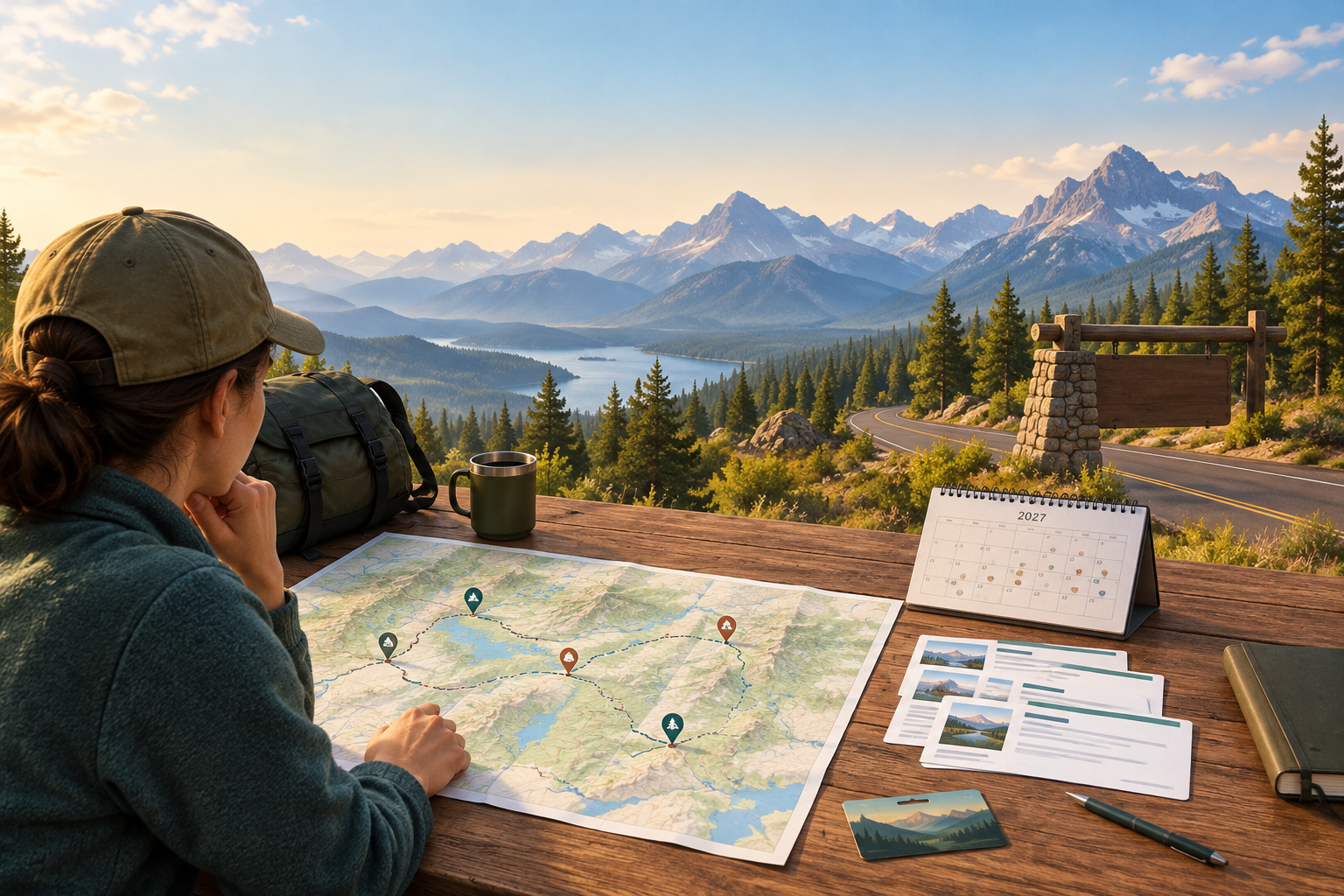
How to check 2027 national park reservations
Start with the itinerary you actually plan to follow, then verify each requirement against the park’s official guidance and booking terms.
For a 2027 national-park trip, check the National Park Service (NPS) page for each park and the official booking listing for every timed-entry period, road, tour, or other activity you plan to use. Determine whether each part of your visit requires an entrance pass, a separate reservation, both, or neither. The sources available for this guide do not establish 2027 reservation policies or release dates, so a rule from 2026 should not be treated as a 2027 rule.
The practical benefit of checking each piece separately is simple: one booking may not cover your entire visit. NPS advises visitors to check their chosen park’s guidance for reservation, timed-entry, pass, and activity requirements. Start there, then follow any official link to a booking page.
Build a checklist from your itinerary
A park name alone may not identify every requirement; record the places and activities you intend to visit.
Before searching for reservations, write down the details that could affect your plan: park, visit date, intended entrance, approximate arrival time, and any named road, tour, campground, or other activity. If your route includes multiple parks, create a separate line for each. A booking or rule at one park should not be assumed to apply at another.
For example, a day trip might include entering a park, driving a particular scenic road, and joining a scheduled tour. Those are different parts of the itinerary, so check each against the relevant official information. If you have alternate dates or destinations, verify those separately too; flexibility does not by itself confirm that a different option has the same requirements.
- Park and planned visit date
- Entrance and approximate arrival time
- Roads, destinations, tours, and other activities
- Any campground or lodging booking that might affect access
- Traveler, party, or vehicle details requested by a particular listing
Check the park’s official NPS page first
Use the park’s own information to find applicable rules and current access notices before relying on a general summary.
Open the NPS page for the specific park and look for information about planning a visit, reservations, timed entry, fees or passes, alerts, closures, and seasonal access. Follow official links to booking platforms and compare the listing with your exact date and itinerary. NPS directs visitors to check park-specific guidance for reservations, timed entry, passes, and activity requirements.
Also check notices about road access, seasonal conditions, or closures. A booking listing may explain how to reserve a particular experience without covering every condition that could affect the rest of your trip. Revisit the park’s official page before departure, especially if your plan depends on a specific road, entrance, or destination.
Separate entrance passes, timed entry, and activity bookings
The word reservation can refer to different permissions, so identify what each item applies to before you make plans around it.
An entrance pass or fee relates to park entry under the applicable rules. A timed-entry reservation, where required, concerns entry or arrival during a specified period. A booking for a road, tour, or activity may apply only to that named destination or experience. These are useful distinctions for planning, but the park’s own instructions define the actual requirements.
NPS explains that entrance passes and reservations are not interchangeable in every situation; reservations may apply to vehicle entry or particular activities, and requirements differ by park. One illustration is a 2026 Recreation.gov listing for Acadia National Park’s Cadillac Summit Road: it describes a vehicle reservation for that road and separately notes the park entrance-pass requirement. That example concerns the listing’s 2026 terms, not Acadia’s 2027 policy.
| Item | What it may apply to | What to confirm |
|---|---|---|
| Entrance pass or fee | Entering a park under its current rules | Whether a pass or fee applies and how to meet the requirement |
| Timed-entry reservation | Entry or arrival during a specified period | Date, time window, entrance or area, and listed limits |
| Road or activity booking | A named road, tour, or other experience | Exact destination, date and time, and any separate entry requirement |
| Campground or lodging booking | A particular campsite or accommodation | Whether the booking covers only the stay or states additional access terms |
Read the booking details before relying on them
The official listing and confirmation—not the label reservation—define the booking’s scope and conditions.
Before booking, verify the date, time window, location, arrival instructions, and any vehicle or party limits shown on the listing. Check whether the reservation is for general entry or for a specific road or activity. Do not infer that a booking guarantees parking, access to every destination, or entry outside its stated terms unless the official information explicitly says so.
Review the booking release schedule if you are planning ahead, along with change, cancellation, and refund terms. Recreation.gov advises visitors to check the rules and cancellation information for the individual facility; terms can vary by location. Save the listing or confirmation that explains what you booked and what you need to do.
- Does the confirmation match the intended park, date, location, and time?
- Does it name a particular road, tour, or activity?
- Are vehicle, passenger, or party limits stated?
- What are the release, change, and cancellation terms?
- Does the listing separately mention an entrance pass, fee, or another requirement?
Check exceptions instead of assuming
A campsite, alternate entrance, or different arrival time may matter, but only official terms can tell you how it affects your visit.
If you have a campground or lodging reservation, do not assume it replaces a timed-entry or activity booking. Look for an explicit statement in the park’s current guidance or the accommodation terms about access for your date and planned destinations. Likewise, an alternate entrance or off-peak arrival may have different rules, but do not treat it as a workaround unless the park confirms that it fits your itinerary.
Park practices can vary. In a March 10, 2026 release, NPS described different access approaches for parks during summer 2026, including timed-entry reservations at Rocky Mountain National Park during specified periods and no timed entry at Arches for 2026. These are dated examples of variation only; they do not establish what either park will require in 2027.
Recheck before departure and save your confirmations
A final review connects your bookings with the instructions and access conditions that apply to your travel dates.
As the trip approaches, revisit the official NPS page and relevant booking listings. Check for updated requirements, alerts, closures, seasonal notes, and changes to booking terms. If 2027 details are not posted when you first plan, make a note to check again rather than relying on last year’s rules or an undated summary.
Save the confirmation for each timed-entry, road, tour, or other activity booking somewhere you can access easily. A downloaded copy or printout may be useful if you have limited service, but follow the listing’s instructions about what to present. Keep entrance-pass information distinct from activity confirmations so you can find the right document quickly.
Before leaving, compare every confirmation with your itinerary. If a date, entrance, or requirement is unclear or inconsistent, contact the park or booking provider identified in the official listing. Repeat the check for every park and separately booked destination on your route.
- List each park, date, entrance, road, tour, and planned activity.
- Check the park’s official NPS page for requirements, alerts, closures, and seasonal details.
- Identify whether each itinerary item needs an entrance pass, timed entry, an activity booking, or more than one requirement.
- Read the official booking terms and verify the date, time, location, limits, and cancellation information.
- Save confirmations and recheck official pages before departure.
Frequently asked questions
Have 2027 national-park reservation rules been announced?
The sources used for this guide do not establish 2027 policies or reservation release dates. Check the official NPS page for each park and its linked booking listings as your trip approaches.
Does a national-park reservation include the entrance fee or pass?
Not necessarily. An entrance pass, timed-entry reservation, and booking for a road or activity can be separate requirements. Check the park’s official guidance and the specific listing rather than assuming one covers the others.
If I book a campground, can I enter the park without another reservation?
Do not assume so. Check the park’s current rules and the campground or lodging terms for an explicit statement about access for your dates and planned destinations.
Does a reservation guarantee parking or access to every part of a park?
Rely only on what the official listing and confirmation explicitly say. A booking for a named road or activity should not be treated as a guarantee of parking or access to other areas.
What should I save before I leave?
Save the confirmation for each timed-entry, road, tour, or other activity booking, along with relevant entrance-pass information and arrival instructions. Keep a copy accessible offline if practical, and check the park’s current alerts before departure.
Sources & further reading
Explore the original sources behind this article. Our editorial perspective is separate from the organizations we reference.
- [S1] Plan Your Visit (U.S. National Park Service)nps.gov
- [S2] - Recreation.govrecreation.gov
- [S3] Recreation.gov - Camping, Cabins, RVs, Permits, Passes & Morerecreation.gov
- [S4] Entrance Passes (U.S. National Park Service)nps.gov
- [S5] National Park Service Expands Access for Summer 2026 While Maintaining Safety at High-Visitation Parks - Office of Communications (U.S. National Park Service)nps.gov