How to Coordinate an Airport Pickup: Check the Flight, Then Follow Local Curb Rules
Coordinate an airport pickup by checking the airline’s flight updates, reviewing the airport’s waiting rules, and agreeing on a clear message for when the traveler reaches the pickup point.
Coordinate an airport pickup around the handoff
A useful pickup plan links flight updates to the airport’s local rules and the traveler’s readiness.
To coordinate an airport pickup, confirm the flight, check its latest status with the airline, and review the arrival airport’s official pickup instructions. Then agree on how the traveler will tell you they have reached the meeting point. This gives you a practical way to decide when to leave or move from a waiting area without treating the scheduled landing time as a curbside appointment.
The plane landing is only one part of the arrival. The traveler may still need to deplane, collect checked bags, navigate the terminal, or get assistance. Meanwhile, airport rules may not allow a driver to wait at the arrivals curb. The goal is to be ready to move when the traveler is ready—not to guess the exact minute they will come outside.
Check flight status and airport delays separately
Flight-specific updates, general airport conditions, and local pickup instructions are different kinds of information.
Start with the airline’s app or website and look up the flight by number. Confirm the arrival airport and travel date, especially for late-night or overnight travel, when the calendar date can be easy to mix up. Check the current status and estimated arrival before setting out, then check again if the plan changes. An estimate can help with planning, but it is not a promise of when the traveler will be ready at the curb.
The Federal Aviation Administration distinguishes general airport delay information from updates for an individual flight. Its airport-status page is not flight-specific; the FAA directs travelers to airlines for information about a particular flight. The FAA’s “Preparing to Fly” page was last updated November 19, 2025. For a pickup, use current airline information for the flight and current airport guidance for the local handoff rather than relying on an old screenshot or estimate.
| Question | Where to check | What it helps you learn |
|---|---|---|
| What is happening with this flight? | The airline’s flight page or app | Current information and estimates for that specific flight |
| Are broader airport delays reported? | FAA airport-status information or official airport updates | General conditions, not a flight-by-flight account |
| Where can I wait or meet the traveler? | The airport’s official pickup and parking instructions | Local locations, rules, and access details |
Check the airport’s pickup and waiting rules
A permitted waiting place and a designated meeting point are not necessarily the same location.
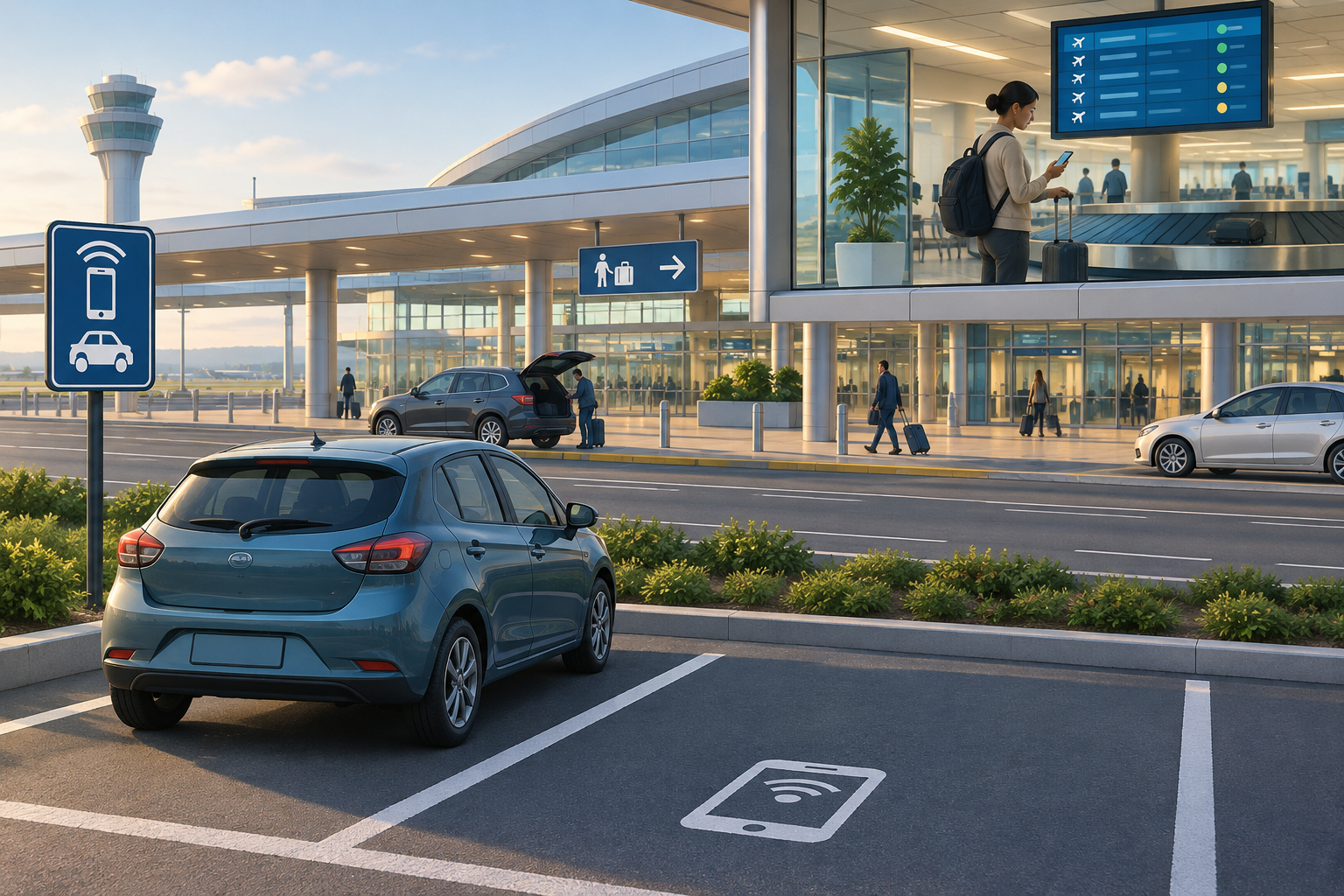
On the airport’s official website, look for pickup, parking, or ground transportation instructions. Check the authorized arrivals pickup area, whether curbside waiting is allowed, and whether the airport has a designated waiting lot. If it does, verify how to reach it and review any posted conditions. Airport layouts and rules vary, so do not assume that a procedure used at one airport applies at another.
O’Hare, for example, says curbside waiting is prohibited and directs drivers to its cell phone lot while passengers deplane, collect baggage, and call when ready. LAX describes free cell phone waiting lots, with conditions specific to that airport. These examples illustrate why local instructions matter; they are not a general rule for all U.S. airports.
Consider an authorized parking option if the traveler needs more time, has mobility needs, or cannot easily reach the curb. If a waiting lot is unavailable, consult the airport’s current parking information for another permitted option. Do not treat a roadside shoulder, nearby street, or arrivals lane as an acceptable place to wait unless the local instructions explicitly allow it.
- Confirm the terminal and the airport’s named pickup location.
- Check whether the waiting area has access rules or other conditions.
- Identify an authorized alternative in case the lot is unavailable or the traveler needs extra time.
Use a simple flight-status-to-curb plan
Make the important decisions before driving, then adjust to current information and the traveler’s message.
There is no universal amount of time to wait after a flight lands. The drive, terminal layout, baggage, accessibility needs, and airport rules all affect the plan. Use this sequence to stay flexible without improvising in a restricted area.
- Confirm the itinerary. Get the airline, flight number, arrival airport, and travel date. Ask for the terminal if the traveler knows it, but be prepared to check again.
- Check the airline’s latest update before leaving. If the estimated arrival changes, revise your departure or waiting plan rather than relying on an earlier message.
- Choose a legal place to wait. Follow the airport’s current instructions and any posted signs. If the airport directs drivers to a designated lot, wait there rather than at the curb.
- Move toward the pickup point when the traveler confirms they have reached the agreed location. Recheck the terminal or zone if either of you receives new information.
- If the first plan cannot work, use the airport’s official parking or pickup guidance to choose an authorized alternative.
Agree on a useful ready-for-pickup message
A message should identify a precise meeting point, not just announce that the plane has landed.
Agree on what “ready” means before the trip. “I landed” may mean the aircraft has arrived while the passenger is still on board or inside the terminal. “I’m outside” can also be unclear at an airport with multiple doors, levels, or pickup zones.
Ask the traveler to send a message once they have reached the agreed meeting point. It should name the terminal and the specific door, zone, or other location used in the airport’s instructions. For example: “I have my bag and am at Terminal 2, arrivals, Door 4, pickup zone B.” That wording is illustrative; use the actual location labels shown by the airport.
Set a backup contact method in case messages do not arrive or a phone battery runs low. If the location changes, confirm the new meeting point before driving toward the terminal. If the traveler needs help with bags, mobility, or finding the pickup area, plan a handoff that fits their needs and local rules.
- The message should say where the traveler is, not only that the flight has landed.
- Use the airport’s own terminal, door, or zone labels.
- If communication fails, contact the traveler while parked in a permitted location.
Make your final checks before you set out
A short confirmation with the traveler can catch a wrong date, terminal, or meeting point before it complicates the pickup.
Before leaving, make sure you have the correct flight and arrival airport, have checked the airline’s current information, and know where the airport permits you to wait. Confirm the agreed ready message and backup contact method with the traveler. Keep the airport’s official pickup instructions available in case a lot is closed, a location changes, or you need to use authorized parking.
If the traveler’s flight is delayed or the terminal changes, update the plan using current information and direct communication. The useful next step is not to predict precisely when someone will emerge; it is to know where you may wait and how you will learn when they are ready.
Frequently asked questions
Should I arrive when the flight is scheduled to land?
Not automatically. Check the airline’s latest estimate and consider your drive, but remember that landing does not mean the traveler is at the pickup point. Deplaning, baggage, and other needs affect the handoff.
Does the FAA airport-status page track my specific flight?
No. It provides broader airport delay information, not a status report for every flight. Check the airline’s app or website for updates about a particular flight.
Can I wait at the arrivals curb until I get a text?
Only if the airport’s current rules allow it. Some airports prohibit curbside waiting and direct drivers to a designated lot. Check official instructions and follow posted signs and staff directions.
What should the traveler include in the ready message?
Ask them to name the terminal and the specific official pickup location, such as a door or zone. They should send it when they have reached the agreed meeting point, not simply when the plane lands.
What if the waiting lot is closed or unavailable?
Check the airport’s current parking and pickup information for an authorized alternative. If needed, use airport parking or contact the airport for guidance rather than waiting on a restricted curb or roadway.
Sources & further reading
Explore the original sources behind this article. Our editorial perspective is separate from the organizations we reference.
- [S1] Preparing to Fly | Federal Aviation Administrationfaa.gov
- [S2] flychicago.com
- [S3] CTA, Economy, and Van Nuys Parking | LAXflylax.com