Putting Your Bike Away for Winter? A Checklist for the Bike—and Its E-Bike Battery
Clean and inspect your bike before storage, choose an indoor or sheltered spot, and follow your e-bike battery’s exact manual. If you’ll keep riding, use a separate winter-maintenance routine.
First decide: storage or winter riding
Choose the right checklist before you start; a bike kept in use needs attention after rides, while a stored bike needs a clean, dry resting place.
If you expect to ride little or not at all, prepare the bike for storage. If you’ll ride through winter, skip the long-storage routine and plan to clean and check the bike regularly instead. Either way, a few minutes of inspection now can help you notice a problem before the bike is put away or taken out again.
This guide is for general bike care in the United States. Local conditions vary: a damp shed, a dry garage, and a heated indoor room are not the same storage environment. For e-bikes, the battery’s own instructions matter more than a general seasonal rule.
- Storing it: clean, dry, inspect, and protect the bike from precipitation.
- Riding it: remove grime after wet or salty rides and maintain the drivetrain.
- E-bike: check the battery manual separately, whether the bike is stored or ridden.
Before winter bike storage: clean, dry, and inspect
A simple preparation routine makes it easier to spot visible wear and avoid putting away a wet, dirty bike.
Start with a gentle clean suited to your bike. Wipe away mud and road grime, taking care around bearings, electrical connections, and other areas where forceful water or an unsuitable cleaner could cause trouble. If you’re unsure what products or methods are safe for your model, consult its owner’s manual.
Dry the bike thoroughly before storage, especially around the chain and other metal parts. Then check the chain and drivetrain for obvious grime or unusual wear, look at the tires for visible damage or loss of shape, and make sure the brakes and controls appear intact. This is a visual check, not a substitute for diagnosing a mechanical problem.
If something is loose, damaged, or not working as expected, avoid assuming it will be fine after months in storage. Trek’s home-maintenance guidance supports basic cleaning and lubrication and advises getting service help for work outside your comfort level. A bike technician can assess repairs or adjustments you do not know how to make safely.
- Clean off dirt and grime using a method appropriate for the bike.
- Dry the bike before putting it away.
- Look over the tires, brakes, chain, drivetrain, and visible components.
- Make a note of anything that needs repair before the next ride.
Choose a dry, sheltered place to store the bike
Prioritize protection from precipitation and a location where the bike can stay undisturbed and easy to check.
Indoor storage is the preferred option when available. A garage, storage room, or other suitable indoor space can keep the bike out of rain and snow. If indoor storage is not possible, choose the most sheltered spot you have and protect the bike from direct exposure to precipitation. REI recommends indoor storage when possible and a sheltered location as the next-best choice.
Before settling on a spot, consider whether it stays dry, whether the bike can be secured, and whether it blocks a walkway or exit. Avoid storing it where it can be knocked over or where other stored items press against wheels, cables, or controls. If you use a cover, make sure the bike is dry before covering it and follow any guidance for your specific bike or battery.
There is no single ideal room or temperature that applies to every bike and battery. For an e-bike, check the battery manual for storage conditions rather than guessing based on the room’s comfort or the weather outside.
E-bike battery storage: follow the exact model’s instructions
Battery handling is the main point where a conventional-bike checklist is not enough.
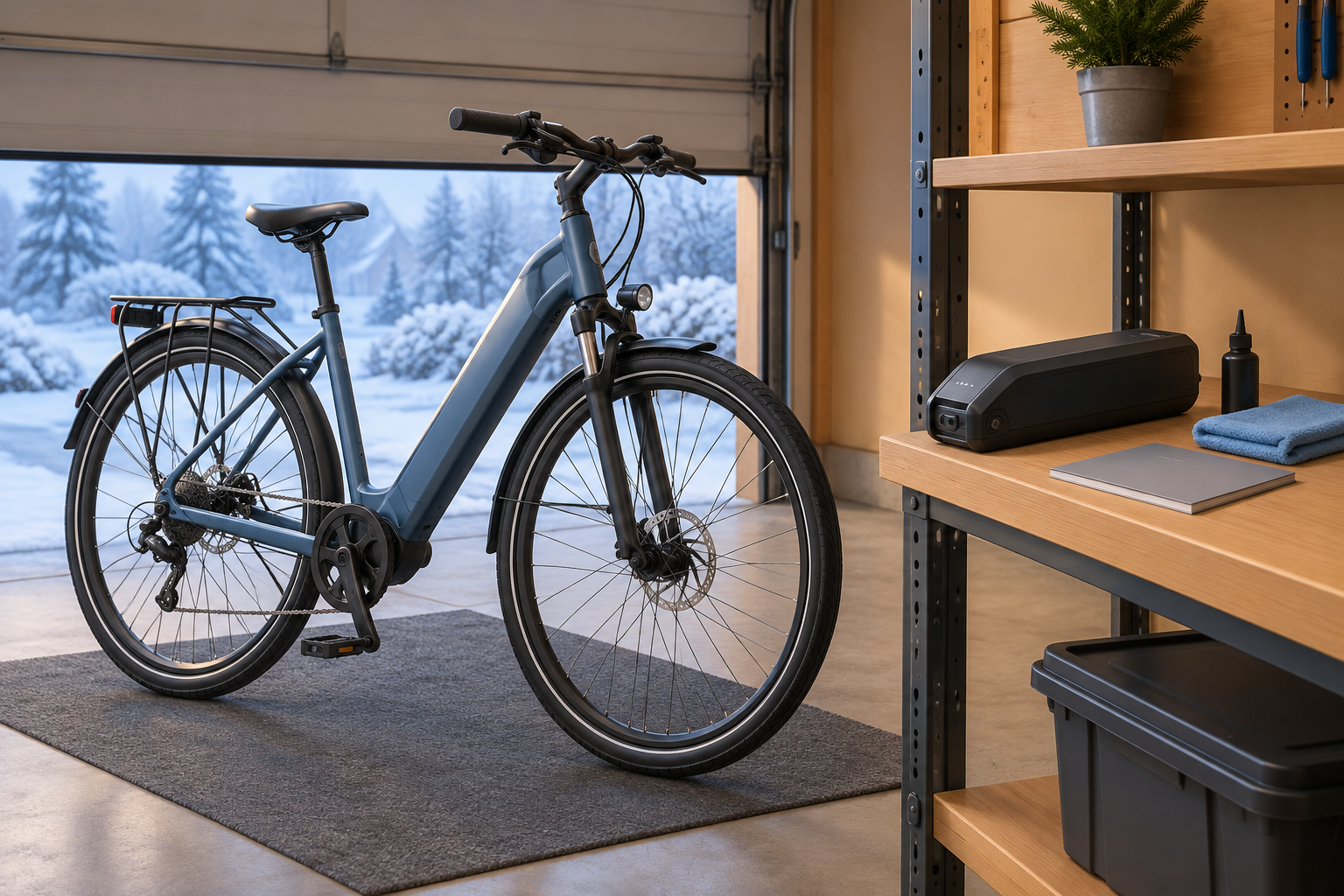
Find the manufacturer and exact battery model, then consult the battery or e-bike owner’s manual. Check whether the battery should be removed for long-term storage, what charge level the manufacturer recommends, where it may be stored, and whether it needs periodic checks. Do not assume that another brand’s instructions—or a general online rule—apply to your battery.
Bosch, for example, recommends removing its battery for long-term storage if possible and specifies a 30–60% charge for its guidance. Bosch also advises a dry storage environment and precautions such as ventilation, a smoke detector, and distance from heat sources and flammable materials. These are Bosch’s recommendations, not a universal instruction for every e-bike battery.
If the battery is damaged, behaves unusually, or you cannot identify the correct instructions, do not improvise a storage setup or charging schedule. Contact the bike or battery manufacturer, a dealer, or a qualified service provider for model-specific guidance. Store and charge batteries only as their instructions permit.
- Record the battery model and locate its matching manual.
- Check the instructions for removal, charge level, storage conditions, and periodic checks.
- Keep the manual’s guidance separate from general bike-storage advice.
- Ask the manufacturer or a qualified service provider if the battery is damaged or the instructions are unclear.
If you’ll keep riding: use a winter routine, not a storage routine
A bike that sees wet, gritty, or salty roads needs attention after rides rather than being left untouched for the season.
After a grimy ride, clean the chain and drivetrain and reapply a lubricant suitable for the conditions and your bike. REI recommends cleaning the chain and drivetrain after grimy winter rides and applying suitable lubricant. Follow the product directions and your bike’s instructions; avoid putting lubricant on braking surfaces.
Make a quick post-ride check part of your routine: notice whether the chain looks dirty, listen for a new noise, and look for visible damage. Clean off accumulated grime rather than letting it build up between rides. A clean drivetrain is maintenance, not proof that the rest of the bike is safe or mechanically sound.
E-bike owners should also follow their battery maker’s guidance for use and care in cold or wet conditions. Storage recommendations do not automatically describe how to ride or charge a battery in winter. If you are uncertain about permitted conditions, check the exact manual before heading out.
- Clean the drivetrain after wet, salty, or otherwise grimy rides.
- Use a suitable lubricant and keep it away from brake surfaces.
- Check for new noises, visible damage, or changes in how the bike works.
- Use the e-bike battery instructions for riding and charging conditions.
A quick comparison: storing the bike or riding through winter
Use this table to keep the two seasonal plans distinct and decide what to do next.
The appropriate routine depends on whether the bike will sit unused or continue to see winter roads. If your plans change, switch routines: clean and inspect it before storage, or begin post-ride checks when you start riding again.
| Decision point | Bike going into storage | Bike used through winter |
|---|---|---|
| First task | Clean, dry, and inspect before putting it away. | Check and clean after rides when grime builds up. |
| Where it stays | Indoors if possible; otherwise in a sheltered place. | Park it securely and protect it from precipitation between rides where practical. |
| Drivetrain | Clean it before storage; address visible issues before the next ride. | Clean the chain and drivetrain after grimy rides and reapply suitable lubricant. |
| E-bike battery | Follow the exact model’s removal, charge, storage, and check-in instructions. | Follow the exact model’s use and charging guidance; storage instructions alone may not cover riding. |
Before the next ride: check the bike again
Treat the first ride after storage as a reason to recheck, not as a guarantee that nothing changed while the bike was parked.
When you bring the bike back into use, look it over before riding. Check the tires, brakes, chain, and visible components, and confirm that controls behave as expected. For an e-bike, reinstall or reconnect the battery only as directed by the manufacturer, then follow its instructions for charging and operation.
If you find damage, a persistent mechanical issue, or anything you cannot confidently assess, pause and arrange help from a bike technician. For a stored e-bike battery, follow the model’s prescribed check-in and return-to-use steps rather than relying on a calendar or a generic percentage.
- Review any repair notes you made before storage.
- Inspect the bike and test its basic functions before riding.
- Follow the battery manual when reconnecting or charging an e-bike.
- Get qualified help for adjustments or faults outside your experience.
- Decide whether the bike will be stored or ridden.
- Clean and dry it, then inspect the drivetrain, tires, brakes, and visible parts.
- Choose indoor storage if possible, or a sheltered place protected from precipitation.
- For an e-bike, identify the exact battery and follow its instructions for storage and checks.
- Set a reminder to inspect the bike before its first ride after storage.
Frequently asked questions
Should I store my bike indoors for winter?
Indoor storage is preferable when available. If you cannot store it indoors, use the most sheltered spot you have and protect the bike from rain and snow. Keep it dry before covering or storing it.
Should I remove an e-bike battery for winter storage?
Check the instructions for your exact battery. Bosch recommends removing its battery for long-term storage if possible, but that is not a universal rule for every e-bike.
What charge level should an e-bike battery have in storage?
There is no single percentage that applies to all batteries. Bosch’s guidance specifies 30–60% for its batteries; use your own battery manual for its charge level and check-in schedule.
What should I do after riding my bike on dirty winter roads?
Clean the chain and drivetrain after grimy rides, then reapply a suitable lubricant according to its directions. Keep lubricant off braking surfaces and seek service help if you notice a problem you cannot assess.
Sources & further reading
Explore the original sources behind this article. Our editorial perspective is separate from the organizations we reference.