How to Request a Book Your Library Doesn’t Own
If a book is missing from your library’s catalog, ask whether it can be borrowed from another library through interlibrary loan. Here’s how to check, submit a useful request, and confirm the terms before pickup.
Can your library get a book it doesn’t own?
Often, a library can try to borrow eligible materials from another institution, but a request is not a guarantee.
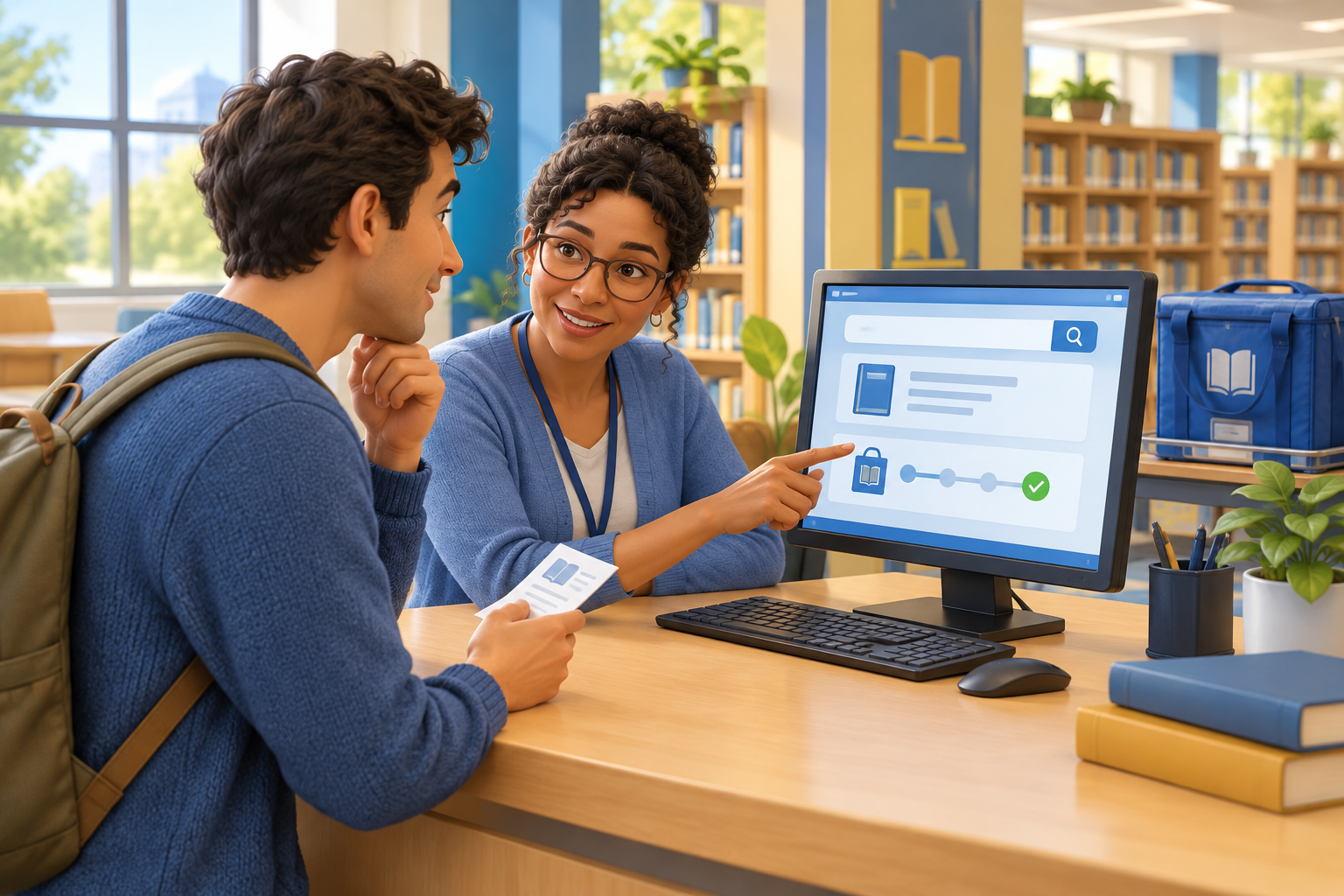
If a book does not appear in your public library’s catalog, ask whether the library offers interlibrary loan, often shortened to ILL. Through this service, your library may request an item from another library on your behalf. You generally start with your own library rather than contacting a distant institution directly.
The Library of Congress, for example, says that requests for some materials must be made through a reader’s local library. That library may first look to other libraries, and lending from the Library of Congress is handled case by case. This illustrates the route, not a promise that any particular title can be borrowed.
Availability, eligible materials, costs, and waiting time depend on the libraries involved. Some systems also offer a nearby-library catalog, an ordinary hold, or a purchase suggestion. Those are different options, so ask which service applies before submitting a form.
- Interlibrary loan: a request for another library to lend or provide an eligible item.
- Ordinary hold: a reservation for an item already available through your library or its regular network.
- Purchase suggestion: a request that your library consider adding a title to its collection.
Check the catalog before requesting the book
A careful catalog search can reveal an available copy or a better request option.
Search your library’s catalog using the exact title and author, then try a broader search if you do not find it. A small difference in punctuation, subtitle, spelling, or author name can affect results. If the catalog has filters, check whether they are hiding unavailable items or a particular format.
Look for other editions, such as a paperback, large-print version, or an earlier publication. If a copy is listed as checked out, see whether you can place a regular hold; that may be simpler than requesting a loan from outside the system. If your library participates in a shared regional catalog, check whether the item can be requested through that network.
If the catalog still comes up empty, ask staff whether the item is eligible for ILL. Rules can differ for newer books, reference materials, rare items, and formats such as DVDs or audiobooks. Do not assume that a digital copy can be obtained through the same process as a physical book.
- Search the full title and author, then try distinctive words from the title.
- Check alternate editions and formats.
- Ask whether the result should be an ordinary hold, an ILL request, or a purchase suggestion.
Find your library’s interlibrary-loan instructions
Use your library’s own instructions to confirm eligibility, the right request route, and any limits.
Search the library’s website for “interlibrary loan,” “ILL,” or “borrow from another library.” If you cannot find a clear page, contact a reference librarian or ask at a branch. Tell them what you searched for and where you checked; that helps distinguish a catalog issue from a title the system does not hold.
Before filling out a form, look for rules about who may request items, which materials are accepted, and how many active requests a cardholder may have. Your library may require an account in good standing, a specific pickup branch, or a separate request form. These are local rules rather than universal ILL requirements.
A public library’s online guide can show what one system asks for, but it should not be treated as a template for every library. Dallas Public Library, for instance, describes its own search and request workflow. Follow the instructions for your library, even if they use different terminology or steps.
Gather the details that identify the item
Accurate publication information reduces confusion when several editions have similar titles.
For a book, record the exact title and author. If available, add the ISBN, edition, publication year, and format. These details are especially helpful when a title has multiple editions, translations, or books with similar names. You can usually find them on the publisher’s page, in a bookseller listing, or in a reliable catalog record.
For a journal article, gather its citation details instead: article title, author, journal name, publication date, volume, issue, and page range. If you have a citation from a class reading list or research paper, copy it carefully rather than relying on a partial title.
Describe the format you need, but be flexible if that is practical for you. If you need a particular edition for a class, explain why. If any edition will do, say so. Your library can tell you what its form requires and whether a different format or version is requestable.
- Book: title, author, ISBN, edition, year, and preferred format.
- Article: article and journal titles, author, date, volume, issue, and pages.
- Your library account details, if the form requests them.
| Item | Helpful identifying details | What to clarify |
|---|---|---|
| Book | Title, author, ISBN, edition, year | Whether another edition is acceptable |
| Article | Article and journal titles, author, date, volume, issue, pages | Whether you need a physical item or a copy |
| Other material | Title, creator, format, release or publication details | Whether that format is eligible |
Submit the request and keep track of it
A confirmation and occasional status check help you follow the request without guessing at its progress.
Use the form or staff-assisted process your library specifies. Enter the identifying details, choose a pickup location if offered, and note any relevant deadline or format preference. Submit only one request for the same item unless staff advise otherwise; duplicate requests may make it harder to track what you need.
Save the confirmation or request number and check your account or email for status updates. A request may take time while staff search for a lender, confirm availability, and arrange delivery. The sources do not establish a standard turnaround, so avoid planning around a particular arrival date unless your library gives you one.
If the status is unclear or a deadline is approaching, contact the library with your request number. Ask whether it is still being searched for, has been sent, or cannot be filled. A status update is more useful than submitting a second request.
- Complete your library’s ILL form or speak with staff.
- Choose a pickup location if the library offers that option.
- Save the confirmation or request number.
- Check the account or contact the library for updates.
Check fees and loan conditions before accepting
The lending library may set important terms, so confirm the conditions attached to your particular item.
Before you agree to a request that may involve a charge, ask whether there is a fee and whether it applies if the item cannot be supplied or you no longer need it. Do not assume ILL is free. Ask as well about possible replacement costs for a lost or damaged item.
Confirm the due date, where to pick up and return the material, whether renewal is possible, and whether the item must stay in the library. Some lenders impose use restrictions, and a renewal may need approval before the due date. Fairfax County Public Library notes that lending institutions can determine availability, due dates, renewals, restrictions, fees, and replacement costs.
Policies can differ even within one library system if it uses more than one borrowing route. Boston Public Library, for example, describes different conditions for its ILL pathways. Treat the terms attached to your own request—not a friend’s experience or another library’s webpage—as the relevant ones.
- Is there a fee, and when would it be charged?
- What is the due date, and where must the item be returned?
- Can the loan be renewed, and how must you request that?
- Are there in-library-use or handling restrictions?
- What replacement cost or other responsibility applies if the item is lost or damaged?
If the request cannot be filled
A declined request may still have alternatives worth asking about.
A lending library may not have an available copy or may not lend that particular item. If your request is declined, ask your librarian what happened and whether another edition or format could be tried. For an article, ask whether a copy can be supplied instead of a physical issue, if that is permitted and available.
Depending on your library’s services, other possibilities might include a nearby partner network, a purchase suggestion, or access through another collection. These are not guaranteed, and some may involve separate eligibility rules or costs. If you need the material for a course or project, explain your deadline so staff can help you assess realistic options.
Before sending a new request, check whether the library needs different identifying details or a broader format preference. Then follow the library’s recommended next step and keep any revised confirmation for your records.
- Ask whether another edition or format is eligible.
- For an article, ask whether a copy request is possible.
- Check whether your library has another access route or accepts purchase suggestions.
Frequently asked questions
Is interlibrary loan free?
It depends on your library and the lending institution. Ask about fees before confirming the request, including whether a charge could apply if you cancel or the item is not supplied.
How long does an interlibrary-loan request take?
There is no single turnaround time established for all libraries. It can depend on whether a lender is found and on delivery and processing. Check your request status with your library rather than assuming a fixed arrival date.
Can I request an ebook or audiobook through interlibrary loan?
Possibly, but eligible formats depend on the libraries and their agreements. Ask your library whether the specific digital format can be requested; do not assume a physical-book process also applies to ebooks or audiobooks.
Can I renew an interlibrary-loan book?
Sometimes, but renewal rules can depend on the lending library and the route used. Check the loan conditions and ask your library before the due date; a renewal is not automatic.
What should I do if my library does not offer interlibrary loan?
Ask staff whether another local access route is available, such as a shared catalog, another format, or a purchase-suggestion process. Options vary, so confirm what your library currently provides.
Sources & further reading
Explore the original sources behind this article. Our editorial perspective is separate from the organizations we reference.
- [S1] How can I obtain copies of books and other materials from the Library of Congress? Does the Library allow users to borrow books? - Ask a Librarianask.loc.gov
- [S2] Interlibrary Loan(ILL) | Dallas Public Librarydallaslibrary.org
- [S3] Interlibrary Loan (ILL) Service | Libraryfairfaxcounty.gov
- [S4] Returns and Renewals | Frequently Asked Questions | Boston Public Librarybpl.org