A Safer Thanksgiving Kitchen: Plan the Cook Zone and Guest Route
Before guests arrive, clear the stove area, keep children and pets three feet from cooking and hot-food handling, and plan a guest route that stays out of the cook’s way.
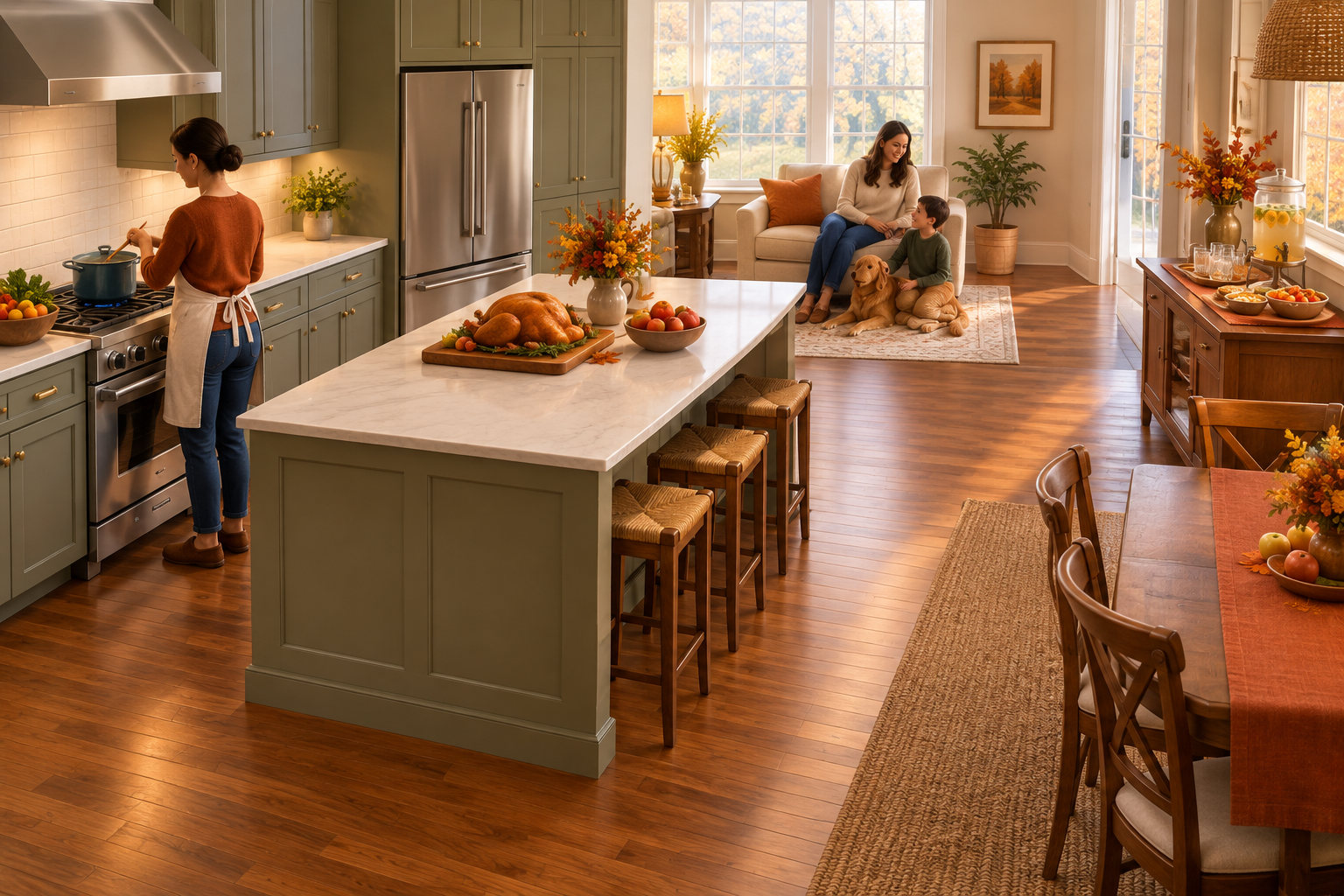
Plan the Thanksgiving kitchen before cooking starts
A short walk-through helps you spot where cooking, guests, and hot dishes might compete for space.
To set up a safer Thanksgiving kitchen, keep the cooking area clear, make a three-foot buffer around the stove and hot-food handling areas, and give guests a route to drinks or snacks that does not pass through the cook’s workspace. Decide who will supervise children and pets, and agree on who will watch the cooking if the cook needs to step away.
Before counters fill up, identify four things: the stove, the main prep surface, a stable spot for hot pans or serving dishes, and the route to the table. Imagine carrying a hot dish along that route. Would someone need to squeeze past you for a drink? Is the landing spot in a busy walkway? Those are the points to address first.
Thanksgiving falls on November 26 in 2026. A National Fire Protection Association release published November 12, 2026, reports 1,139 U.S. home cooking fires on Thanksgiving Day in 2024. That is historical data, not a count for 2026 or evidence that one particular room layout prevents fires. It is useful context for planning attentively, not a prediction about this year.
Set a clear cook zone and three-foot buffer
Make the active cooking and hot-food area easy to recognize, then keep it free of traffic.
Use the stove and nearby hot-food handling area as the center of the cook zone. The NFPA recommends keeping children and pets at least three feet from cooking areas, including places where hot food or drinks are prepared or carried. In practice, the buffer should account for the path a hot pan or drink will take, not just the space beside a burner.
Use a boundary people can understand, such as the edge of a counter or a clear change in floor space. Tell children and guests where the cooking area begins and where they can wait instead. For a young child who may not reliably follow the boundary, a supervised activity in another room may be a more workable plan. Choose a comfortable place for pets away from cooking and serving traffic.
Clear combustible items from beside the stove, as NFPA advises. Also move bags, packaging, and other clutter out of the cook’s immediate work area and the route used to carry dishes. Avoid marking the boundary with objects that could themselves become tripping hazards.
- Keep the cook’s tools within easy reach so they do not need to search through a busy walkway.
- If the kitchen is too small to separate cooking from visitors, make it a no-guest area while active cooking is underway.
- Use adult supervision for children and pets; a verbal reminder alone may not be enough for everyone.
Give guests a route that avoids the cook
A refreshment spot outside the active work area gives visitors a practical destination elsewhere.
A separate guest route is a host’s planning suggestion, not an official safety rule or a proven fire-prevention system. Its purpose is simple: make it easy for visitors to get a drink or snack without passing the stove, brushing against the cook, or crossing the place where hot food is being carried.
If you have a nearby table or counter, set out cups, drinks, and a small snack station there. Keep the path to it clear of chairs, bags, boxes, and anything else people might trip over. Before cooking gets busy, tell guests which way to go. A direct cue—“Please use the dining-room side rather than walking behind the stove”—is more useful than expecting people to infer the route.
When there is only one narrow entrance, do not try to create another route by putting objects in a doorway. Instead, ask guests to stay out of the kitchen during active cooking and wait until hot dishes are set down before approaching. If guests are helping, agree on a waiting place and route before food is ready.
| Kitchen setup | Practical choice | Check before cooking |
|---|---|---|
| Kitchen beside a dining area | Put refreshments outside the kitchen and direct guests there. | Keep the path clear of the route used to carry hot dishes. |
| Small kitchen with one entrance | Limit guest traffic while cooking is active; serve refreshments elsewhere. | Keep the doorway open and free of trip hazards. |
| Guests helping with serving | Agree on a waiting spot and a route to the table. | Avoid gathering helpers beside the cook or landing area. |
Agree on a handoff if the cook must leave
A named adult taking over is clearer than assuming someone nearby is watching the stove.
The U.S. Fire Administration advises staying in the kitchen when frying, boiling, grilling, or broiling. NFPA also recommends staying in the kitchen while cooking on the stovetop. If the cook needs to answer the door, help a guest, or leave for another reason, arrange for another attentive adult to take over watching the cooking before the cook steps away.
Make the handoff explicit: identify what needs attention and confirm the other adult has taken over. When the cook returns, say so and resume responsibility. If nobody can take over, turn off the heat first if it is safe and appropriate for the cooking task. A timer or another person being somewhere in the room is not the same as an agreed handoff.
To reduce interruptions, give helpers tasks that do not require entering the cook zone, such as setting the table or organizing serving utensils elsewhere. Anyone helping with hot dishes should know the route and landing spot before carrying food.
Prepare a landing spot and serving route
Decide where hot dishes will stop and clear the path before food starts moving.
Choose a level, stable surface for hot pans and serving dishes. Keep it away from the edge of a counter and out of the main walking path, where a passing guest might bump it. The route to the landing spot should be clear before a dish leaves the stove or oven.
Tell helpers where to walk and where to set dishes. Ask children and pets to stay outside the three-foot buffer around cooking and hot-food handling areas. If people gather in the route, pause until it is clear rather than trying to weave through them with a hot pan.
The best arrangement depends on the home. A larger kitchen may allow separate cooking and guest paths; a compact one may work better with guests outside while dishes are being carried. Neither option removes all risk, so keep attention on the cooking and adjust if the room becomes crowded.
Use a quick clear, zone, route, handoff, serve check
Five short checks can reset the room before guests arrive or when the arrangement changes.
Do the check before cooking starts and repeat it if the kitchen gets busier. Keep the plan simple enough that household members and helpers can follow it without needing a long explanation.
- Clear: Move combustible items away from the stove and remove clutter from work and walking areas.
- Zone: Keep children and pets at least three feet from the stove and hot-food preparation or carrying areas.
- Route: Put refreshments outside the active cooking space if possible; keep the guest path open.
- Handoff: Name the adult who will take over attention if the cook steps away.
- Serve: Clear a stable landing spot and wait for the carrying route to clear before moving hot dishes.
Frequently asked questions
How far should children and pets stay from the stove?
The NFPA recommends at least three feet from cooking areas. Apply that buffer to the stove and to areas where hot food or drinks are prepared or carried.
Should guests stay out of the kitchen while Thanksgiving food is cooking?
There is no one layout for every home. In a narrow or crowded kitchen, asking guests to stay out during active cooking may be the simplest plan. Otherwise, place refreshments outside the work area and give visitors a clear route that avoids the cook.
What should I do if I need to leave while food is cooking on the stove?
Arrange an explicit handoff to another attentive adult before you step away. The U.S. Fire Administration advises staying in the kitchen when frying, boiling, grilling, or broiling; NFPA advises staying in the kitchen while cooking on the stovetop.
Does a separate guest route prevent kitchen fires?
No. A guest route is a practical way to organize foot traffic, not a proven fire-prevention system. Stay attentive while cooking, keep combustible items away from the stove, and follow official safety guidance.
Sources & further reading
Explore the original sources behind this article. Our editorial perspective is separate from the organizations we reference.