Should You Use a Fire Extinguisher at Home? A Leave-or-Use Checklist
Use a home fire extinguisher only when the fire is small and contained, you can act safely, and your exit is clear. If any check fails—or you are unsure—get out and call 911.
When should you use a fire extinguisher at home?
Decide whether the situation is safe enough before approaching the fire or retrieving an extinguisher.
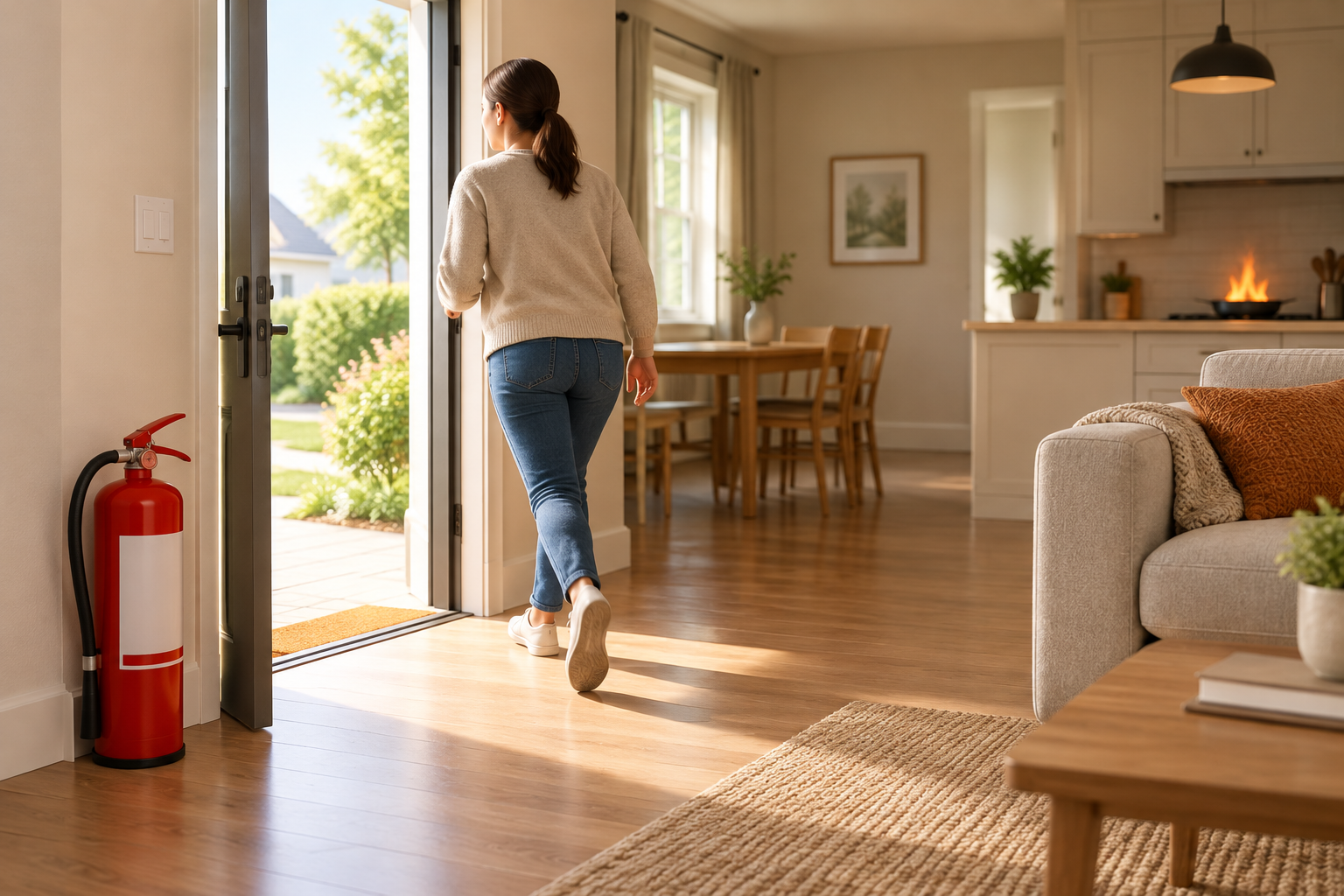
Use a home fire extinguisher only when the fire is small and contained, you can act without entering smoke or another danger, and you have a clear escape route behind you. If any condition is missing—or you are uncertain—alert others, leave the building, and call 911 from a safe place.
An extinguisher is a limited response to a limited fire, not a substitute for evacuation or emergency services. Do not stay inside to protect belongings, look for a better extinguisher, or decide whether the fire might spread. Your first priority is getting people out.
- The fire is small and has not spread beyond its immediate area.
- You can act without moving into smoke or approaching danger.
- You can leave promptly using a clear exit behind you.
Run the leave-or-use checklist
Make the decision from a safe position; do not move closer to investigate warning signs.
Before attempting to use an extinguisher, check the situation as a whole. Can everyone be alerted without delaying escape? Is emergency help being contacted? Can you reach the unit and use it safely? Is your route out clear? If the answer to any safety question is no or uncertain, leave rather than trying to resolve it from inside.
If you are with other people, one person may be able to contact 911 while others leave, provided that this does not delay anyone’s escape. If you are alone, do not remain inside to make the call: get out and call from safety. Do not ask someone else to stay in the home to help fight the fire.
| Check | A limited attempt may be considered only if… | Leave if… |
|---|---|---|
| Fire | It is small and contained. | It is spreading or you cannot tell whether it is contained. |
| People and emergency response | Others are alerted and help is being contacted without delaying escape. | Someone may be in danger, or making a call would keep you inside. |
| Smoke and safety | You can act without entering smoke or another danger. | Smoke is a concern or approaching feels unsafe. |
| Escape route | You can leave promptly by a clear route behind you. | Fire, smoke, or an obstacle could threaten your way out. |
| Extinguisher | You can reach it safely and confirm its label is suitable. | The unit appears unusable, or checking it would put you at risk. |
Check the extinguisher label—do not guess
The unit’s rating, not its location or appearance, tells you which fire types it is intended for.
Extinguishers are labeled for different types of fires. Read the label and instructions while the home is calm so you know what your particular unit covers. The National Fire Protection Association explains that extinguisher ratings correspond to different fire types; a nearby extinguisher should not be assumed suitable for every hazard.
For instance, a unit stored in a kitchen is not automatically appropriate for every fire that could occur there. The same caution applies to a garage or workshop, where the hazards may differ. Use the label rather than the extinguisher’s color, size, or storage location to identify its rating.
If a fire is underway, do not move toward it just to read the label. If you cannot confirm the rating from a safe position, choose evacuation.
- Read the rating and instructions before an emergency.
- Check the listed fire types for the specific unit.
- If the label is missing, unreadable, or unclear, do not guess.
If every safety check passes, remember PASS
PASS is an operating sequence for a situation you have already judged safe enough to approach.
Follow the instructions on your specific extinguisher. A commonly taught method is PASS: pull the pin, aim low at the base of the fire, squeeze the handle, and sweep the discharge across the base. Keep your exit behind you and remain alert to changes in the fire, smoke, or escape route.
The U.S. Fire Administration describes PASS, but knowing these steps does not make an unsafe fire safe to fight. Use them only when the fire is small and contained, you can act safely, your route out is clear, and emergency response is being arranged without delaying anyone’s escape.
- Pull the pin.
- Aim low at the base of the fire.
- Squeeze the handle.
- Sweep the discharge across the base.
Stop and leave if conditions change
Even a small fire can become unsafe to approach; do not wait for the extinguisher to run out.
Abandon the attempt immediately if the fire grows, the extinguisher does not work as expected, smoke becomes a problem, or your exit is threatened. Do not stay to empty the unit, fetch another one, or retrieve belongings. If you are unsure whether it is safe to continue, stop and leave.
Once outside, stay out and call 911 if no one has already done so. Do not re-enter because the flames appear to have gone out; leave the scene for emergency responders to assess.
Prepare your extinguisher before an emergency
Learn what your unit is rated for and where it is, while there is time to read its instructions.
Keep the extinguisher accessible and make sure household members know where it is. Think about whether it can be reached without moving toward a likely fire. There is no single extinguisher model or placement established as best for every home, so consider the hazards in your space and follow applicable local requirements or guidance.
Read the label and operating instructions in advance. Check the unit’s condition, any gauge if present, and maintenance needs according to its instructions. If it appears damaged, obstructed, or otherwise not ready, do not assume it will work; ask the appropriate building contact or service provider how to address it.
The U.S. Fire Administration advises keeping extinguishers accessible and in good condition and following the unit’s own maintenance instructions. For renters, a landlord or property manager may be the right person to contact about a provided extinguisher that is damaged or difficult to reach.
- Make sure household members know where the extinguisher is.
- Learn its rating and operating instructions before an emergency.
- Check its condition and any gauge according to the manufacturer’s directions.
- Follow the specific unit’s maintenance and service instructions.
Make evacuation the household default
A simple shared plan makes it easier to put people’s safety ahead of property.
Take a few minutes to identify the extinguisher, read its label, and remind household members how to leave. Agree that anyone who sees a fire should alert others and get out if the fire is not clearly small and contained or any safety check fails. The extinguisher is an option only when all the conditions for a limited attempt are met.
For your next step, check the unit while there is no emergency and make sure everyone knows the safe way out. During a fire, do not delay leaving to inspect equipment or settle a doubt: get outside, stay out, and call 911.
Frequently asked questions
Should I call 911 before using a fire extinguisher?
Emergency help should be contacted without delaying anyone’s escape. If someone else can call while people leave, that may avoid delay. If you are alone, get outside first and call from a safe place. Do not stay inside just to make the call or attempt to fight the fire.
How do I know if a home fire is too large to tackle?
Do not attempt to use an extinguisher if the fire is spreading, smoke makes it unsafe to approach, your exit is not clear, or you cannot tell whether the fire is contained. If any condition is uncertain, evacuate and call 911.
Can I use any fire extinguisher on any fire?
No. Extinguishers are labeled for different types of fires. Check the rating on your specific unit before an emergency. If you cannot confirm that it is appropriate without approaching danger, leave.
What does PASS mean on a fire extinguisher?
PASS means pull the pin, aim low at the base of the fire, squeeze the handle, and sweep the discharge across the base. Follow your extinguisher’s instructions, and use these steps only when you can act safely and have a clear way out.
What should I do if the extinguisher does not put out the fire?
Stop and leave immediately. Stay outside and call 911 if no one has already done so. Do not remain inside to empty the unit or retrieve belongings.
Sources & further reading
Explore the original sources behind this article. Our editorial perspective is separate from the organizations we reference.
- [S1] Choosing and Using Fire Extinguishersusfa.fema.gov
- [S2] Fire Extinguisher Types | NFPAnfpa.org