How to Build a Cash-Flow Calendar When Your Income Changes Week to Week
Track expected pay and expenses week by week to spot tight periods, label uncertain deposits, and update your plan when dates or amounts change.
Why a cash-flow calendar matters when income varies
A month can add up on paper and still contain a week when cash is tight.
If you freelance, work contract shifts, or earn seasonally, knowing your expected income for the month may not tell you whether money will be available when a bill is due. Rent could come out before a client pays an invoice; a slower work week could fall just before an automatic payment. The challenge is often timing, not simply the monthly total.
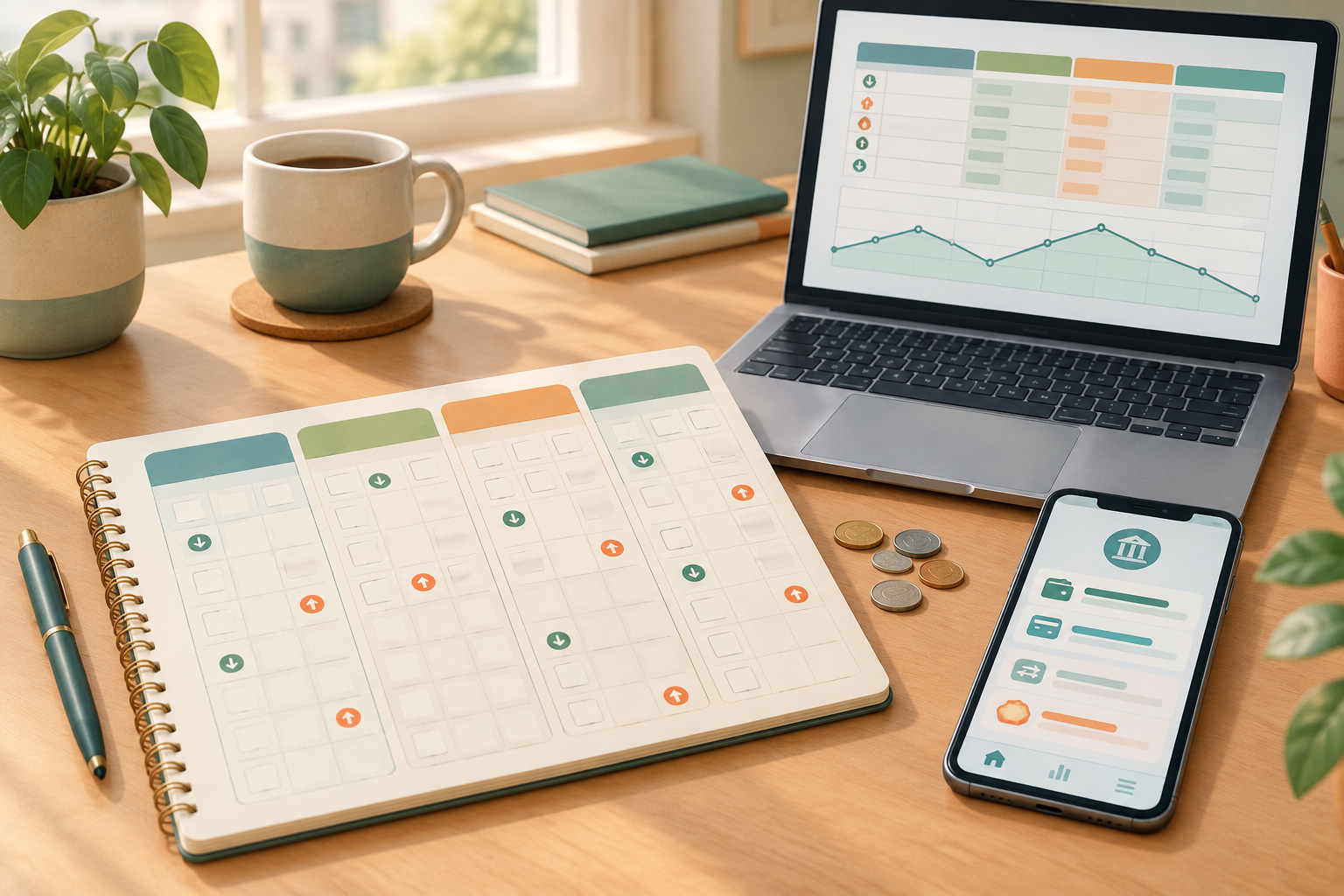
A cash-flow calendar puts expected money coming in and expenses going out in date order. The Consumer Financial Protection Bureau (CFPB) describes cash-flow budgeting as tracking the timing of income and expenses, and notes that it can be useful when income is irregular or seasonal. Its weekly method carries each period’s ending balance into the next. That helps you see which weeks may need attention, but it cannot guarantee when income will arrive.
- A monthly budget helps you compare totals and plan priorities.
- A cash-flow calendar helps you see whether expected money lines up with payment dates.
Gather the numbers for your first draft
Begin with money you can use and information you can reasonably estimate.
Choose a practical planning window. A four- or five-week view is a useful starting point for near-term bills and deposits. If your work has a seasonal pattern or payments are farther apart, you can keep a broader outlook too, while treating distant dates and amounts as less certain.
First, check your current available balance and note payments that are pending or already scheduled. Then list expected income using the date you think funds may reach your account—not the date you sent an invoice or finished a job. An unpaid invoice can be included as an estimate, but it is not cash in hand.
Next, record recurring bills, their amounts, due dates, and payment methods. The CFPB’s bill-calendar guide recommends recording bill amounts and due dates and reviewing the calendar regularly. Include everyday costs that may not arrive as formal bills, such as groceries, transit, fuel, and household supplies. For costs that change, use a reasonable estimate informed by your own recent spending and revise it when you have better information.
The FDIC’s Money Smart participant guide also uses a payment calendar to organize recurring expenses, due dates, amounts, and payment methods. You can use paper, a spreadsheet, or a budgeting tool; choose a format that makes dates and assumptions easy to see.
- Current usable balance, plus pending transactions or scheduled payments
- Expected deposits, dates, amounts, and whether each is confirmed or estimated
- Bills, due dates, usual amounts, and payment methods
- Essential variable spending and known one-time costs
Build the calendar week by week
Use the same simple calculation for each period, then carry its result forward.
Choose consistent week boundaries, such as Monday through Sunday. Put each deposit in the week you expect it to arrive and each expense in the week you expect it to leave your account. Include automatic payments and planned everyday spending. If a due date falls close to a weekend or holiday, check the provider’s payment terms rather than assuming exactly when a transaction will process.
For each week, add expected income to the starting balance and subtract planned expenses. Write down the projected ending balance, then use that figure as the next week’s starting balance. Resetting every week to your original balance would make the plan look as if the same money were available more than once.
- Write your available balance at the start of the first week.
- Enter expected deposits and planned expenses in the weeks they may occur.
- Label deposits and expenses that are estimates or could change.
- Calculate the week’s ending balance: starting balance plus income, minus expenses.
- Carry that ending balance into the next week and repeat.
Example: see what happens if a payment is late
A side-by-side projection makes the effect of uncertain income visible beyond the week it was expected.
These invented figures illustrate the calculation; they are not a suggested budget. The example starts with $600 available. The $500 payment in week 3 is uncertain. The first projection assumes it arrives that week; the second shows what happens if it does not arrive during the four-week window.
| Week | Starting balance if payment arrives | Income in base projection | Expenses | Ending balance if payment arrives | Ending balance if week 3 payment does not arrive |
|---|---|---|---|---|---|
| 1 | $600 | $900 | $910 | $590 | $590 |
| 2 | $590 | $350 | $290 | $650 | $650 |
| 3 | $650 | $500 estimated | $435 | $715 | $215 |
| 4 | $715 | $0 | $455 | $260 | -$240 |
Mark estimates and investigate tight weeks
Make uncertainty visible so a hopeful deposit does not quietly become assumed spending money.
Use clear labels such as confirmed, expected, or estimated, and note why an amount or date is uncertain. A scheduled paycheck and an invoice with no confirmed payment date may call for different assumptions. Even a payment you expect can be delayed, so avoid treating it as available cash before it arrives.
When a week looks tight, verify the details first: check the current balance, pending transactions, deposit dates, automatic payments, and expenses you may have missed. If the projection still shows a gap, you might contact the payer to check on timing or ask a biller whether a different due date or payment arrangement is available. Options and terms vary by provider; do not assume a change has been approved until it is confirmed.
A calendar can show the timing and approximate size of a possible shortfall, but it cannot decide which obligation to prioritize or create funds. Consider the consequences described by the relevant provider and your own circumstances. This is general financial education, not individualized financial or tax advice.
- Keep an uncertain deposit marked as an estimate until you verify it or receive it.
- Ask providers directly about options and confirm any agreed change and its effective date.
- Recalculate later weeks when an amount, date, or expense changes.
Make updating the calendar a brief routine
Comparing the projection with what actually happened keeps the next few weeks useful.
Choose a regular time to review upcoming weeks, perhaps when you check account activity. Replace estimates with actual amounts when payments arrive, record changed bill dates, and carry the current balance forward. The CFPB bill-calendar guide also recommends reviewing the calendar regularly.
Keep the routine focused on upcoming deposits, bills, essential variable costs, and weeks that appear tight. You do not have to predict every purchase perfectly. If your workload or payment pattern changes, update the plan instead of relying on a month that no longer resembles your situation.
To get started, make a blank four-week view. Enter your current usable balance, the next expected deposits, and known expenses. Calculate the first week’s ending balance and carry it forward. Then check any uncertain item that could make a meaningful difference to a tight week.
Frequently asked questions
How far ahead should I make a cash-flow calendar?
Start with the next four or five weeks so you can focus on near-term dates and amounts. If your work is seasonal or payments are spaced farther apart, add a broader outlook, but mark distant estimates as less certain.
Should I include an invoice that has not been paid?
You can include it as an estimate to show a possible future deposit. Use the date you think payment may arrive, not the invoice date, and recalculate if the payer changes the timing. Do not treat the money as available before it arrives.
What should I do if the projected balance is negative?
Check the opening balance, pending transactions, deposit dates, and planned expenses for errors or omissions. Then verify important payment dates and ask relevant providers whether any options are available. A negative projection identifies a possible gap; it does not guarantee an outcome or determine which bill to prioritize.
Can I change a bill’s due date to match my pay schedule?
A provider may offer a different due date or another option, but availability and terms vary. Ask directly, confirm any approved change and when it takes effect, and keep the existing date on your calendar until the change is confirmed.
Sources & further reading
Explore the original sources behind this article. Our editorial perspective is separate from the organizations we reference.
- [S1] files.consumerfinance.gov
- [S2] Bill Calendar: Know what you owe and when it's due | Consumer Financial Protection Bureauconsumerfinance.gov
- [S3] Money Smart for Adults Module 3 Participant Guidecatalog.fdic.gov