Can Hardy Perennials Survive Winter in Pots? How to Protect Them Outdoors
A locally hardy perennial may survive winter in a pot, but its roots face more exposure than they would in the ground. Choose a winter plan based on the plant, container, site, and shelter available.
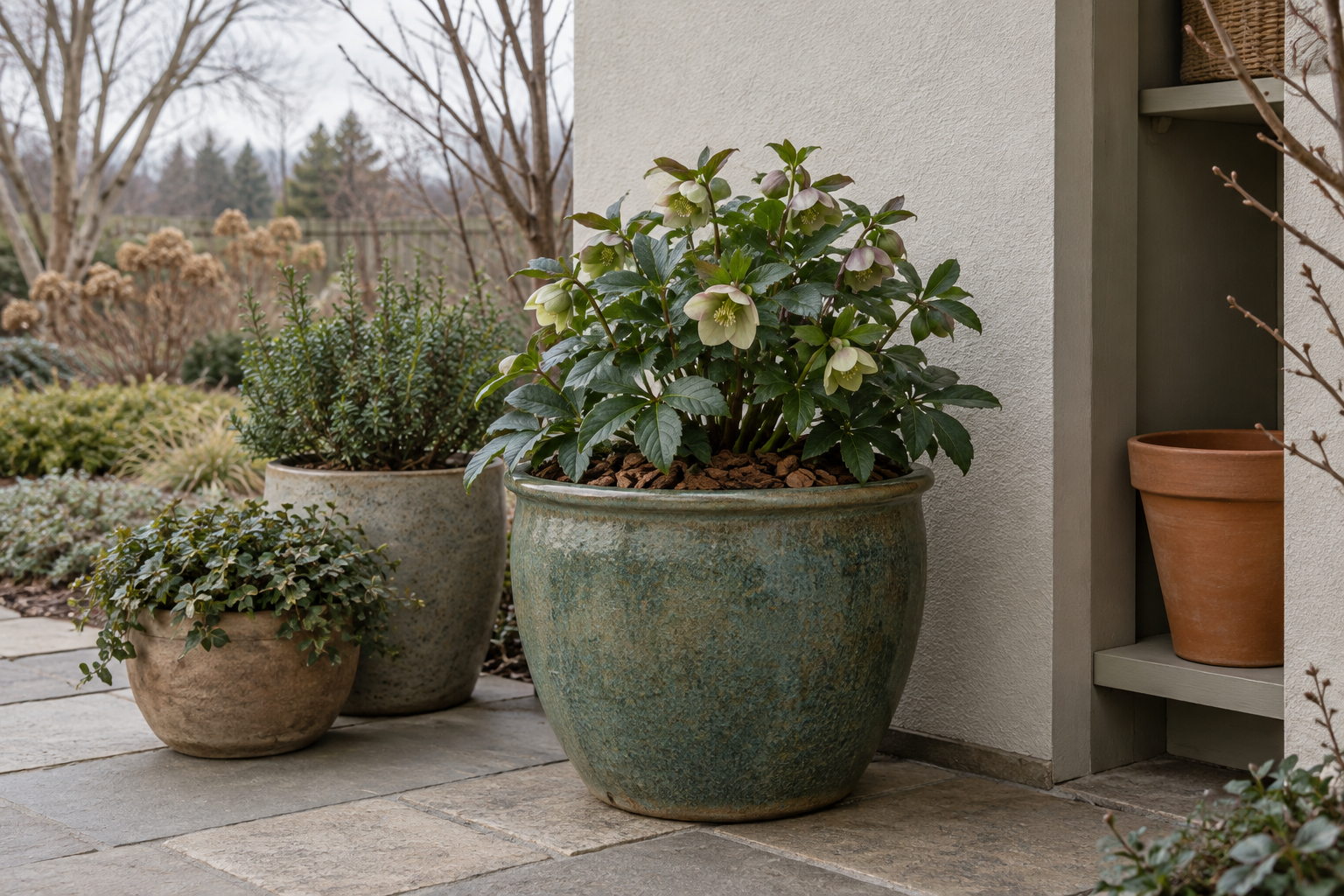
Can a hardy perennial survive winter in a pot?
Often it can, but a plant’s hardiness in the ground does not guarantee that its roots will be protected in an exposed container.
Yes, a locally hardy perennial can sometimes stay outdoors in its pot through winter. The important difference is that roots in a container are more exposed to cold and changing conditions than roots surrounded by garden soil. University of Illinois Extension recommends options such as sinking a pot into the ground or moving it to a protected location.
Before deciding, identify the perennial and check whether it is suited to your area. Then consider where the pot will spend winter and whether the container itself is appropriate for outdoor exposure. This guide is for hardy perennials that may remain outdoors, not tender summer plants that need a different overwintering plan.
Check the perennial, container, and site
A short assessment helps you choose a realistic method instead of applying one rule to every pot.
Find the plant’s name, including its cultivar if known, and look for plant-specific winter guidance from a reliable local source such as your Cooperative Extension. A perennial’s needs can vary by plant and growing conditions, so avoid assuming that a method suitable for one container will suit another.
Next, inspect the pot. Note its material, condition, drainage, and whether it is light enough to move safely. Finally, assess the location: is the container exposed, or can it be placed in a more protected spot? A balcony gardener with no ground access, for example, needs a different option from someone who can sink a pot into a garden bed.
- Plant: Confirm its identity and local outdoor-winter guidance.
- Pot: Check its material, condition, drainage, and portability.
- Site: Identify whether a more sheltered outdoor or unheated location is available.
- Routine: Choose a setup you can inspect for moisture during winter.
Choose a wintering route that fits your setup
The best option is the one that reduces exposure and is practical for your space and container.
Extension guidance for perennial patio containers describes several possibilities, including grouping pots, protecting them, moving them to a sheltered place, or sinking a container into the ground. These are options to weigh, not guarantees of survival. A protected, unheated location may be workable for a movable pot; an exposed balcony may leave you with fewer choices.
Use the comparison below to choose a starting plan. If a method is not practical—such as digging on a paved patio—do not force it. Use the best available shelter and check local advice for the specific plant and conditions.
| Option | How to set it up | What to consider |
|---|---|---|
| Move to a sheltered, unheated space | Relocate a movable pot to a protected area where it can still be checked. | Confirm the plant is suited to that location and keep monitoring soil moisture. |
| Group pots outdoors | Place containers together in the most protected available spot, while keeping them accessible for inspection. | Grouping is an exposure-reduction option, not a guarantee against cold damage. |
| Sink the pot into the ground | Where digging is feasible, set the container into garden soil as an alternative to leaving it fully exposed above ground. | This is not practical for many balconies, paved patios, or heavy planters. |
| Leave the pot in place | Use the most sheltered position available and make a plan to check the container through winter. | Consider the plant, pot material, site exposure, and whether the container can tolerate outdoor conditions. |
If the pot stays outside, make the setup easy to maintain
Choose shelter before winter weather arrives, then keep the arrangement accessible for simple checks.
Move the pot away from the most exposed part of a patio or balcony if a more protected position is available. If you have several containers, group them in that spot rather than scattering them across the area. Leave enough access to inspect the soil and check that water can drain as intended.
If you can sink a pot into the ground, plan the location and movement while the container is manageable. Illinois Extension includes this as an option for reducing the exposure of container-grown roots. It may not suit every plant, pot, or property, so treat it as one possible approach rather than a universal requirement.
Avoid relying on an improvised insulation method as a substitute for checking the plant’s needs. When local guidance recommends a particular approach, follow it for that perennial and your climate. Otherwise, a realistic plan—shelter where possible, routine observation, and a container that can tolerate the conditions—is more useful than a one-size-fits-all formula.
Manage moisture without watering by habit
A winter container still needs attention, but its soil condition—not a fixed calendar—should guide your checks.
University of Illinois Extension advises maintaining moisture in containers being overwintered. Check the soil periodically and use its condition to decide whether the plant needs water. The aim is to avoid letting the root area become completely dry, not to keep the soil constantly wet.
Think through drainage as well as moisture. A container that cannot drain properly may remain too wet, while a pot in a protected spot can still dry out. Evergreen plants may be easy to overlook because they retain foliage through the season. Check them along with the rest of your containers, and follow plant-specific advice where available.
Protect porous pots and plan for spring
The container has its own winter needs, separate from the perennial growing in it.
Penn State Extension advises storing porous pots such as terracotta in a protected place to reduce the chance of freeze damage. If a perennial is planted in a pot you would rather not leave outdoors, consider whether the plant or container can be moved safely. Check plant-specific advice before disturbing roots or changing the planting arrangement.
For an empty pot, remove leftover soil or plant debris as appropriate, inspect it for existing damage, and store it in a protected place if possible. In spring, assess the plant before assuming it has failed or removing any protection. If you are unsure whether it is recovering, consult a local gardening resource familiar with the plant and your region.
A practical checklist before winter
Use these steps to turn general guidance into a plan for the specific pot on your patio or balcony.
You do not need to use every method. Choose the steps that fit your plant, container, and available space, then make a note to check the pot during winter.
- Identify the perennial and check local, plant-specific advice for outdoor winter care.
- Inspect the pot’s material, condition, drainage, and whether it can be moved.
- Choose a workable route: a protected unheated space, a sheltered outdoor position, grouping, or sinking the pot where feasible.
- If the pot remains outside, check the soil periodically and respond to its condition rather than following a rigid watering schedule.
- If the container is porous, consider protected storage and determine whether the plant can be moved safely.
- Reassess the plant in spring and seek local guidance if it is unclear whether it is recovering.
Frequently asked questions
Can I leave a hardy perennial in its pot outside all winter?
Possibly, if the perennial suits your local conditions and the container and site are appropriate. Roots in pots are more exposed to cold than roots in the ground, so check plant-specific local guidance and consider shelter.
Should I bring a potted perennial indoors?
Not necessarily. This guide concerns hardy perennials that may remain outdoors, sometimes in a sheltered or unheated location. Tender plants have different needs; check the plant’s requirements before moving it into a heated home.
How often should I water a potted perennial in winter?
Check the soil periodically rather than watering on a fixed schedule. Illinois Extension advises maintaining moisture in overwintering containers, but the soil should not be kept constantly wet. Consider the plant’s needs and the pot’s drainage.
Can terracotta pots stay outside in freezing weather?
Penn State Extension advises storing porous pots such as terracotta in a protected place to reduce the chance of freeze damage. If a perennial is growing in one, check whether the plant or pot can be moved safely.
Is grouping pots enough to protect them?
Grouping is one option described in extension guidance, but it is not a guarantee. Consider the plant, container, local conditions, and available shelter, and check local advice for your setup.
Sources & further reading
Explore the original sources behind this article. Our editorial perspective is separate from the organizations we reference.
- [S1] Overwintering potted plants | Good Growing | Illinois Extension | Illinoisextension.illinois.edu
- [S2] Overwintering Perennial Patio Containers | Hort in the Home Landscape | Illinois Extension | Illinoisextension.illinois.edu
- [S3] Winter Outdoor Arrangementsextension.psu.edu
- [S4] Overwintering Plants in Containers | Container Gardens | Illinois Extension | Illinoisextension.illinois.edu