Is Your Child’s Halloween Costume Ready? A 5-Minute Fit and Visibility Check
Before trick-or-treating, check your child’s complete costume, shoes, bag, and light together. This quick test helps spot tripping hazards, blocked vision, and visibility gaps before you leave.
Start with the complete costume, not the mirror
A costume can look fine while your child is standing still and become awkward once they move.
To check whether a child’s Halloween costume is ready, have them put on the complete outfit they will wear outside: costume, layers, shoes, mask or makeup, bag, and light. Then watch them walk, turn, and carry the bag. If they stumble, cannot see clearly, or cannot manage an accessory, make an adjustment before heading out.
This five-minute check is a practical routine, not a formal safety test. The U.S. Consumer Product Safety Commission’s Halloween reminder, published October 12, 2026, calls attention to costume fit, visibility, and fire safety. It does not announce a new safety rule; use it as a prompt to check the outfit and follow any applicable product instructions. The suggestions below are for families in the United States, where local road layouts and rules can vary.
- Lay out every item the child plans to wear or carry.
- Check fit and movement from head to toe.
- Add visibility aids and test them in the actual outfit.
- Agree on an adult-supervised route and crossing habits.
Check fit, vision, and movement
Focus on the points most likely to interfere with a child’s steps or view.
Start at the feet. Ask your child to walk at their usual pace, turn around, and step up and down a curb or stair if one is available and safe to use. Look for hems, capes, or loose pieces brushing the ground or catching under a shoe. Check whether the shoes stay on securely and feel manageable; a costume accessory should not make ordinary walking difficult.
Next, ask your child to look left, right, up, and down without moving the mask or headpiece. If the costume shifts over their eyes, narrows their view, or makes turning awkward, adjust it or choose an alternative. A child who says they can see may still have trouble noticing things near the edge of their view, so watch as they turn and walk.
Try the bag, bucket, or other container too. Can the child carry it without dragging it, swinging it into others, or needing both hands for balance? If not, a smaller or lighter bag, a shorter handle, or an adult carrying the extra items may make the outfit easier to manage. Remove or secure any accessory that repeatedly slips, snags, or distracts the child.
- Hem and cape: nothing drags or catches underfoot.
- Footwear: shoes stay on and allow a steady walk.
- Mask or headpiece: the child can see and turn comfortably.
- Props and bag: the child can carry them without losing balance or attention.
Make the costume easier to notice
Combine visible details with a portable light, while remembering that no accessory guarantees visibility.
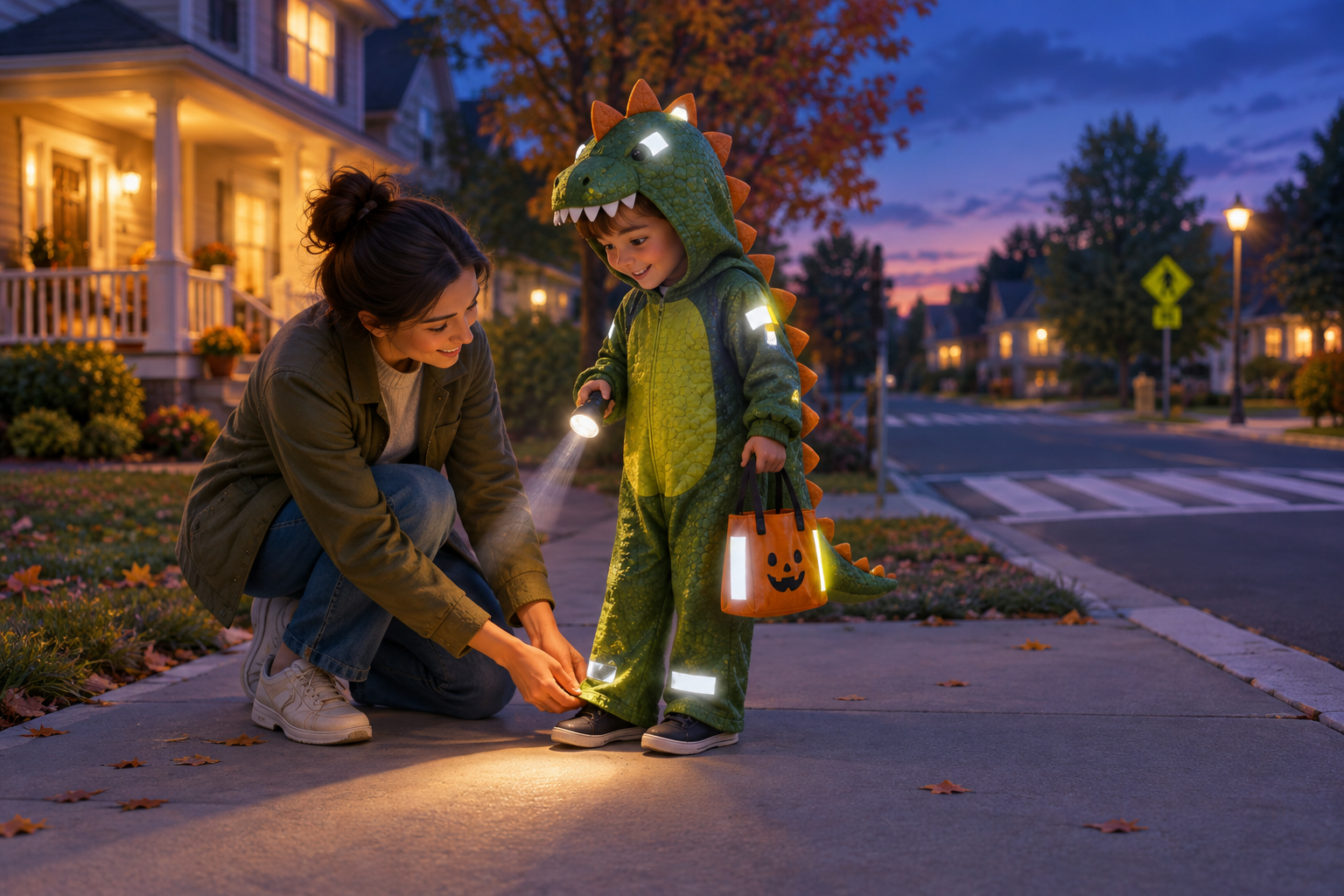
Look at the costume and bag together. Reflective tape or stickers can be added to areas likely to face approaching traffic, such as the front, back, and sides, if they are suitable for the material and do not interfere with the costume. Safe Kids recommends reflective details, a flashlight or glow stick, and light-colored clothing where practical.
Reflective material is different from material that simply looks bright. NHTSA explains that retroreflective materials can help drivers detect pedestrians at night by reflecting light toward its source. That benefit depends on light reaching the material; reflective details do not make a child visible in every situation or address risks such as a distracted driver. Visibility aids should complement adult supervision and careful crossing, not replace them.
Give the child the flashlight or glow stick they will actually use, and check that they can carry it alongside the bag. A flashlight can help the child see the path as well as provide a visible light source, but it is not a substitute for choosing a suitable route or watching traffic. If the costume is dark, adding reflective details and a light is more useful than assuming that one light-colored item makes the whole outfit easy to see.
- Consider reflective tape or stickers on the costume and bag.
- Use a flashlight or glow stick that the child can manage.
- Check the outfit from more than one direction in dim conditions if possible.
- Do not treat visibility aids as protection from every road hazard.
Do one full-outfit walk-through
A short rehearsal can reveal problems that are easy to miss when checking each item separately.
Put on the costume in the order your child will wear it outside, including a jacket or other layer if the weather calls for one. Give them the real bag and light. Then walk together along a clear indoor space or a safe area near home. Ask the child to walk, turn, look both ways, and hold the light while carrying the bag.
Watch for practical snags: a mask that shifts, a cape that trails, a bag that blocks the child’s view, or a light that is hard to hold. Make one change at a time and repeat the movement that exposed the problem. If the child still cannot see or walk comfortably, change the costume setup rather than asking them to manage through it.
As a separate check, review any labels or instructions that came with the costume and its accessories, especially fire-safety information. The CPSC’s reminder flags fire safety as a consideration, but specific products and materials can have different directions. Follow the product guidance rather than assuming that a costume is safe because it looks sturdy or is marketed for Halloween.
- Put on the complete outfit, including weather-appropriate layers.
- Add the actual shoes, bag, and light.
- Walk, turn, look around, and carry everything as you would outdoors.
- Adjust anything that drags, shifts, blocks vision, or is difficult to handle.
- Review product labels and instructions before leaving.
Pair the costume check with a road-safety plan
The route and adult supervision matter as much as the outfit’s visibility details.
Before leaving, decide who will accompany the child, where you plan to walk, and what to do if the group gets separated. Choose sidewalks and crossings where available, and use crosswalks or intersections where possible. NHTSA advises pedestrians to follow road rules and look for vehicles in all directions before crossing.
Pause at each crossing rather than assuming that a driver has noticed the group. Look in all directions and follow local signals and crossing rules. An adult’s presence does not remove every risk, so keep the child close enough for the supervision appropriate to their age, abilities, and the setting.
If sidewalks are missing or the route feels difficult to manage in the dark, consider a different route or a supervised event away from traffic. A costume that passes the walk-through is only one piece of the evening’s plan.
A final checklist before trick-or-treating
Use this quick scan at the door after the child is dressed, not earlier in the day.
A last-minute costume check works best when the child is wearing everything they will actually take outside. If a change is needed, prioritize comfortable walking and clear vision over preserving a particular accessory or detail.
- The costume and layers fit without trailing fabric.
- The child can see clearly and turn their head.
- The shoes stay on and feel manageable.
- The child can carry the bag and light without difficulty.
- Reflective details are in place where practical; a light is ready.
- Labels and product instructions have been checked.
- An adult knows the route, crossing plan, and supervision arrangement.
| Check | Look for | If it is a problem |
|---|---|---|
| Fit | Nothing drags, catches, or makes steps awkward | Shorten, secure, or remove the troublesome piece |
| Vision | The child can see around them and turn comfortably | Adjust or replace a mask or headpiece that blocks the view |
| Visibility | Reflective details and a manageable light are ready | Add suitable reflective details or choose a light the child can carry |
| Walking plan | The adult knows the route and crossing approach | Choose a simpler route or a supervised alternative |
Frequently asked questions
What is the quickest way to check a child’s Halloween costume?
Have the child wear the full outfit, including shoes, bag, and light. Watch them walk, turn, look around, and carry everything. Fix anything that drags, shifts over their eyes, or makes walking difficult.
Does reflective tape guarantee that drivers will see a child?
No. NHTSA says retroreflective materials can help drivers detect pedestrians at night, but visibility aids do not address every risk and cannot guarantee that a driver will see or respond. Pair them with adult supervision and safe crossing habits.
Should a child wear a mask while trick-or-treating?
Check whether the child can see clearly and turn comfortably while wearing it. If the mask restricts their view or shifts as they move, adjust it or consider face paint or another option that does not obstruct vision.
What should I do if the costume makes walking awkward?
Shorten or secure trailing fabric, remove an awkward accessory, or change the shoes or bag setup. Repeat the walk-through after making changes. If the child still cannot move comfortably, choose a simpler costume arrangement.
Sources & further reading
Explore the original sources behind this article. Our editorial perspective is separate from the organizations we reference.