How to Prepare a Pet Evacuation Kit and Plan
Prepare for an evacuation with a portable kit, current pet identification and records, and a destination that has agreed to take your animal. Use this guide to tailor the plan to your pet.
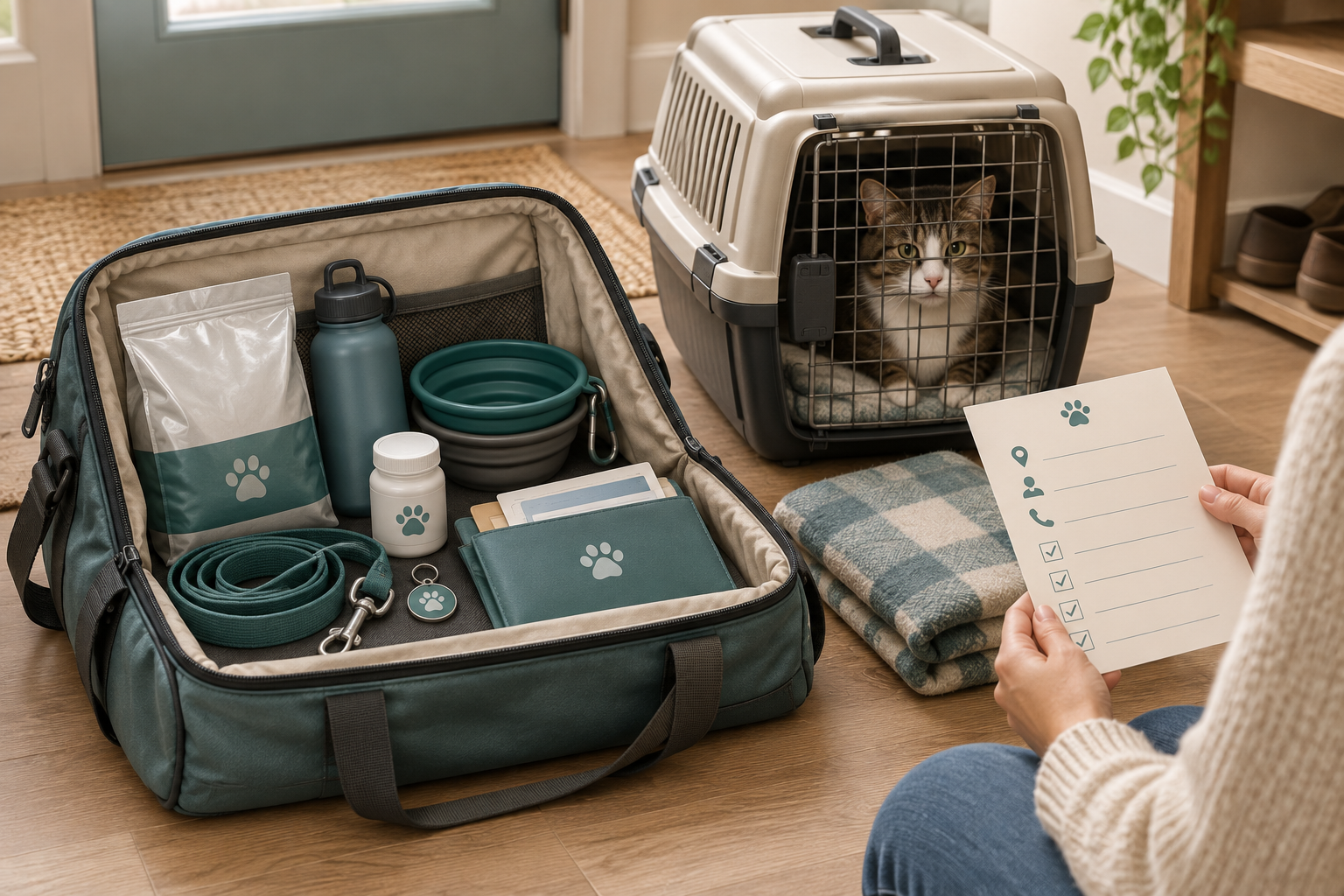
A pet evacuation plan needs a kit and a destination
Prepare for both the journey and the first place your pet can safely stay.
A practical pet evacuation plan has two parts: a portable kit and a confirmed destination. A bag of supplies does not help much if you have nowhere that will accept your animal, while a lodging option is harder to use if you leave without needed food, medication, or records.
Do this planning before an emergency, when you can check requirements and consider backup options. Shelter policies and availability vary by location and situation. The ASPCA advises arranging pet-friendly lodging in advance rather than assuming an emergency shelter will accept animals. When an evacuation is advised, follow local officials’ instructions and leave promptly if conditions require it.
Choose a place your pet can actually stay
Verify the destination’s rules and keep another option in reserve.
Make a short list of possible destinations: a trusted person who has agreed to help, pet-friendly lodging, boarding, or an appropriate local shelter. Contact each option directly. Ask whether it accepts your kind of animal, whether advance reservations or records are needed, and what rules apply to carriers, leashes, or other equipment.
Keep the address and phone number for your primary option and a backup with your plan. If you are relying on a friend or relative, agree in advance on how they would reach your pet and supplies if you were away. Recheck arrangements periodically; policies, availability, and contact details can change. For an emergency affecting your area, verify current instructions with local authorities and the destination before setting out when it is safe to do so.
Make identification and care information easy to find
A caregiver or destination may need to identify your pet and understand its routine quickly.
Check that your pet’s ID tag has current contact information. If your pet has a microchip, review the registration details and update the phone number or other contact information if needed. A microchip and an ID tag are separate ways to help connect a found pet with its owner; keeping both current makes your information easier to retrieve.
Prepare a concise record with your veterinarian’s contact details, relevant health information, medication names and instructions, and records a destination may ask for. Save a recent photo of your pet where you can access it, and consider a printed copy in case your phone is unavailable. Keep the records with the kit or in another place you can reach during an evacuation, while sharing essential care details with anyone who may transport or look after the animal.
Pack a practical pet evacuation kit
Organize the items needed for food, care, transport, cleanup, and familiarity.
Use a sturdy bag or container that is easy to find and carry. The ASPCA’s September 1, 2026 guidance lists food and water, bowls, medications, a spare collar and leash, medical information, familiar items, cleanup supplies, and a suitable carrier among items to consider. It suggests 7–10 days of food and water and two weeks of medication. Those are the ASPCA’s stated quantities, not a universal requirement: your pet’s needs, the likely duration away, storage conditions, and veterinary instructions may call for a different plan.
Ready.gov also recommends preparing extra medication and including familiar items such as a toy or bedding. Water and food can add substantial weight, so consider how the supplies will be transported, especially if one person is responsible for more than one animal.
| Item | Why it may help | What to check |
|---|---|---|
| Familiar food, water, and bowls | Supports the pet’s usual feeding routine while away. | Plan amounts and containers around your animal and expected trip; store food as directed. |
| Medications and care notes | Keeps treatment and instructions together. | Ask your veterinarian about quantity, storage, and any additional supplies. |
| Leash, harness, collar, or carrier | Helps you transport and manage the animal. | Choose equipment suitable for the species, size, and behavior of your pet. |
| Medical records, contact details, and a recent photo | Makes important information easier to share or retrieve. | Keep contact information current and check what your destination requires. |
| Cleanup supplies and a familiar item | Helps with care in temporary surroundings and brings a recognizable object. | Choose supplies appropriate to the animal, such as waste bags or litter supplies. |
Adapt supplies to species and health needs
The right transport and care items depend on the animal, not just the size of the bag.
For a dog, a suitable leash or harness and a way to manage waste may be useful. For a cat, consider a secure carrier and familiar litter supplies. These are examples, not a complete checklist for every pet. Birds, reptiles, and small animals can have different transport, temperature, feeding, and handling needs. Ask a veterinarian familiar with the species what arrangements are appropriate.
If your pet has a chronic condition, a special diet, or prescribed medication, ask the veterinarian how to prepare for a disruption and how medication should be stored. Do not change a dose or substitute a treatment based on a general preparedness list. Write down instructions clearly enough that another caregiver can follow them, and check destination requirements for any records or supplies they need.
Store the kit and make the handoff simple
Accessibility and a clear handoff turn supplies into a plan someone can use under pressure.
Keep the kit somewhere accessible rather than behind items you would need to move first. If it is too heavy or you have multiple pets, divide it into clearly labeled bags and decide who will carry each one. Store a copy of essential contacts and care instructions where you can access it without relying solely on a phone.
Tell household members or a trusted caregiver where the kit is, where the pet could go, and how to reach that destination. Include daily feeding instructions, medication directions, and any handling concerns. Set a reminder to check food and medication dates, update records and contact details, and replace anything used. Follow product labels and veterinary advice for storage; not every supply remains usable indefinitely.
This pet-specific plan can sit alongside a household emergency communication plan, which covers how people will contact one another if separated. Keep the animal’s destination, transport, and care instructions together so a caregiver does not have to search through unrelated notes.
When an evacuation is advised
Use the preparation you have made, while putting immediate safety and official directions first.
Follow local evacuation instructions. If it is safe to do so, secure your pet, take the kit and essential records, and contact your chosen destination to confirm it can still accept the animal. If your first option is unavailable, use the backup you identified. Do not delay leaving to complete a checklist when conditions are becoming unsafe.
To get started today, confirm a primary destination and one backup, check your pet’s ID and microchip details, then assemble a carryable kit based on your animal’s needs. Share its location and the care notes with someone who may need to help. Review the arrangements when your pet’s health, household, or local options change.
- Confirm a pet-friendly destination and a backup, including their current requirements.
- Update identification and microchip contact details; gather useful health information and a recent photo.
- Pack supplies tailored to your animal and ask your veterinarian about medication, storage, or species-specific needs.
- Show a trusted caregiver where the kit is and how to follow the care instructions.
Frequently asked questions
How much food and water should I put in a pet evacuation kit?
Plan around your animal’s needs, the likely time away, storage, and how the supplies will be carried. ASPCA guidance dated September 1, 2026 suggests 7–10 days of food and water, but that is source-specific guidance rather than a universal amount.
Should I pack my pet’s medication?
Include prescribed medication and clear instructions as appropriate, and ask your veterinarian how much to keep ready and how to store it. ASPCA guidance lists two weeks of medication, but the right amount and storage approach depend on the prescription and the animal.
Can I assume an emergency shelter will take my pet?
No. Shelter acceptance and requirements vary. Check local arrangements in advance and identify alternatives such as pet-friendly lodging, boarding, or a trusted caregiver. Confirm current details directly.
How should I prepare for a bird, reptile, or small animal?
Use a species-specific plan rather than relying only on a dog-and-cat checklist. Ask a veterinarian familiar with your animal about safe transport, temperature, food, handling, and other supplies.
Sources & further reading
Explore the original sources behind this article. Our editorial perspective is separate from the organizations we reference.
- [S1] Disaster Preparedness for Pets: What to Plan and Pack | ASPCAaspca.org
- [S2] Prepare Your Pets for DisastersYour pets are important member of your family! This is why they should be included in your family’s emergency plan.To prepare for the unexpected, keep your pets in mind as you follow these tips:1. Make a plan.ready.gov