How to Make a Holiday Spending Plan Before You Shop
Set one holiday spending limit, budget travel and other costs before gifts, then track purchases so you can adjust when plans change.
Start with one total holiday spending limit
Treat the limit as a boundary for the whole season, not a target you have to spend.
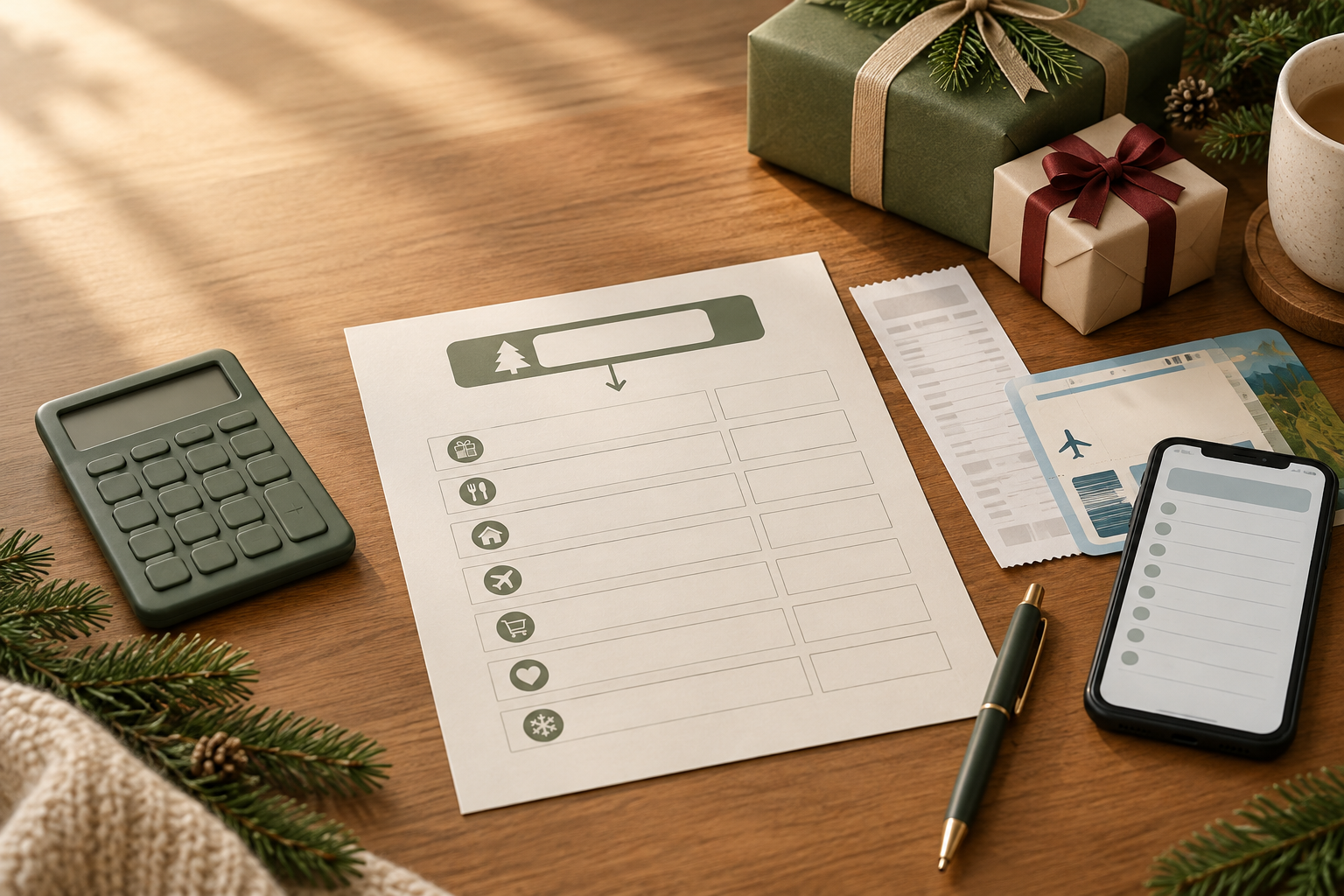
To make a holiday spending plan, first choose one total amount for the celebrations and gifts you expect to pay for. Then list the costs beyond gifts, set aside amounts for those plans, and divide what remains among recipients. Keep a running record of purchases so you can see whether the plan still fits as details change.
There is no single holiday budget that works for every household. Begin with your broader spending plan: account for regular bills and everyday needs before deciding what, if anything, is available for seasonal spending. If the amount you can comfortably set aside is small, that is useful information for planning—not a reason to borrow or spend beyond your means.
The CFPB recommends setting a seasonal limit and considering gifts, travel, parties, decorations, and other holiday costs. Its archived guidance dates from 2011, so use it as general budgeting guidance, not evidence about current shopping habits. The practical principle remains useful: decide the boundary before shopping begins.
- Choose a total based on your own available funds and priorities, not a suggested average or percentage.
- Include celebrations you observe and costs you expect to cover; leave out categories that do not apply.
- If the total does not fit alongside regular expenses, revise the plans or the limit before making purchases.
List the costs that are not gifts
Small and irregular expenses can take up room in a plan, so estimate them before allocating gift money.
Write down the celebrations and logistics you expect to pay for. Depending on your plans, the list might include airfare or fuel, lodging, meals, groceries, hosting supplies, party contributions, decorations, postage, gift bags, and delivery charges. Include taxes or fees when you can estimate them. You do not need to use every category; the point is to make your own likely costs visible.
Look at recent account activity, receipts, or last year’s records if they help you estimate amounts. These are starting points, not guarantees: this year’s guest list, travel plans, prices, and responsibilities may differ. CFPB guidance on assessing spending specifically encourages reviewing less-frequent costs such as gifts, travel, and seasonal expenses, and using account history or receipts to make a plan more realistic.
Avoid counting the same cost twice. For example, if a grocery trip includes both ordinary weekly food and a holiday meal, estimate only the portion you consider part of the holiday plan. If another person will share a cost, record only the amount you expect to pay, and revisit it if the arrangement changes.
- Travel: transportation, lodging, parking, and local travel.
- Food and hosting: groceries for a gathering, takeout, or a contribution to someone else’s meal.
- Other plans: decorations, events, postage, wrapping, and delivery.
Reserve non-gift costs, then set gift amounts
Allocate in order: total limit first, planned celebrations second, gifts with what remains.
Subtract your estimated non-gift costs from the total limit. The remainder is the most you have available for gifts under this version of the plan. If the remainder is not enough for the list you had in mind, adjust the list, the plans, or the limit before shopping rather than silently adding a new spending category.
For example, suppose a household chooses a total holiday limit of $900. It estimates $220 for travel, $180 for a meal and hosting, $60 for decorations and event costs, and $40 for postage and delivery. Those non-gift plans total $500, leaving $400 for gifts. These figures are only an illustration; they are not a recommended budget.
Next, write down recipients and assign each a flexible amount. The amounts should add up to no more than the gift remainder. You might keep a small portion unassigned for an overlooked recipient or a price difference, but count it inside the gift total—not on top of it. A list also makes it easier to choose a different kind of gift if a preferred item exceeds its amount. CFPB holiday guidance recommends listing recipients, assigning amounts, and tracking purchases.
| Category | Planned amount | Running balance |
|---|---|---|
| Total holiday limit | $900 | $900 |
| Travel | $220 | $680 |
| Meal and hosting | $180 | $500 |
| Decorations and event costs | $60 | $440 |
| Postage and delivery | $40 | $400 |
| Available for gifts | $400 | $0 |
Choose gifts that fit the plan
A recipient list can guide choices without requiring identical amounts or expensive purchases.
Gift amounts do not have to be equal. You can set them according to your own priorities, household traditions, and the number of people on your list. If a planned item costs more than its amount, decide deliberately whether to choose a lower-cost option, change another gift allocation, or revise the plan elsewhere.
Lower-cost approaches can include a shared gift exchange, a homemade item, a meal together, or agreeing to skip gifts among some adults. These are options to discuss, not rules. If you are changing a tradition, communicate early and keep the alternative comfortable for the people involved.
When comparing gifts, consider the full cost rather than the shelf price alone. Shipping, tax, accessories, or travel to collect an item may affect the amount you actually spend. If you are ordering something that may need to be returned, keep the receipt and note the return deadline so you can account for a refund or replacement accurately.
- Record the expected total cost, not only the displayed item price.
- Mark a gift as planned, purchased, or still undecided to avoid duplicate buying.
- If plans change, update the gift amounts and overall balance together.
Track purchases and make adjustments
A simple record is useful only if you update it after spending and check the remaining amount.
Choose a tracking method you will actually use: a phone note, spreadsheet, paper list, or budgeting tool. For each purchase, record the date, category, amount, and whether it is paid or still owed. Keep the receipt or order confirmation for returns and to check the final charge. The FTC’s consumer budgeting guidance describes a budget as a written plan and recommends recording spending and comparing it with the plan.
Check the running total after purchases and when plans change. If travel costs rise, for example, subtract the difference from the amount available for gifts or another category. Do not treat the original estimate as fixed if the actual plan has changed. If you return an item, note the refund when it appears rather than assuming it has already restored your available funds.
A quick check can use three columns: planned, spent, and remaining. Keep the full-season limit visible, and compare actual spending with both the category amount and the overall amount. That helps identify whether a small overage in one place can be offset by a planned change elsewhere—or whether the total needs a broader revision.
- Update the list soon after each purchase, not only at the end of the season.
- Separate a pending order from a completed charge if that distinction helps you avoid counting it twice.
- Recalculate the remaining balance when a cost, recipient, or event changes.
Decide how you will pay before checkout
Payment choices should be part of the plan, particularly when purchases may not be paid off immediately.
Before shopping, decide which funds or payment methods you expect to use. A cash or debit purchase should still be recorded in the same plan as a card purchase; otherwise, the running total will be incomplete. If you use a credit card, make a specific repayment plan that takes the card’s terms and your other obligations into account. Do not assume that a future refund, bonus, or other uncertain money will cover the balance.
The CFPB’s holiday spending guide advises choosing a payment plan and checking purchases against the budget. This is general educational guidance, not individualized financial advice. Credit terms vary, and the effect of carrying a balance depends on the account and the person’s circumstances. If the planned repayment does not seem workable, consider changing the purchase or the celebration plan before charging it.
A useful checkout pause is to ask: Is this included in the holiday limit? What category will it come from? How will I record it? If the answer requires adding money that is not available, wait and revise the plan rather than treating the purchase as outside the budget.
Use a short checklist before you shop
Turn the plan into a repeatable routine you can revisit as the season unfolds.
The most useful plan is one you can adjust. Set it up before buying, then check it whenever a major cost changes or you are about to make a purchase that could affect the overall limit. A written list is enough; a more elaborate tool is optional.
- Choose one total holiday limit that fits with regular expenses.
- List the travel, food, hosting, decorations, postage, and other costs you expect to cover.
- Estimate those costs using current plans and, where helpful, receipts or account history.
- Subtract non-gift costs from the total and set flexible amounts for recipients from what remains.
- Choose a payment approach and record each purchase against the relevant category.
- Review the remaining balance when costs or plans change, then adjust before spending more.
Frequently asked questions
How much should I budget for holiday spending?
There is no universal amount that fits every household. Start with regular expenses and other priorities, then set a total that reflects what you can allocate to the celebrations you plan to cover. The example in this guide is illustrative, not a recommended figure.
What should a holiday spending plan include besides gifts?
Include the costs you expect to pay, such as travel, lodging, meals, hosting, decorations, events, postage, wrapping, and delivery. Add only the categories that apply to your plans, and avoid counting the same expense twice.
How do I divide my holiday budget among gifts?
First subtract expected non-gift costs from your total limit. Make a recipient list and assign flexible amounts that add up to no more than the remainder. Adjust the list or the plans if the amounts do not fit.
What should I do if I go over one category’s amount?
Update the record and check the full-season balance. Decide whether to reduce another planned category, choose a different purchase, or revise the overall plan. Avoid ignoring the overage or assuming extra money will appear later.
Can I use a credit card for holiday purchases?
You can include card purchases in the plan, but decide how you intend to repay them before charging. Consider the account’s terms and your other obligations. If the repayment plan is unclear or does not fit, revise the purchase or celebration plan.
Sources & further reading
Explore the original sources behind this article. Our editorial perspective is separate from the organizations we reference.
- [S1] Plan your spending to avoid holiday debt | Consumer Financial Protection Bureauconsumerfinance.gov
- [S2] A five-step spending plan to avoid holiday debt | Consumer Financial Protection Bureauconsumerfinance.gov
- [S3] Making a Budget | consumer.govconsumer.gov
- [S4] Assess your spending | Consumer Financial Protection Bureauconsumerfinance.gov