How to Make Your Windows Safer for Birds During Fall Migration
Reflections and clear views through glass can confuse birds. Learn how to spot risky windows, choose visible treatments, and avoid fixes that leave most of the glass exposed.
Why birds hit windows
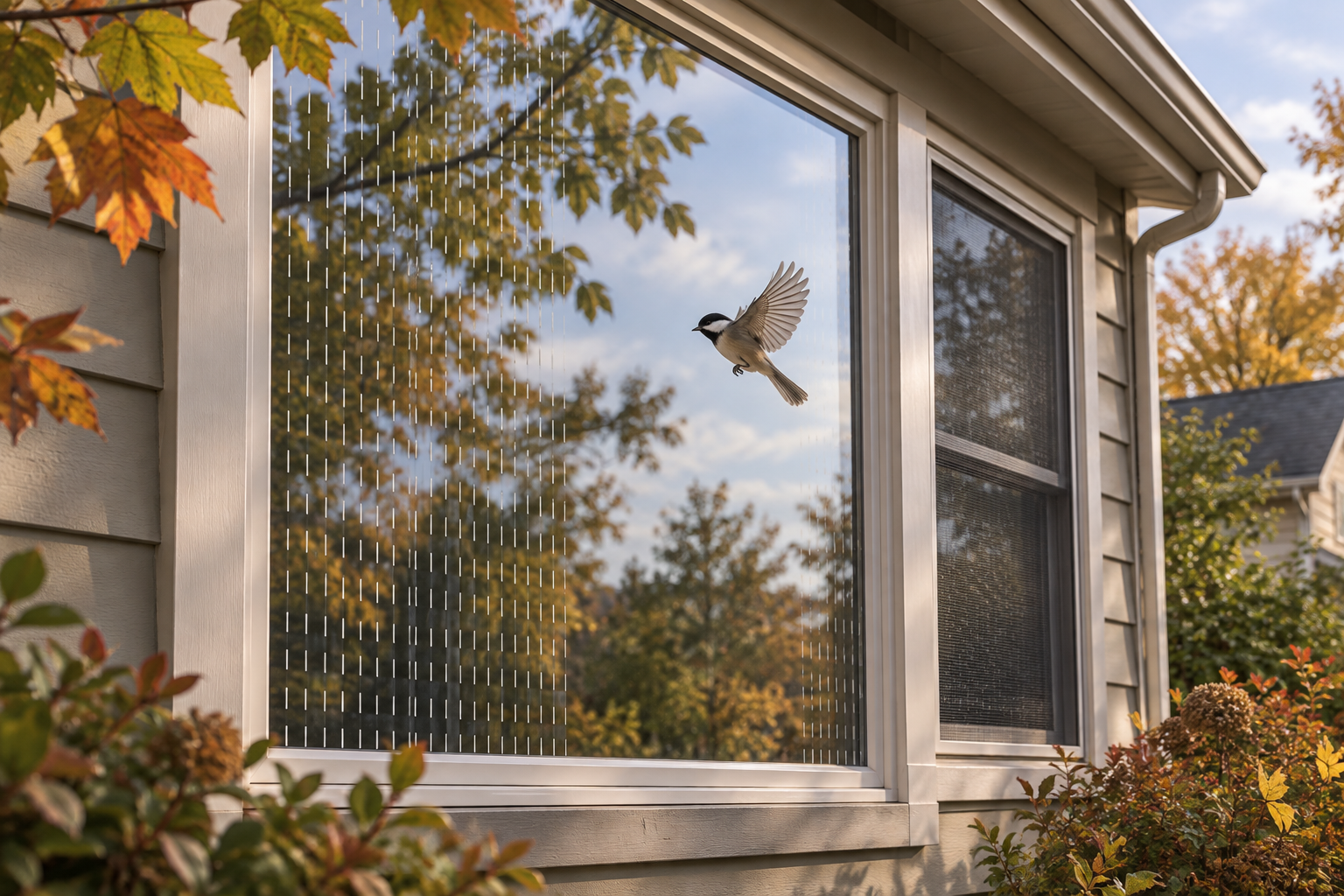
Glass can look like open space, either because it reflects the outdoors or because birds can see through it.
To make your windows safer for birds during fall migration, identify panes that reflect the outdoors or appear transparent, then make the glass visible from outside. Exterior insect screens, markings spread across the pane, or hanging cords are options to consider. Turning off unnecessary lights near windows at night is another practical step. These measures can reduce risk, but none guarantees that collisions will stop entirely.
A window may reflect trees, shrubs, or open sky, making the reflected scene look like real space. A clear pane can also show plants or landscape on the other side, seeming to offer a passage. Nighttime lighting is a separate concern for birds around buildings. The Cornell Lab of Ornithology notes that collisions are more frequent around dawn and dusk during spring and fall migration; the U.S. Fish & Wildlife Service notes that collisions occur year-round. Fall is a useful reminder to check your home, not a nationwide deadline: migration timing varies by region.
Find the windows that need attention
An outdoor inspection helps you focus effort on the panes that look most like open space.
Walk around your home and look at each window from outside. Notice whether it mirrors nearby trees or sky, or whether you can see plants and landscape through it. Check at different times of day: the sun’s angle and indoor lighting can change how a pane appears. A window that seems unremarkable from inside may reflect strongly from outdoors.
Prioritize panes where you have seen a collision or repeated bird approaches, as well as those with strong reflections or clear views through the glass. You can jot down the window and the conditions—such as bright sun or dusk—when you notice activity. This is a practical way to organize your work, not a formal risk test. A lack of observed collisions does not prove that a pane is safe.
If you rent, ask your landlord or property manager before attaching anything to the exterior, especially if the building has rules about screens or window coverings. Removable options may be appropriate, but they still need to cover the glass effectively and remain secure.
- Inspect panes from outdoors rather than relying only on how they look from inside.
- Look for strong reflections, transparent views, and windows associated with observed collisions.
- Record which panes concern you and prioritize those first.
Choose a treatment birds can see
The aim is to make the risky glass recognizable as a barrier across the area where birds might approach.
Treatments on the outside of the window are visible to birds before they reach the glass. Options include an exterior insect screen, markings applied across the pane, or hanging cords in front of it. Choose an approach that suits the window and can be installed securely. Follow product directions, and check periodically for peeling, gaps, or loose parts.
For markings intended to deter small birds, Cornell Lab advises covering the window with gaps no wider than about 2 inches. That spacing is guidance for coverage, not a guarantee that every pattern or product works equally well. Cornell Lab notes that hanging cords are an exception because they can remain visible at wider spacing. Its guidance does not establish a universal cord layout, so follow product instructions and cover the area of concern. External insect screens can also reduce collisions.
| Approach | How it can help | What to check |
|---|---|---|
| Exterior insect screen | Adds a visible layer in front of the glass and can reduce collisions. | Make sure the screen covers the pane of concern and stays fitted and intact. |
| Exterior markings | Make the glass easier to perceive as a surface rather than open space. | For small-bird deterrent markings, cover the window and keep gaps no wider than about 2 inches. |
| Hanging cords | Create a visible barrier in front of the pane. | Cover the area of concern, secure the cords, and follow product guidance. |
| One or two decals | Mark only a small part of the glass. | Sparse decals leave most of the pane untreated and are not a reliable stand-alone solution. |
Avoid fixes that leave most of the glass untreated
A symbol that stands out to people may still leave large areas of reflective or transparent glass unchanged.
A lone sticker, a few scattered decals, or a hawk silhouette may seem like an easy fix, but each can leave broad areas of the window looking like open space. Cornell Lab cautions that sparse stickers are not a reliable solution and that hawk silhouettes do little to deter birds. The practical issue is coverage: a small shape does not necessarily make the rest of the pane look like a barrier.
If you already have decals, assess the entire window from outdoors. Ask whether visible markings or another treatment cover the risky area—not merely whether you can spot a sticker from inside. If large sections remain reflective or transparent, improve coverage across those sections rather than moving one small decal to another corner.
Reduce unnecessary nighttime lighting
Changing light use can address a different collision risk from daytime reflections and transparent views.
Turn off indoor and outdoor lights near windows when they are not needed, particularly overnight during migration periods. Close blinds or curtains when appropriate, and consider whether exterior lights can be switched off or directed away from windows. Start with decorative or otherwise unnecessary lights while keeping lighting needed for household activities.
The U.S. Fish & Wildlife Service identifies reducing unnecessary nighttime lighting as a practical measure for preventing building collisions. This does not alter a window’s daytime reflections or clear views, so pair lighting changes with a suitable treatment for glass that appears hazardous.
Use a simple inspection-and-follow-up routine
A short plan turns general advice into manageable work and helps you notice when a treatment needs adjustment.
You do not have to treat every window at once. Start with the panes that look most reflective or transparent, or where you have observed collisions. Once those are treated, inspect the result from outdoors and keep an eye on any windows where bird activity continues.
- Choose the highest-priority panes based on reflections, views through the glass, or observed collisions.
- Install an exterior screen, suitable markings, or hanging cords, following product and building instructions.
- Turn off nearby lights at night when they are not needed, especially during local migration periods.
- Recheck treated windows from outside. Repair gaps, loose cords, damaged screens, or markings that have peeled away.
- If collisions continue, review the coverage and condition of the treatment and adjust the area that remains exposed.
Frequently asked questions
Do window decals stop birds from hitting glass?
A few isolated decals are not a reliable fix because they leave much of the pane untreated. For markings intended to deter small birds, Cornell Lab advises covering the window with gaps no wider than about 2 inches.
Do hawk silhouettes keep birds away from windows?
Cornell Lab says hawk silhouettes do little to deter birds. Making the risky glass itself visible is a more practical approach.
Should bird-safe window treatments go inside or outside?
Exterior treatments are visible to birds before they reach the glass. Exterior screens, markings, and hanging cords are options; follow product instructions for installation.
Are bird-window collisions only a fall problem?
No. Collisions occur year-round. Migration is a useful time to review windows, but its timing varies by region and window risks can persist beyond the season.
Will turning off lights prevent daytime window collisions?
Turning off unnecessary nighttime lights can address lighting-related risks, but it does not change daytime reflections or clear views through glass. Pair lighting changes with an appropriate treatment for risky panes.
Sources & further reading
Explore the original sources behind this article. Our editorial perspective is separate from the organizations we reference.