Before You Turn On the Heat: A Home Heating Safety Check
Before using your furnace, fireplace, wood stove, or portable heater, test your alarms, arrange any due professional inspections, and make sure equipment is set up according to its instructions.
Start with smoke and carbon monoxide alarms
Make sure alarms are present, appropriately placed, and working before regular heating use begins.
Before you use home heating equipment, test your smoke and carbon monoxide (CO) alarms and check their placement. The U.S. Consumer Product Safety Commission (CPSC) recommends smoke alarms on every level of a home and inside each bedroom. It recommends CO alarms on every level and outside sleeping areas.
Test alarms monthly according to each device’s instructions. While checking them, look for damage or warning signals and review the manufacturer’s directions for batteries and end-of-life alerts. If an alarm is missing, damaged, or does not respond as directed, address that rather than assuming another alarm covers the gap.
Alarm placement details can vary by device and local requirements. Follow the instructions for your specific alarm and check applicable local rules; this general checklist does not replace either.
- Test each alarm using its test button or the procedure in its manual.
- Check that alarms are in the recommended locations for your home and device.
- Note any missing, damaged, or nonworking alarms and arrange to address them.
Arrange a professional heating-system inspection
A professional can assess equipment and exhaust components that a simple visual check cannot evaluate.
CPSC recommends annual professional inspection of fuel-burning heating systems and related components. Depending on your home, this may include a furnace, fireplace, chimney, flue, or vent. Check your equipment’s maintenance instructions and local requirements too; they may specify what applies to your particular system.
If an inspection is due, schedule it before you rely on the equipment regularly. When you book, describe the appliance and mention any concerns, such as visible damage, an unexpected shutdown, or unusual operation. Ask what the inspection covers, including relevant venting components.
Keep any service records and recommendations together so you can tell when the equipment was last checked and what follow-up remains. A household glance at an appliance is not a substitute for the professional inspection.
- Gather the equipment model information and any service records you have.
- Ask a qualified service provider what inspection is appropriate for your equipment.
- Record the appointment and any recommended follow-up.
Set up portable heaters with clear space
Safe positioning and supervision are part of using a portable heater, not just a one-time pre-season task.
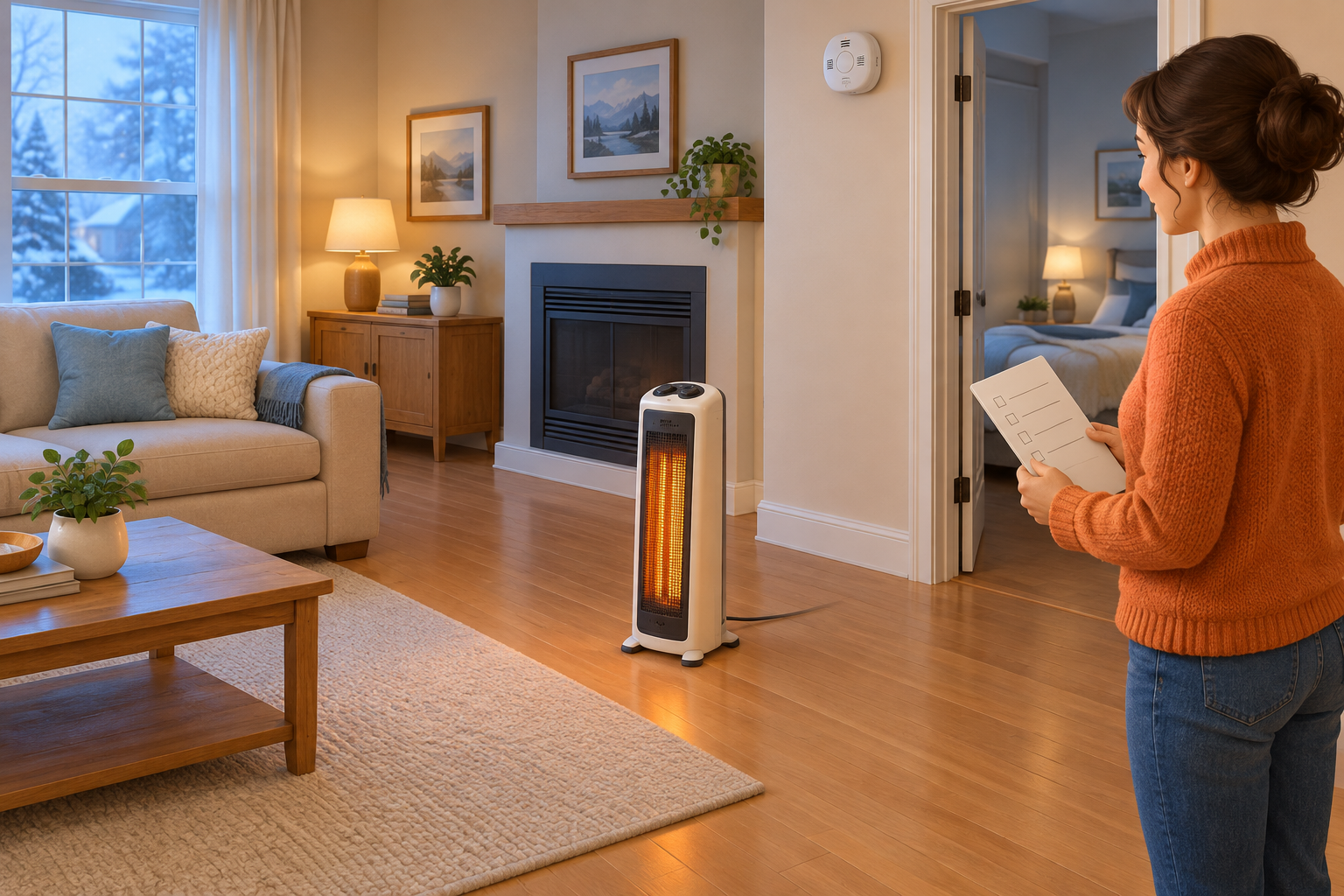
Keep combustible items at least three feet from a portable heater. Move furniture, bedding, curtains, paper, and other items that could catch fire out of that area. If the manufacturer calls for greater clearance, follow the larger distance.
Set the heater on a stable surface in a location where it is less likely to be bumped or create a trip hazard. Follow its instructions for placement, power, and operation. The U.S. Fire Administration (USFA) advises turning portable heaters off when you leave the room or go to bed; do not leave one operating unattended.
Before switching it on, check that the clear area is still clear and that you can turn the heater off when you leave. A room arrangement can change, so make this a quick check each time you use it.
- Keep at least three feet between the heater and combustible items, or more if its instructions require it.
- Place the heater where it is stable and less likely to be knocked over.
- Turn it off when leaving the room or going to bed.
Review each appliance’s instructions before use
A brief, equipment-specific review helps you avoid treating every heater or alarm as if it worked the same way.
Read the manufacturer’s instructions for your furnace, fireplace, wood stove, or portable heater, especially if you have not used it recently or have moved it. Confirm the intended controls and any placement or maintenance requirements. For alarms, use the separate instructions for testing and upkeep.
Look for visible damage without opening equipment panels or attempting repairs. If a component appears damaged, a vent seems blocked, or the appliance behaves unexpectedly, do not use it until you have consulted a qualified professional. Do not climb onto a roof or try to clear or repair a system if you are not qualified to do so.
If you are unsure whether a concern is significant, describe what you observed to a qualified service provider rather than experimenting with the equipment. Inspection and repair needs depend on the appliance and home.
Know when to stop and get help
Preparation includes recognizing when a household check is not enough.
Do not use heating equipment that appears damaged, has a suspected venting problem, or is not working as expected. If you can switch it off safely, do so, keep people away from the concern, and contact a qualified professional. Avoid adjusting, disassembling, or repairing the equipment yourself.
If you believe there is immediate danger, leave the home and contact emergency services. When requesting service for a non-emergency concern, share the appliance type, model information if available, and what you noticed. A clear description helps the professional assess what to check without requiring you to investigate the fault.
Turn your checks into a simple household plan
A short record makes it easier to track what is ready and what still needs attention.
Rather than repeating a long checklist each time you use the heat, keep a brief note of alarm tests, inspection dates, and unresolved concerns. Use it to decide what is ready for normal use and what needs professional attention. These are organizational steps, not a guarantee that equipment is safe.
- Test smoke and CO alarms monthly and follow each device’s maintenance instructions.
- Record when fuel-burning equipment and related components were professionally inspected, and schedule service when due.
- Keep appliance instructions and service records somewhere household members can find them.
- Before using a portable heater, confirm the required clearance and plan to switch it off when leaving the room or going to bed.
- Leave damaged, blocked, or unexpectedly operating equipment unused until a qualified professional advises you.
| Item | Record or check | Next action if unresolved |
|---|---|---|
| Smoke and CO alarms | Test date, placement concern, or warning signal | Follow device instructions and address missing, damaged, or nonworking alarms. |
| Fuel-burning equipment | Last inspection date and any service recommendations | Contact a qualified provider if inspection is due or a concern remains. |
| Portable heater | Whether the required clear area is in place | Rearrange the area or do not operate the heater until it is. |
| Suspected fault or blocked vent | What you observed and when | Do not use affected equipment; contact a qualified professional. |
Frequently asked questions
How often should I test smoke and carbon monoxide alarms?
CPSC recommends testing smoke and CO alarms monthly. Use the procedure in each alarm’s instructions and follow its directions for batteries and end-of-life alerts.
Where should smoke and CO alarms be placed?
CPSC recommends smoke alarms on every level of the home and inside each bedroom, and CO alarms on every level and outside sleeping areas. Follow your device instructions and local requirements as well.
How often should fuel-burning heating equipment be inspected?
CPSC recommends annual professional inspection of fuel-burning heating systems and related components, including furnaces, fireplaces, chimneys, flues, and vents. Check the instructions for your equipment and local requirements for details that apply to your home.
How far should items be kept from a portable heater?
Keep combustible items at least three feet away, or farther if the heater’s instructions require it. Turn the heater off when leaving the room or going to bed.
What should I do if my heater appears damaged or acts unexpectedly?
Do not use it. If you can switch it off safely, do so, then contact a qualified professional. Do not attempt a repair unless you are qualified to do that work.
Sources & further reading
Explore the original sources behind this article. Our editorial perspective is separate from the organizations we reference.