What “Particularly Dangerous Situation” Means in a Winter Weather Warning
In select Blizzard and Ice Storm Warnings, “Particularly Dangerous Situation” emphasizes a high-confidence storm of historic severity. Here’s how to read the alert and find the instructions that apply to you.
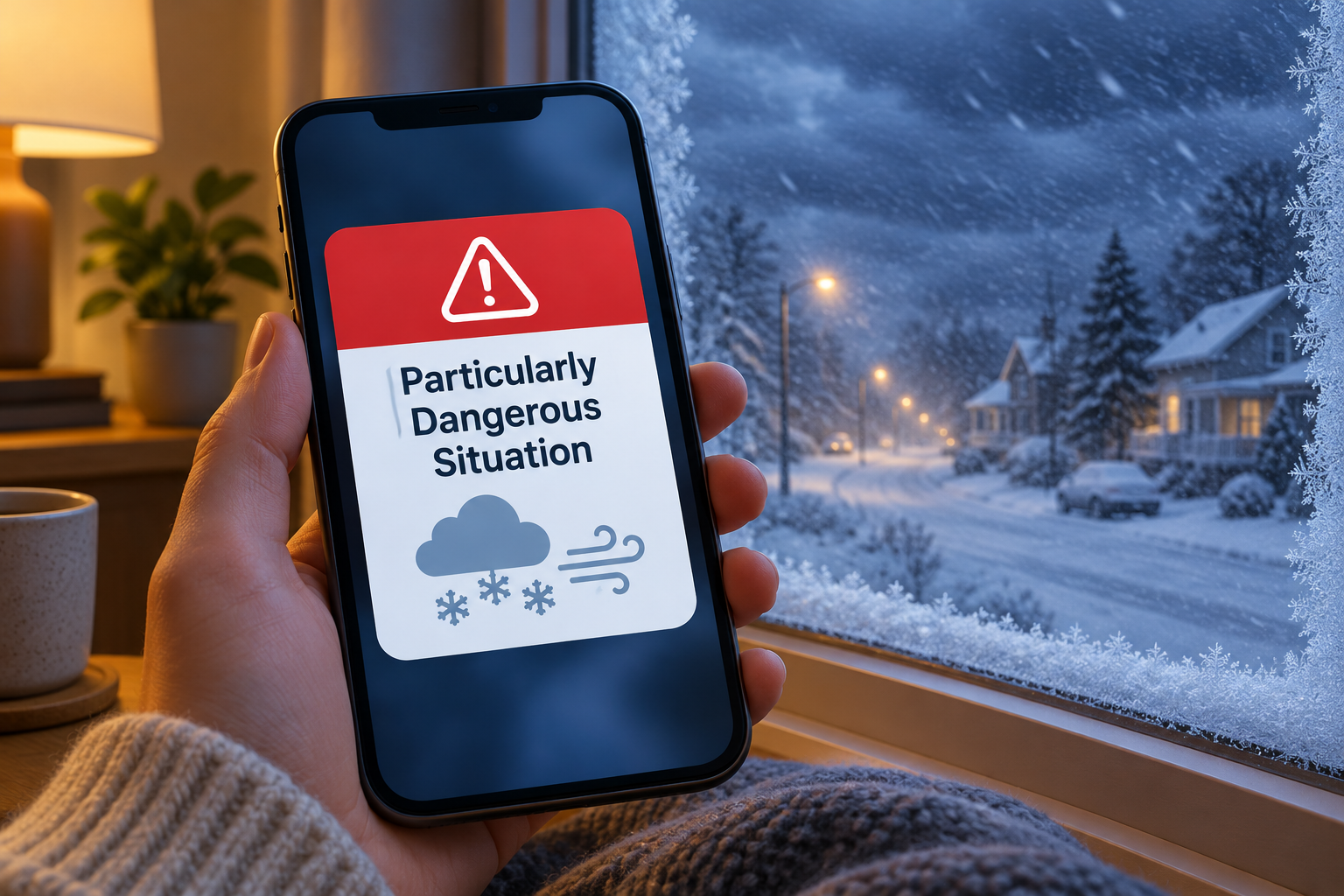
What the phrase means
It signals that the NWS is emphasizing the expected severity of a selected storm; the full warning explains the local details.
“Particularly Dangerous Situation” is wording the National Weather Service (NWS) is using in select Blizzard and Ice Storm Warnings during the 2026–27 winter season. NOAA announced that the wording is intended to highlight storms with high-confidence forecasts of historic severity. It is not expected to appear in every winter warning.
Treat the phrase as a cue to read the alert carefully—not as a forecast for your exact address or instructions on its own. The warning’s text and area information are what tell you which places are included, when the warning applies, what hazards and impacts are expected, and what safety actions are advised.
An NWS warning issued October 31, 2026, provides an example of the phrase appearing in an alert. That dated example shows how the wording may be used; it does not establish that the warning is still active. For current conditions, check the latest official warning for the place you care about rather than relying on an old notice, screenshot, or repost.
How to read the full winter warning
Use the alert’s details to decide whether it covers your location or plans, rather than relying on a regional headline.
Open the complete, current warning and first identify its affected area. A headline naming a nearby city or a broad region may not show whether your home, workplace, school, or route is included. Check the area details in the alert and compare them with the specific location you need to assess.
Then note when the warning begins and ends, and read the hazards, expected impacts, and safety instructions. If the warning is updated, use the newest information. For a planned trip, consider the full route: a destination outside the warned area does not establish that the roads leading to it are clear.
The table is a quick way to separate the phrase’s general meaning from the location-specific information you need.
| Alert detail | What it tells you | How to use it |
|---|---|---|
| “Particularly Dangerous Situation” | The NWS is emphasizing a selected storm of high-confidence, historic severity. | Read the rest of the alert; the phrase alone is not a local forecast. |
| Affected area | Which places the warning covers. | Check whether your location, destination, or route is included. |
| Timing | When the warning starts and when it is expected to end. | Compare the alert period with your plans, and check for updates. |
| Hazards, impacts, and instructions | What the alert describes and what action it advises. | Use these details alongside current local official guidance. |
Where to find local safety instructions
The NWS warning and local emergency officials are the practical sources for decisions during an active storm.
If you are in the warned area, follow the safety instructions in the warning and check guidance from your local emergency-management officials. NWS winter safety guidance advises following warning instructions and cautions against travel during blizzards and ice storms.
If you were planning to drive, check current road information from the relevant state or local transportation authority as well as the weather warning. A route that avoids a place mentioned in a headline may still cross the warned area or face conditions described in the alert. If officials advise against travel, follow that direction. If travel is unnecessary, postponing it may be a sensible precaution when the warning or local instructions make conditions unsafe.
If you are helping another person understand the alert, share the current official notice and direct them to its affected-area details. A short headline or social post can alert people to a storm, but may leave out information needed for a local decision.
- Give priority to instructions in the warning and from local officials.
- Use current official road information when travel is part of your decision.
- Do not assume conditions are safe simply because a nearby location or destination is outside the warning area.
What the phrase does not tell you
The wording is not a public formula for predicting which warnings will use it or how conditions will vary within a warned area.
NOAA describes the wording as selective, but its announcement does not establish a public threshold that readers can use to predict which warnings will include it. Do not try to infer whether the phrase will appear from one forecast number or by comparing the storm with a different event.
The phrase also does not specify exactly what conditions will occur at an individual home. A warning may cover multiple communities, and conditions can differ across a broad area. Read the local details and updates rather than assuming that a nearby town’s experience will match yours.
A warning without this phrase can still describe dangerous weather and include important instructions. Read every warning on its own terms; the presence or absence of one expression does not replace the alert’s actual hazards and directions.
A quick checklist when you see the wording
This short sequence turns an unfamiliar phrase into a practical check without adding another forecast interpretation.
Use this checklist when you receive or come across a winter alert. If the warning is already in effect, start with its instructions and local official guidance; do not delay action to complete every check.
- Open the complete, current NWS warning, not just a headline or repost.
- Check whether the affected area includes your location, destination, or route.
- Note the warning period and read the hazards, impacts, and stated instructions.
- Check local emergency-management guidance and official road information if relevant.
- If the storm is ongoing or plans depend on conditions, check for a newer warning or update.
What to do next
Use the phrase as a reason to focus on the current alert, then rely on its details and local instructions.
For the 2026–27 winter season, “Particularly Dangerous Situation” adds emphasis to select Blizzard and Ice Storm Warnings. The practical next step is to verify whether the alert covers your location or route, read what it says about timing and hazards, and follow current instructions from the NWS and local officials.
For a broader explanation of winter watches, warnings, and advisories, see Beulog’s guide “Winter Weather Watch, Warning, or Advisory? How to Read the Alert and Decide What to Do.” During an active storm, prioritize the latest official warning and local safety directions.
Frequently asked questions
Does “Particularly Dangerous Situation” mean I should evacuate?
Not by itself. Read the full warning and follow any evacuation or other instructions issued for your location by local officials. The phrase emphasizes a selected storm; it does not replace location-specific directions.
Will every Blizzard or Ice Storm Warning use the phrase?
No. NOAA said the NWS would use it in select Blizzard and Ice Storm Warnings during the 2026–27 winter season. Its announcement does not provide a public threshold for predicting which alerts will include it.
Can the phrase tell me whether my home will have the worst conditions?
No. It does not predict exact conditions at an individual address. Check the warning’s area, timing, hazards, impacts, and updates for information relevant to your location.
Should I drive if a warning contains this wording?
Do not decide based on the phrase alone. Read the full warning, check local official guidance and current road information, and follow any direction to avoid travel. NWS winter safety guidance cautions against travel in blizzards and ice storms.
Sources & further reading
Explore the original sources behind this article. Our editorial perspective is separate from the organizations we reference.
- [S1] El Nino looms large over U.S. Winter Outlook | National Oceanic and Atmospheric Administrationnoaa.gov
- [S2] WWA Summary by Location for 37.66N 108.6W with COZ019/COC033/COZ294 emphasis Winter Storm Warningforecast.weather.gov
- [S3] Winter Weather Warnings, Watches and Advisoriespreview.weather.gov