How to Check Whether Food in Your Kitchen Has Been Recalled
Find the official recall notice, compare its product and package details with the food at home, and follow the notice if they match. If anything is unclear, contact the company or responsible agency instead of guessing.
Start with the package and the full recall notice
A reliable check depends on comparing details, not recognizing a familiar logo.
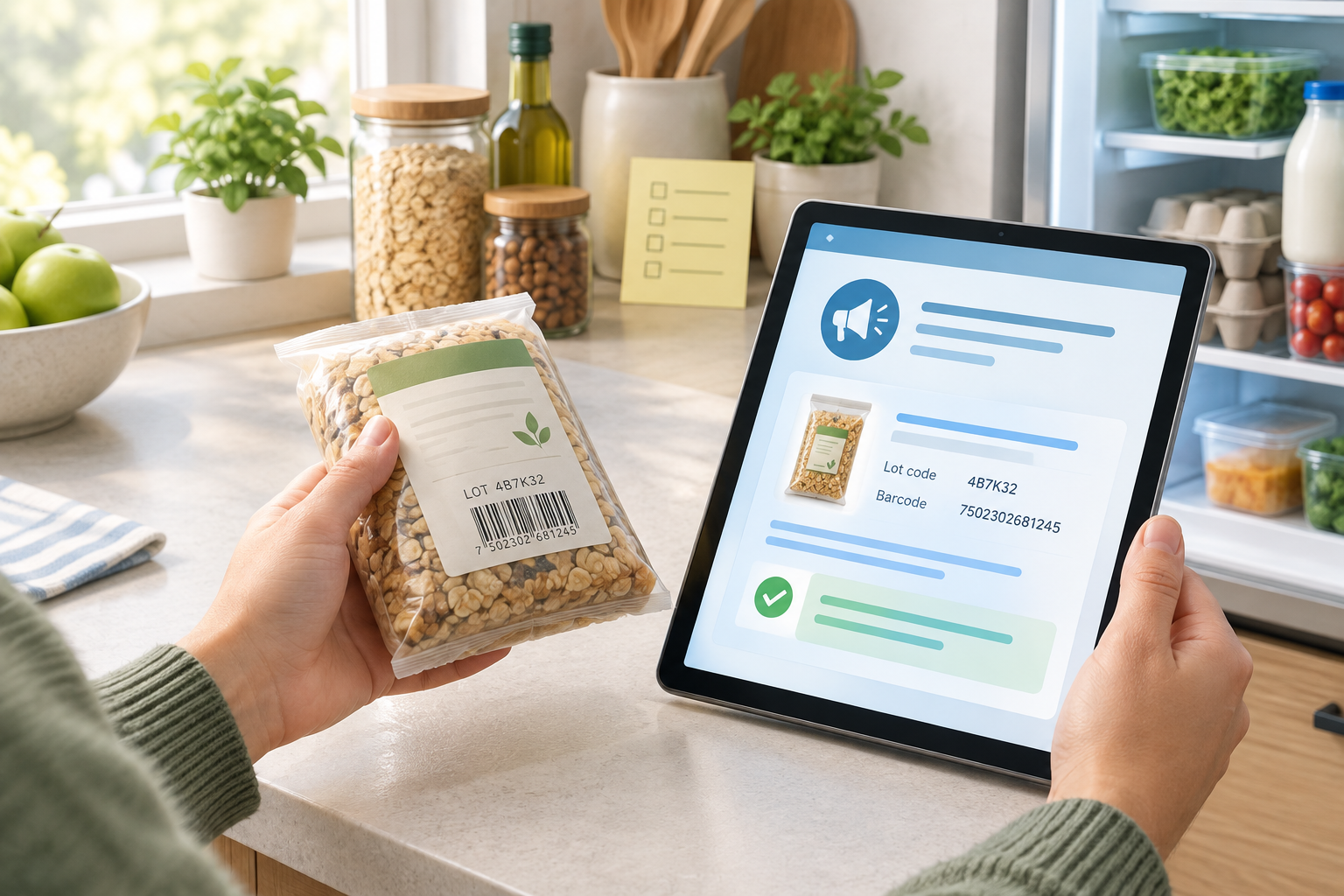
To check whether food in your kitchen has been recalled, find the official notice and compare its product details with the package you have. Check the brand, product name, size, UPC, lot or date code, and any geographic or distribution limits the notice gives. If the notice identifies your product, do not open or eat it; follow its instructions for return, disposal, or other steps.
A headline such as “Brand X recalls cheese” may cover only certain products or production batches. A different size, code, or product in the same brand family may not be included. But a detail that seems different is not enough to dismiss a possible match unless you have checked the full notice and the package carefully.
- Keep the package available while you look up the notice.
- If the food has been removed from its original packaging, check whether you still have a receipt, label, or other record that can identify it.
- Do not rely on the food’s appearance, smell, or taste to decide whether a recalled product is affected.
Find the right official source
The type of food determines which U.S. agency is the best place to check.
FoodSafety.gov’s recalls and outbreaks page is a useful combined starting point for U.S. shoppers. FDA oversees food other than meat, poultry, and processed egg products; USDA’s Food Safety and Inspection Service (FSIS) oversees those products. If you know which agency is responsible, check its recall information directly as well.
Do not assume every recall will appear in one agency’s public listing. The FDA explains that not all recalls are posted on its public warnings page. A company may also provide a notice with product-specific details. When you find a notice through a search engine, open the full official agency or company notice rather than relying on the search result summary.
The agency distinction helps you choose where to look, but a product category or brand name alone does not establish that a specific package is included. The notice itself is the reference for identifying affected products and instructions.
- For a combined starting point, use FoodSafety.gov’s recall information.
- For meat, poultry, or processed egg products, check USDA FSIS information.
- For most other foods, check FDA information and the company notice if one is provided.
Compare every identifier the notice provides
Use the notice as a checklist; the identifiers vary by recall.
Read the notice all the way through and compare each listed identifier with the package. Some notices include photographs or specify where the product was distributed. A notice may not provide every identifier in the table below, and the exact meaning of a code can vary by product. Match the fields the notice actually uses; do not treat an unlisted field as proof that the item is or is not affected.
| Notice detail | Where to check | What to compare |
|---|---|---|
| Brand and product name | Front label and product description | Compare the specific food, not just the brand family. |
| Package size or type | Net weight, count, or container | Check that the size and packaging match the notice. |
| UPC | Barcode area on the package | Compare the digits when the notice lists a UPC. |
| Lot or date code | Printed or stamped code, often on a package edge or seal | Match the exact code or range; do not guess at hard-to-read characters. |
| Date information | Any date named in the notice and the package | Check the specific date type the notice identifies. |
| Distribution area | Notice text about states, stores, or distribution | Use it as an additional check, not a substitute for package identifiers. |
If the package matches the recall
Pause use first, then follow the instructions for that particular product.
If the product details match, do not open or consume it. Follow the recall notice’s specific directions. Depending on the notice, those may tell you how to return or dispose of the item, whether to keep packaging or proof of purchase, and whether to clean surfaces or containers that contacted the food. Do not substitute a general rule for the instructions in the notice.
If the product has already been opened or some was used, stop using what remains and read the notice for directions that apply to opened packages or food prepared with the product. If the notice is not clear about your situation, contact the company or responsible agency. Avoid serving the food to someone else or donating it while you are checking.
- Keep the item separate from food you plan to use while you check the notice.
- Follow the stated return, disposal, and cleaning instructions.
- If you believe someone became ill after eating the food, contact a healthcare provider.
If you cannot tell whether it matches
Uncertainty is a reason to verify, not to declare the package safe.
Reopen the full notice and look for product images, code examples, affected dates, and distribution details. Check the package in good light; lot and date codes may be printed separately from the main label. Make sure you are comparing the right date or code rather than treating every date on the package as interchangeable.
If the package is missing, the code is unreadable, or the notice leaves a key question unanswered, contact the company using contact information from its official site or the notice. For meat, poultry, or processed egg product questions, FSIS also provides a consumer help route. You can describe the product and share the identifying details you can read. Until you have a clear answer, do not eat a product that may match the recall.
A mismatch in one field may matter, but only if the notice makes that field relevant and the package detail is clear. When you cannot establish that, treat the result as unresolved and ask the source responsible for the notice.
Make future recall checks easier
A small routine can help you act quickly without treating alerts as a substitute for package checks.
If you hear about a recall, save the notice or keep it open while checking the pantry, refrigerator, and freezer. Note any items you could not identify and return to them once you have the package or a clearer code. When a household has several similar products, compare them one at a time rather than relying on memory.
You can bookmark official recall pages or sign up for notifications offered by an agency. Alerts can help you learn about notices, but they do not confirm whether the specific product in your kitchen is included. The package-to-notice comparison is still necessary.
For the next step, use the source named in the notice if you need clarification. Keep the product label or a photo of it available when contacting the company or agency, and follow the notice if it confirms a match.
- Keep a photo of the label and code if you need to ask a question.
- Check the agency that oversees the product and read the full notice.
- Use the notice’s directions for the exact product rather than applying instructions from a different recall.
Frequently asked questions
Is a product recalled if its brand appears in a recall notice?
Not necessarily. A notice may apply only to particular products, package sizes, codes, or distribution areas. Compare the package with all identifying details in the full notice.
What should I do if I cannot read the lot code?
Do not guess. Check the package in good light and review any product images or code examples in the notice. If the code is still unclear, contact the company or responsible agency and avoid eating the product until you have an answer.
Should I throw away a recalled food immediately?
Follow the specific recall notice. It may direct you to discard or return the item and may include other instructions. Do not assume the same handling steps apply to every recall.
Where do I check a recall for meat or poultry?
For meat, poultry, and processed egg products in the United States, check USDA FSIS recall information. FoodSafety.gov can also be a combined starting point. Compare the package with the full notice.
What if I already ate some of the recalled food?
Stop using the product and read the notice for any relevant instructions. If you believe the food made someone ill, contact a healthcare provider. For questions about whether your package is included, contact the company or responsible agency.
Sources & further reading
Explore the original sources behind this article. Our editorial perspective is separate from the organizations we reference.
- [S1] Recalls of Foods & Dietary Supplements | FDAfda.gov
- [S2] Food Recalls: What You Need to Know | FDAfda.gov
- [S3] Recalls and Outbreaks | FoodSafety.govfoodsafety.gov
- [S4] Is my product part of a recall?ask.fsis.usda.gov