How to Store Winter Squash: Keep It Whole, Then Refrigerate What You Cut
Store sound, whole winter squash in a cool, dry place with airflow. Once you cut one, wrap the remainder and refrigerate it; storage time depends on the squash and its condition.
How to store winter squash: the simple rule
The right storage method depends first on whether the squash is whole or cut.
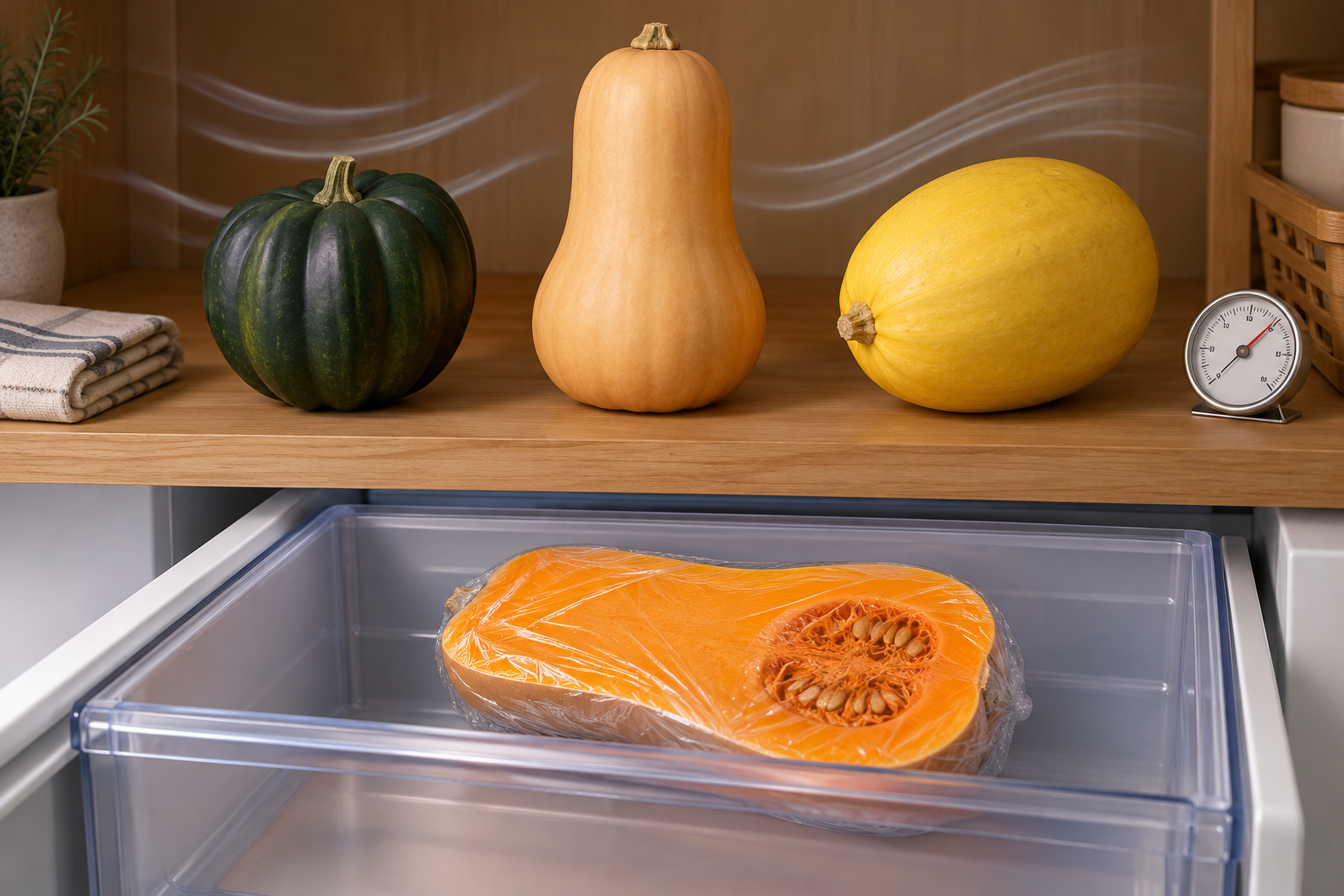
Keep sound, whole winter squash—such as butternut, acorn, or spaghetti squash—in a cool, dry place where air can move around it. Once you cut into one, wrap the remaining piece and put it in the refrigerator. That change in handling is the key to a practical winter-squash routine.
Whole squash does not automatically belong in the refrigerator. Extension guidance favors cool, dry storage for intact squash, while cut squash should be wrapped and refrigerated. The best location and how long a particular squash keeps depend on its variety, condition, and the conditions in your home.
Choose which squash to store first
A quick inspection helps you decide what to keep and what to cook sooner.
Before putting squash away, look over each one and handle it gently. Choose firm squash without obvious soft spots or visible deterioration for longer storage. A sturdy-looking surface is a useful first check, not a guarantee that the squash will keep well.
If one squash is bruised, cracked, or has a soft area, plan to use it sooner than an unblemished one. Keep it separate from squash you intend to store for a while, and check it more often. If it is clearly deteriorating, do not put it back into long-term storage. Avoid washing whole squash just before storage unless you can dry it thoroughly; a damp surface does not fit the cool-and-dry guidance.
- Store the firmest, least-damaged squash first.
- Set aside damaged or soft-spotted squash for earlier use.
- Do not assume that a clean-looking exterior guarantees good quality inside.
Find a cool, dry place for whole squash
Think about the conditions in the spot, not just the room name.
A pantry, cool closet, or dry basement may work if it stays reasonably cool and has some air movement. Avoid a warm spot beside an oven or heating appliance, and do not crowd squash into a damp, poorly ventilated corner. Place them so they are not pressed tightly together; this makes it easier for air to circulate and for you to notice changes.
Utah State University Extension gives 50–55°F as a suggested range for storing whole squash. Treat that as a reference condition, not a requirement every home can meet. If your available space is warmer or fluctuates, prioritize a dry, reasonably cool location with airflow, and check the squash more often. A refrigerator is generally colder and more humid than the recommended conditions for whole squash, so it is not the default storage spot for intact fruit.
Keep squash away from ripening apples and pears when practical. Utah State University Extension notes that these fruits can shorten squash storage life. This is a helpful placement detail if your pantry or storage area holds several kinds of produce.
Storage time depends on variety and condition
Use storage-life estimates as possibilities, not promises.
There is no dependable single deadline that applies to every winter squash. The variety, the squash’s condition when you bring it home, and the temperature and airflow where it sits all affect how long it remains in good condition. A squash with damage or an unsuitable storage environment may deteriorate sooner.
Utah State University Extension says properly stored squash can last up to three months. That is a potential upper limit under suitable conditions, not a guarantee for every acorn, butternut, or spaghetti squash in a household. Illinois Extension also describes cool, dry storage, while its guidance addresses particular home-gardening and variety contexts. Use these figures as context and make the condition of the individual squash your guide.
- Do not label every squash with the same expected storage life.
- Use older, damaged, or uncertain squash before sounder ones.
- If your storage area is warm or damp, shorten your expectations and inspect more frequently.
What to do after you cut a squash
Once cut, switch from cool pantry storage to refrigeration.
If you use only part of a squash, wrap the remaining cut piece and refrigerate it. Store it in a way that keeps the exposed flesh covered, and place it in the refrigerator rather than returning it to the whole-squash storage spot. Utah State University and Illinois Extension both advise refrigerating cut squash.
The cited extension guidance does not establish one specific refrigerated shelf life for every cut squash, so avoid relying on a made-up number of days. Check the piece when you plan to use it and make your decision based on its condition. If you want to keep extra for a later meal, cook it and use a storage method appropriate to the cooked food rather than assuming raw cut squash can remain in the refrigerator indefinitely.
- Cut off what you need for the recipe.
- Wrap the remaining piece promptly.
- Refrigerate it and check its condition before using it later.
Check stored squash and adjust as you go
A brief routine can help you catch deterioration before it affects the rest of your stored produce.
Look over stored squash regularly—weekly is a reasonable household reminder, not a formal extension-prescribed interval. Check for softening, wet or sunken areas, or visible rot. University of Minnesota Extension recommends monitoring stored squash for signs of rot, and good airflow can help you inspect individual pieces without moving a crowded pile.
If one squash is deteriorating, remove it from the storage area and check the others nearby. Use squash that remains in good condition, and discard one that is clearly rotting rather than keeping it in storage. If you are unsure about a specific squash, do not treat its original appearance or the number of weeks stored as proof of quality.
- Make squash easy to see and reach.
- Check for changes in firmness and visible deterioration.
- Remove deteriorating squash and recheck nearby pieces.
Whole versus cut squash: a quick comparison
Use this reference when deciding where to put each squash in your kitchen.
The storage handoff is simple: whole squash gets a cool, dry, ventilated place; cut squash goes into the refrigerator. The exact location and expected storage time still depend on the squash and your home conditions.
| Squash condition | Where to store it | Useful check |
|---|---|---|
| Whole and sound | Cool, dry place with air movement | Keep away from dampness and inspect periodically |
| Whole but damaged or soft-spotted | Set aside in a visible place and use sooner | Check its condition more often |
| Cut or partly used | Wrap and refrigerate | Check the piece before using; do not assume a fixed shelf life |
If you grew the squash yourself
Harvest handling adds a separate decision that depends on variety and local growing guidance.
Home-grown squash may need handling steps that do not apply to store-bought produce. Curing recommendations differ by variety and gardening context; Illinois Extension describes curing guidance for some home-grown squash and notes exceptions. Do not assume every squash needs the same curing treatment, or that produce bought at a store should be cured at home.
If you have just harvested squash, check local Extension advice for the specific variety and your growing conditions. After any recommended harvest preparation, the general storage principle remains cool, dry conditions with airflow, followed by refrigeration once the squash is cut. This keeps the routine clear without applying a one-size-fits-all curing rule.
Frequently asked questions
Should whole winter squash go in the refrigerator?
Usually, no. Keep sound, whole winter squash in a cool, dry place with air movement. Refrigerate it after cutting, rather than using the refrigerator as the default spot for an intact squash.
What temperature is best for storing whole winter squash?
Utah State University Extension gives 50–55°F as a suggested range. Treat it as a reference, not a requirement every household can meet; aim for a cool, dry, ventilated place and check the squash regularly.
How long can whole winter squash be stored?
It varies with variety, starting condition, and storage conditions. Utah State University Extension says properly stored squash can last up to three months, but that is not a guarantee for every squash or home.
How should I store leftover cut squash?
Wrap the remaining piece and refrigerate it. Extension sources recommend refrigeration for cut squash, but the guidance cited here does not set one universal refrigerated shelf life, so check its condition before using.
Do I need to cure store-bought winter squash?
Do not assume so. Curing advice is for particular home-harvest contexts and can vary by variety. If you grew the squash, consult local Extension guidance for that variety; otherwise, store whole squash cool and dry.
Sources & further reading
Explore the original sources behind this article. Our editorial perspective is separate from the organizations we reference.
- [S1] Fruit and Vegetable Guide Series: Winter Squash | USUextension.usu.edu
- [S2] Winter Squash | Home Vegetable Gardening | Illinois Extension | Illinoisextension.illinois.edu
- [S3] Growing pumpkins and winter squash in home gardens | UMN Extensionextension.umn.edu