How to Make Turkey Stock From a Leftover Carcass—and Store It Safely
Turn a safely handled turkey carcass into lightly seasoned stovetop stock, then cool it promptly and store it in portions for soups, rice, or gravy.
Check the carcass before you start
Whether the bones are suitable for stock depends on how they were handled after the meal, not on how long you plan to simmer them.
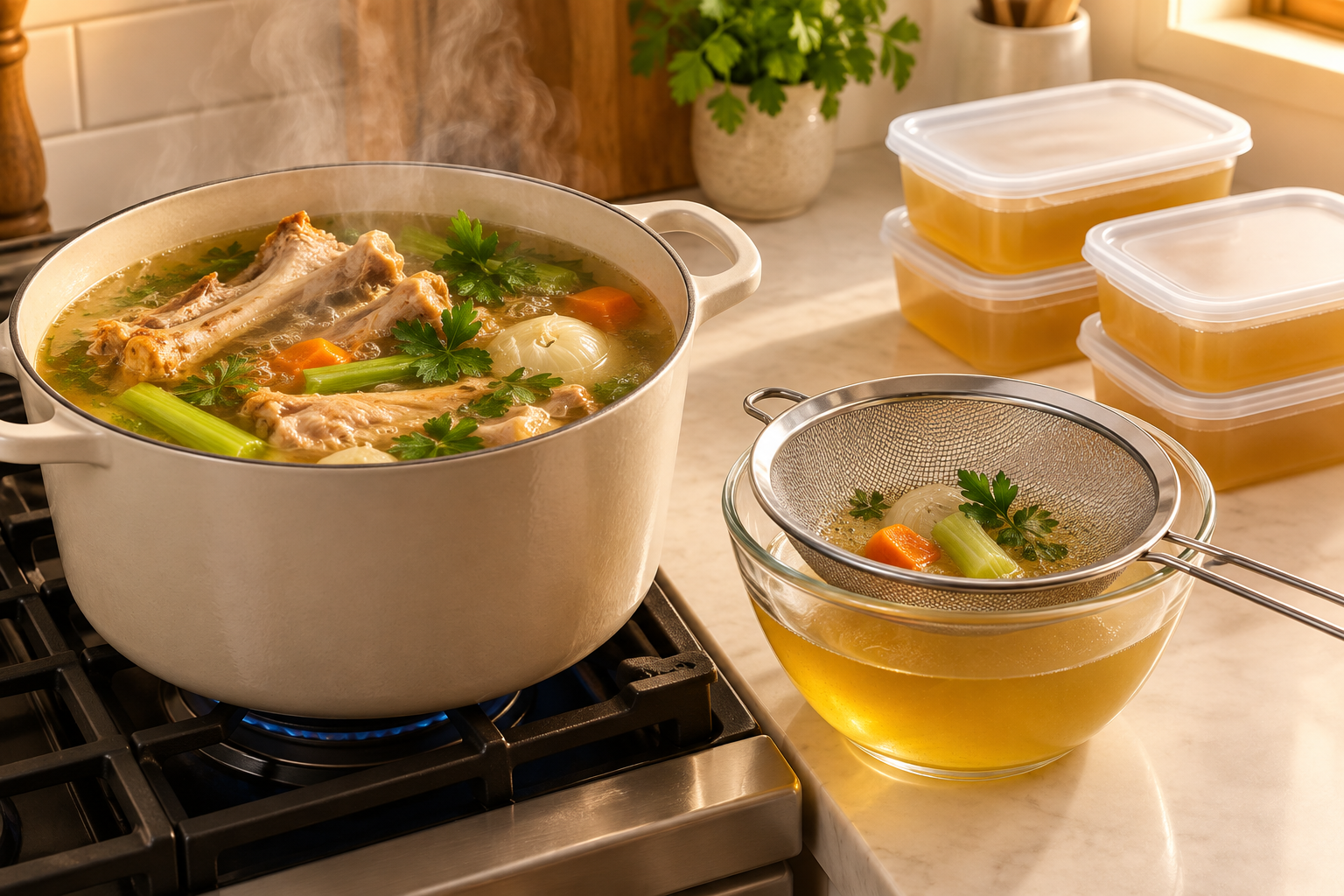
To make turkey stock, cover the bones from a cooked turkey with water, simmer them gently with optional aromatics, and strain the liquid. The result can become a base for soup, rice, or gravy. The quantity and richness will vary with the carcass, pot, and amount of water, so treat this as a flexible method rather than a recipe with a guaranteed yield.
First check the time. FoodSafety.gov advises refrigerating perishable food within two hours—or within one hour when the surrounding temperature is above 90°F (32°C). If the carcass exceeded the applicable limit, discard it rather than trying to make it safe through simmering. If you are not ready to make stock, refrigerate the carcass promptly and use it while it remains within safe handling guidance.
Gather a stockpot large enough for the bones and water, a strainer, a heat-safe bowl or second pot, and clean, shallow storage containers. Optional additions include onion, carrot, celery, parsley stems, a bay leaf, or peppercorns. A plain stock made mostly from bones and water is also useful.
Remove the meat and prepare the pot
Separate anything you plan to eat from the bones, then choose how strongly flavored you want the stock to be.
Pull off usable turkey meat and refrigerate it separately for another meal. Break the carcass into pieces that fit comfortably in your pot; there is no need to crush the bones. Add the bones and, if you wish, suitable cooking juices. Leave out burnt pieces or anything with an unpleasant flavor.
Cover the bones with water, leaving room at the top of the pot so it does not spill as it heats. More water makes a lighter stock; less makes a more concentrated one. If the bones do not fit comfortably or are difficult to cover, use a larger pot or make the stock in batches rather than crowding the pot.
Add a modest amount of vegetables or herbs if you want extra flavor. Onion, carrot, celery, and parsley are flexible choices. Keep salt minimal or leave it out: the stock may be reduced later or added to a dish that is already seasoned. Penn State Extension’s chicken-or-turkey method also suggests optional vegetables and herbs and advises against heavy seasoning so the stock can be used in different recipes.
- For a versatile batch, start with bones and water, then add a few aromatics rather than a large mix.
- Avoid filling the pot to the brim; leave space for the liquid to move safely as it heats.
Simmer gently and strain
Use a gentle simmer and taste the liquid as it develops; the carcass and amount of water determine the timing and strength.
Bring the pot to a boil, then lower the heat until the liquid bubbles gently. A rolling boil is not necessary. Partly cover the pot if you like, and check it occasionally. If bones become exposed as water evaporates, add a little water to cover them again.
Cooking time and yield vary, so there is no exact finish time for every carcass. Start checking the flavor after a couple of hours; continue simmering if it tastes weak, and stop when it suits the dishes you have in mind. This is a practical starting point, not a guarantee of a particular volume or intensity. Penn State Extension’s method follows the same basic sequence: cover chicken or turkey bones with water, simmer, and strain.
Turn off the heat and strain the liquid into a clean, heat-safe vessel. Let the solids drain without forcing them through the strainer. Discard the spent bones and vegetables. If you prefer less fat, chill the stock and lift off the firm layer that forms on top before using it.
- Keep the heat low enough for a steady, gentle simmer.
- Use clean utensils if tasting the stock, and avoid returning a used tasting spoon to the pot.
Cool the stock promptly and portion it
Plan the cooling containers before the pot is done so a large batch does not linger on the counter.
Divide the strained stock among clean, shallow containers. Smaller, shallow portions cool more readily than one deep stockpot. FoodSafety.gov recommends shallow containers to help food cool quickly and advises refrigerating perishable food within two hours—or one hour if the surrounding temperature is above 90°F (32°C). Count from when the stock is off the heat; do not wait for a large pot to reach room temperature on the counter.
If the stock is very hot, you can first place the heat-safe pot or bowl in an ice-water bath and stir with a clean utensil. Then portion it and put it in the refrigerator promptly. Keep the refrigerator at 40°F (4°C) or below. Leave room around the containers so cold air can circulate, rather than stacking warm portions tightly together.
Choose portions based on how you cook. A small container may be handy for a pan sauce or rice; a larger one can suit a pot of soup. Label each portion with the contents and date so you can identify it later.
Refrigerate or freeze for later
Pick the storage method based on when you expect to use the stock, and package it in amounts that are convenient to thaw.
Penn State Extension advises keeping finished stock in the refrigerator for up to three days or freezing it for longer storage. Keep refrigerated stock at 40°F (4°C) or below. Do not use smell or appearance as a substitute for following the storage time and safe-handling guidance.
For freezing, use freezer-safe containers or bags and leave room for the liquid to expand as it freezes. Freeze portions in sizes you are likely to use, and label them with the date. If you use bags, lay them flat in the freezer until solid to make them easier to stack.
Thaw only what you need in the refrigerator, or warm the stock directly in a saucepan if that suits your cooking plan. Avoid thawing it on the counter. Once thawed, use it promptly in a recipe and follow safe handling for the finished dish.
| Storage place | Portioning approach | Guidance |
|---|---|---|
| Refrigerator | Covered, shallow containers | Use within three days, following Penn State Extension guidance; keep the refrigerator at 40°F (4°C) or below. |
| Freezer | Freezer-safe containers or bags with expansion space | Freeze for longer storage; label portions and thaw only what you need. |
Put the stock to work
A lightly seasoned batch can fit into several dishes; adjust salt and flavor after you add it to the recipe.
Use turkey stock as some or all of the liquid in soup, or substitute some for water when cooking rice or another grain. It can also serve as a base for gravy or a pan sauce. Since the stock’s strength and saltiness can vary, taste the finished dish before adding more seasoning.
For example, use a small portion to add flavor to a pot of rice, and keep a larger container for soup. If you are making gravy, add the stock gradually and season at the end. The useful next step is to check the volume you actually strained, divide it into portions you will use, and freeze what you do not expect to finish within the refrigerator window.
- Soup: use stock as the cooking liquid, then adjust seasoning near the end.
- Rice: replace some of the water with stock while keeping the recipe’s total liquid amount in mind.
- Gravy: use stock as a base and season after combining it with other ingredients.
Frequently asked questions
How long should I simmer turkey bones for stock?
There is no single time that fits every carcass and pot. A couple of hours is a useful starting point; taste the stock and continue simmering if it still seems weak. The amount of water and bones affects the result.
Can I make stock from a carcass that sat out overnight?
No. FoodSafety.gov advises refrigerating perishable food within two hours, or within one hour when the surrounding temperature is above 90°F (32°C). Discard a carcass left out beyond the applicable limit; simmering does not make mishandled food safe.
How long does homemade turkey stock keep in the refrigerator?
Penn State Extension advises using its finished stock within three days. Keep it covered in the refrigerator, which should be at 40°F (4°C) or below.
Can I freeze turkey stock?
Yes. Penn State Extension recommends freezing it for longer storage. Use freezer-safe containers or bags, leave room for expansion, and label portions so you can identify them later.
Should I add salt while the stock simmers?
Keep salt light or omit it. Stock may be reduced or used in a recipe that is already seasoned, so it is easier to adjust the finished dish to taste.
Sources & further reading
Explore the original sources behind this article. Our editorial perspective is separate from the organizations we reference.
- [S1] Preparing and Preserving Your Own Chicken or Turkey Stockextension.psu.edu
- [S2] 4 Steps to Food Safety | FoodSafety.govfoodsafety.gov