Before You Buy a Toy: Check Age Fit, Warnings, and Recalls
Use a quick checklist to match a toy to a child, read its warnings, look for potential hazards, and check current recalls before buying.
Start with the child, not the packaging
The best first question is whether this toy suits the child and the place where it will be used.
Before buying a toy, check its age guidance, warnings, condition, and current recall status. Also consider the child who will use it: their abilities and interests, the way they are likely to play, and whether younger children might have access to it. This checklist works whether you are shopping in a store or online.
Age recommendations are useful clues, not a full assessment of an individual child. The American Academy of Pediatrics (AAP) notes that they can help buyers think about both safety and whether a toy fits a child’s abilities and interests. A toy that requires careful assembly, for example, may not suit a child who is still exploring objects by putting them in their mouth. A complicated game may be a poor fit if its rules are beyond the child’s current experience.
If you are buying for someone else, ask the parent or caregiver for a simple steer: What does the child enjoy? Are there toys or materials the household prefers to avoid? Is there a younger sibling who might share the space? You do not need personal details to make a more considered choice.
- Check the recommended age and any stated skill level.
- Think about how and where the toy is likely to be used.
- If the fit is uncertain, ask the caregiver or choose a simpler option.
Read the age guidance and package warnings
The exact label matters because it can flag risks that are not obvious from a product photo.
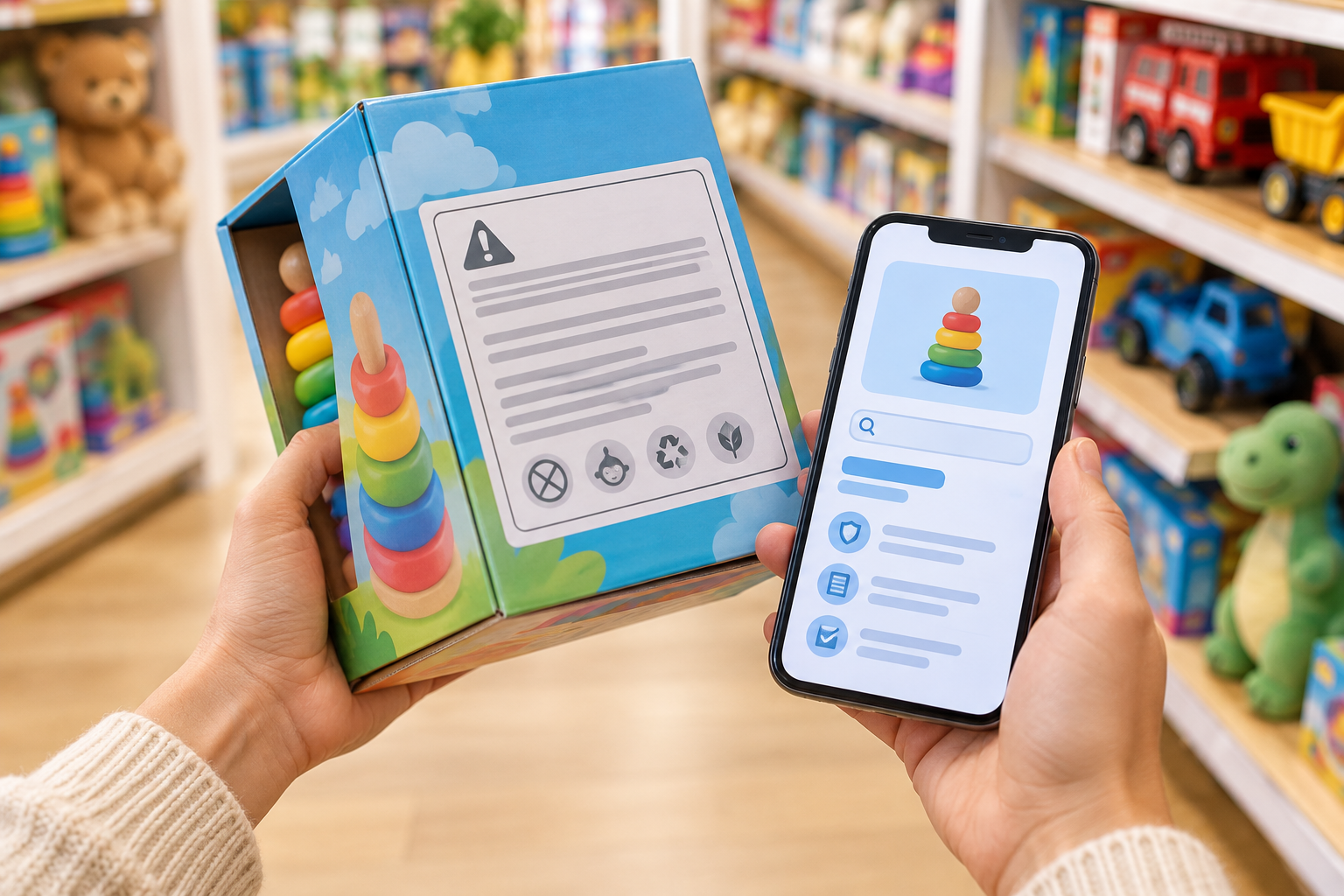
Read the age recommendation and warnings on the exact toy you plan to buy. Look for instructions about supervision, assembly, or intended use as well as any specific hazard warning. If the package is missing, damaged, or unreadable, ask the retailer for the product information instead of guessing.
The U.S. Consumer Product Safety Commission (CPSC) advises buyers to follow age guidance and package safety information. Its toy guidance says to keep small balls and toys with small parts away from children under 3, and to keep deflated balloons away from children under 8. These are specific cautions to take seriously; they are not a substitute for reading the complete label.
Think about the whole household, not only the child receiving the gift. A toy with small pieces intended for an older child may still be a poor choice if a younger sibling can readily reach them. Consider where the pieces will be used and stored, and whether the caregiver can manage that arrangement.
- Read all warnings on the actual package or product information.
- Pay particular attention to age-specific warnings about small parts, small balls, or balloons.
- Consider whether other children in the home could access the toy.
Notice specific hazards, including batteries and magnets
A close look can reveal some obvious concerns, but it cannot establish that a toy has no hazards.
Before paying, check for visible damage, missing pieces, or components that appear loose or accessible. Make sure the toy matches its package description. If it uses batteries or magnets, review the product information and look at whether those components appear accessible during ordinary use. Do not pry open a toy or test it by force.
AAP toy-buying guidance specifically flags accessible button batteries and high-powered magnets as hazards to watch for. These are useful details to consider when comparing products, particularly if the toy includes those components or the product information is unclear. If you cannot tell how a component is enclosed, ask the seller or choose another item rather than trying to dismantle it.
An intact-looking toy is not automatically free of risks. Some problems are not visible during a quick inspection, and appearance alone does not tell you whether an item is subject to a recall. Treat this as one screening step, not a safety certification.
- Look for visible damage, missing parts, or components that seem loose.
- Review product information for batteries or magnets and how they are enclosed.
- If an important feature is unclear, do not guess or dismantle the product.
Check the current CPSC recall index
Recall information changes, so use the live official index rather than relying on memory or an old list.
Before buying, search the CPSC’s current recalls and product safety warnings index. Start with the brand and product name, then compare any possible match with the identifying details available for the item. These may include a model or item number, product description, or information printed on the package.
Read a notice carefully before deciding whether it applies. Similar names or appearances do not prove that two products are the same model. If the recall clearly matches the item, do not buy it; follow the instructions in the notice. If you cannot tell whether the item matches, pause and ask the seller or manufacturer for clarification.
A recall check complements, rather than replaces, reading the label and examining the item. A search you made in the past may not reflect newer notices, so check the live index close to the time you buy.
- Search by the brand and product name.
- Compare the notice with identifying details for the exact item.
- If a match is confirmed, do not purchase it and follow the recall notice.
Verify the exact product when shopping online
A listing may show several versions or sellers, so confirm which specific item will go into your cart.
Check that the online listing provides enough information to identify the toy, such as its brand, product name, age guidance, and model or item details when available. Compare the listing with the package information shown and with any recall notice you find. Do not assume that a similar photo or broad product title identifies the same model.
Pay attention to options such as colors, bundles, sizes, or different sellers. The item selected in your cart may not be the version shown in the first product image. If key information is missing or inconsistent, ask the seller for clarification before placing the order. You can also keep the product details so the caregiver can check the item when it arrives.
In a store, use the same approach: read the label on the actual box rather than relying on a shelf sign. If identifying details are obscured or the package is damaged, ask for an undamaged, clearly identified item or choose another toy.
- Match the listing to the brand and product details, not just the photo.
- Check the selected version and seller before checkout.
- Pause if you cannot tell exactly which product you are buying.
Use the findings to decide whether to buy
Let the unresolved question determine whether to continue, ask for more information, or choose another item.
A toy does not need to be perfect to be a thoughtful gift, but you should not have to guess about a key warning, product identity, or recall match. Use the checks below as a practical decision aid. They cannot guarantee that a toy has no hazards; they help identify when you need more information before buying.
| What you find | Practical next step |
|---|---|
| Age guidance and warnings appear to fit the child and setting | Continue with a condition and recall check. |
| A warning could affect a younger child in the home | Ask the caregiver how the toy will be used and stored, or choose another gift. |
| A current recall notice clearly matches the product | Do not buy it; follow the instructions in the notice. |
| The listing or package does not identify the exact product | Ask the seller for details or pause the purchase. |
| The toy is damaged or a component is unclear | Do not guess; choose a clearly identified item in good condition. |
Run a final checklist before checkout
A short, repeatable routine helps you catch missing details without treating a quick check as a guarantee.
Use this sequence in a store or online. If a key answer is missing, the next step is to seek clarification or pick another product—not to assume that the toy is suitable.
- Identify the child’s age, abilities, interests, and likely play setting as well as you can.
- Read the age guidance and warnings on the exact toy or listing.
- Consider warnings about small parts, small balls, and deflated balloons, and whether younger children may have access.
- Look for obvious damage or loose components without taking the product apart.
- Search the current CPSC recall index and compare any possible match with the exact product details.
- If you still cannot confirm the fit, condition, or product identity, ask the caregiver or seller before buying.
Frequently asked questions
Are toy age recommendations only about safety?
No. They can help buyers consider safety as well as whether a toy fits a child’s abilities and interests. Use the recommendation as a starting point, then consider the child and the likely play setting.
Which toy warnings should I check first?
Read the full package warning, including age guidance and any notes about small parts or supervision. CPSC guidance specifically advises keeping small parts and small balls away from children under 3, and deflated balloons away from children under 8.
How do I check whether a toy has been recalled?
Search the current CPSC recalls and product safety warnings index using the product name and brand. Compare any notice with the exact item details you can find, such as its model or item number. If it is a confirmed match, do not buy it and follow the notice.
If the toy looks fine, do I still need to check recalls?
Yes. A visual inspection may reveal obvious damage, but it cannot tell you whether the product is covered by a recall. Check the current CPSC index separately.
What if I do not know the child’s age or abilities?
Ask the parent or caregiver for a recommendation. If you cannot confirm that the toy fits the child or the household, choose a clearly identified alternative rather than guessing.
Sources & further reading
Explore the original sources behind this article. Our editorial perspective is separate from the organizations we reference.
- [S1] Toys | CPSC.govcpsc.gov
- [S2] How to Buy Safe Toys - HealthyChildren.orghealthychildren.org
- [S3] Recalls & Product Safety Warnings | CPSC.govcpsc.gov
- [S4] Recalls & Product Safety Warnings | CPSC.govcpsc.gov