How to Cook Dried Beans on the Stovetop: A Flexible, Safe Method
Sort and rinse dried beans, soak them for at least five hours, then boil and simmer in fresh water until tender. Dried kidney beans need a clear safety check before you use a slow cooker.
How to cook dried beans on the stovetop
The dependable approach is a sequence, not a fixed timer: prepare the beans, soak and drain them, boil in fresh water, then simmer until tender.
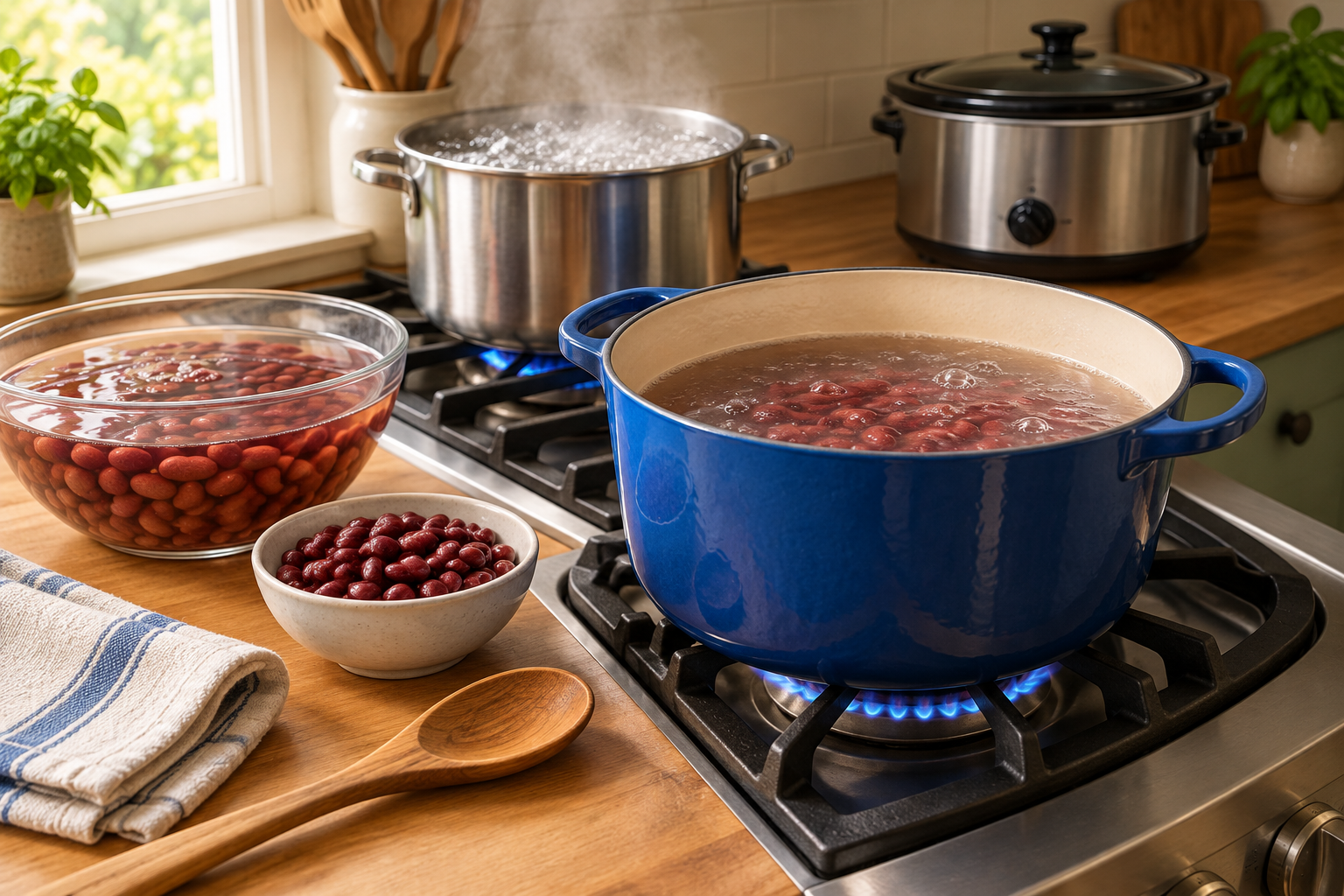
To cook dried beans on the stovetop, sort and rinse them, soak them for at least five hours, and drain the soaking water. Cover the beans with fresh water, bring them to a boil for at least 30 minutes, then lower the heat and simmer until tender. The FDA gives that soaking and boiling guidance because raw or undercooked beans can contain phytohaemagglutinin, a natural toxin that can cause illness. Dried kidney beans need special attention: do not use a slow cooker as their only cooking step.
The practical payoff is a flexible method that works without promising that every pot will finish at the same time. Bean variety and age affect how long softening takes, so use tenderness—not the clock alone—to decide when they are ready.
Sort, rinse, and soak the beans
A few minutes of preparation helps you catch debris and start with clean beans; soaking also gives you time to plan the cooking.
Spread the dried beans on a tray or clean counter and look for small stones, shriveled beans, or other debris. Pick out anything that does not belong, then rinse the beans under running water. This simple check is useful even when the beans look clean in the bag.
For the soak, put the rinsed beans in a large bowl or pot and cover them generously with water. They expand as they absorb it, so leave room rather than filling the container to the top. Soak for at least five hours, then pour off the water and drain the beans. If your plans change, keep the soaking container covered in the refrigerator rather than leaving it out for an extended period.
A longer soak can fit easily into meal planning: soak the beans the night before, drain them when you are ready to cook, and start with fresh water. The FDA specifies a minimum of five hours; do not treat a shorter quick-soak as meeting that advice for kidney beans.
Boil, then simmer until tender
Use a full boil as the safety step, then a gentler simmer for the longer work of softening the beans.
Transfer the drained beans to a roomy pot and add fresh water so the beans are well covered. Set the pot over high heat and bring the water to a boil. Maintain a boil for at least 30 minutes, following FDA guidance. Then lower the heat to a gentle simmer. Keep the beans covered with water; if the level drops while they cook, add hot water.
A simmer should produce small, steady bubbles rather than a vigorous churn. Stir occasionally, especially near the bottom of the pot, and avoid letting the beans cook dry. Once they begin to soften, check several beans from different parts of the pot. They are ready when they are tender through the center, not chalky or firm.
There is no reliable universal finish time. Bean type and age can change how long simmering takes, so start checking for tenderness periodically rather than planning around a single number. Oregon State University Extension likewise describes simmering until tender and using a tenderness check rather than treating the clock as definitive.
- Put the drained beans in a pot and cover them with fresh water.
- Bring the pot to a boil and keep it boiling for at least 30 minutes.
- Reduce the heat to a gentle simmer, topping up with hot water if needed.
- Check several beans for tenderness; continue simmering if they are still firm.
The kidney-bean safety check
Dried kidney beans are the reason to be especially precise about soaking, boiling, and slow-cooker instructions.
Raw or undercooked beans can contain phytohaemagglutinin. The FDA advises soaking beans for at least five hours, discarding the soaking water, and boiling them in fresh water for at least 30 minutes. Apply those steps when preparing dried kidney beans; do not assume that a long, low-temperature cook is equivalent.
Utah State University Extension specifically advises boiling dried kidney beans on the stovetop before transferring them to a slow cooker. If you want to finish a kidney-bean dish in a slow cooker, complete the soak and stovetop boil first, then follow a suitable recipe for the remaining cooking. A slow cooker alone is not the safe shortcut.
| Method | Practical guidance |
|---|---|
| Stovetop | Soak for at least five hours, drain, and boil in fresh water for at least 30 minutes before simmering until tender. |
| Slow cooker | Do not use it as the only cooking step for dried kidney beans. Boil them on the stovetop first. |
If the beans stay firm
Firm beans do not always mean the method has failed; check the cooking conditions and give them more time before changing the recipe.
First, taste a few beans. If the centers are still firm, continue simmering and check again later. Make sure the pot has not boiled dry and that the beans remain covered with water. A gentle simmer and occasional stirring help the batch cook more evenly.
If you have added tomatoes, vinegar, citrus, or another acidic ingredient, it may be slowing the softening process. For the next batch, wait until the beans are tender before adding acidic ingredients. Avoid assuming that one cooking duration will work for every bag: bean age and variety matter, and time is only a guide.
Salt advice differs across cooking references, so there is no need to treat salt as a universal cause of tough beans. You can season to taste, while keeping the tenderness check as your guide.
Turn the cooked beans into a meal
Once tender, beans can be seasoned and used in many dishes; choose additions that suit the meal rather than complicating the basic cooking method.
Season the cooked beans to taste, or drain them if the dish calls for beans without their cooking liquid. Fold them into soup, chili, or a grain bowl; mash some with a fork for a thicker stew; or toss them with vegetables and a dressing after they cool. If you plan to add tomatoes or another acidic ingredient, add it after the beans have softened.
For the next batch, note the bean variety and how long it took to become tender. That small record can help you plan ahead without turning the cooking time into a promise for every future bag. Follow the same preparation and safety steps, especially when the beans are kidney beans.
Frequently asked questions
How long should I soak dried beans?
The FDA advises soaking beans for at least five hours, then discarding the soaking water. A longer soak can fit an overnight plan, but the beans still need to be boiled in fresh water for at least 30 minutes.
How long do dried beans take to cook on the stovetop?
There is no guaranteed finish time. After the required boil, simmer and check the beans periodically. Variety and age affect how long it takes for them to become tender.
Can I cook dried kidney beans in a slow cooker?
Do not rely on a slow cooker as the only cooking step. Soak the beans, discard the soaking water, and boil them in fresh water on the stovetop for at least 30 minutes before using a slow cooker to finish a dish.
Why are my beans still hard?
They may need more simmering time. Keep them covered with water and check again later. Acidic ingredients such as tomatoes can delay softening, so add them after the beans are tender.
Sources & further reading
Explore the original sources behind this article. Our editorial perspective is separate from the organizations we reference.
- [S1] Natural Toxins in Food | FDAfda.gov
- [S2] Killer Kidney Beans | USUextension.usu.edu
- [S3] Beans - January 2019 | OSU Extension Serviceextension.oregonstate.edu