How to Force Spring Bulbs Indoors: Chilling Timelines and a No-Chill Paperwhite Option
Choose between spring bulbs that need weeks of chilling and paperwhites that do not. Learn when to pot, how to manage the cold period, and what to expect before winter flowers appear.
How to force spring bulbs indoors: choose your route
The main decision is whether you can provide a long cold period or would prefer to skip chilling.
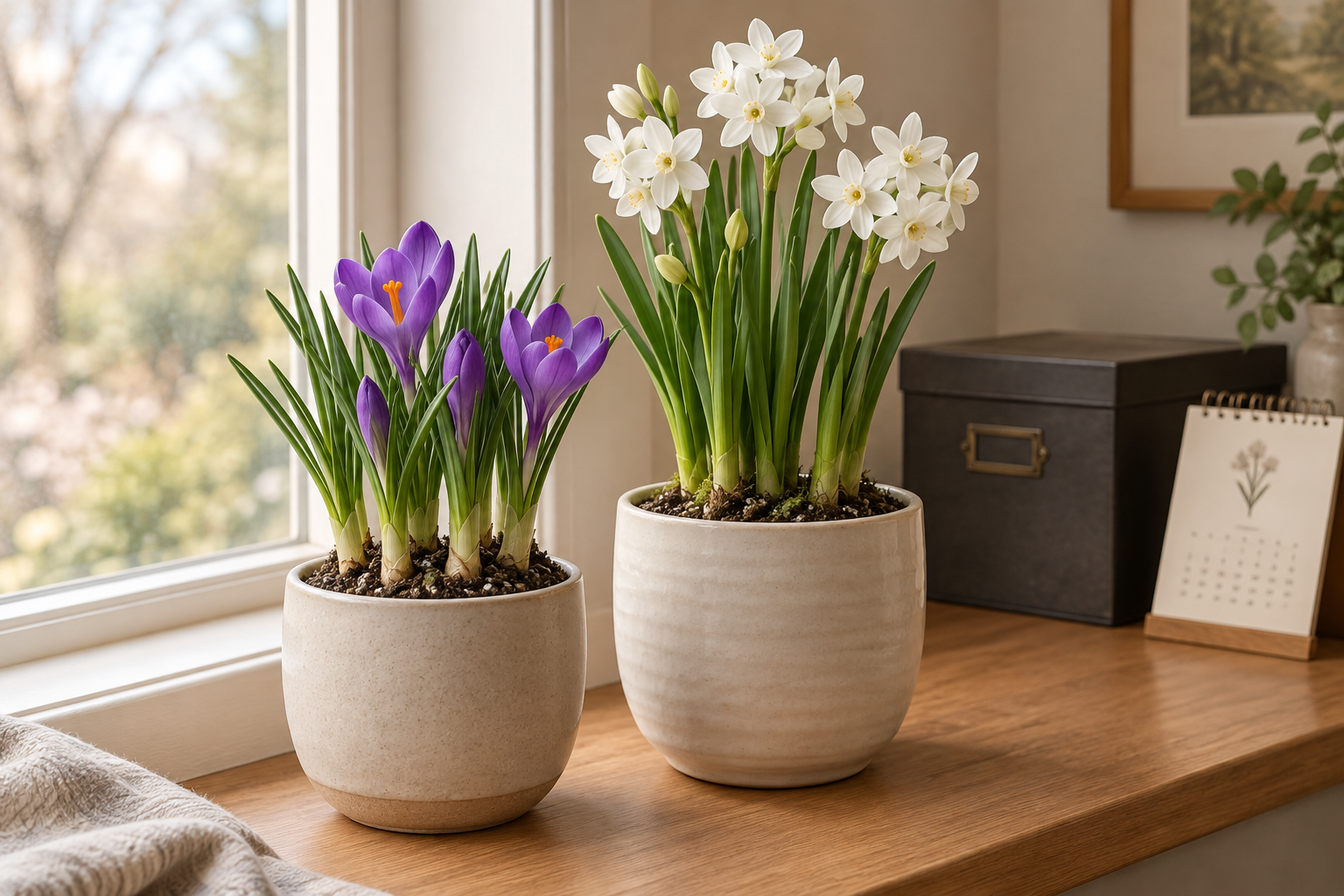
To force spring bulbs indoors for winter flowers, pot bulbs that are suitable for forcing, give them the cold period their type requires, and then move them into brighter, warmer indoor conditions. Tulips, daffodils, hyacinths, grape hyacinths, and crocuses are among the spring-flowering bulbs commonly used for indoor forcing. Many need chilling to bloom properly.
Paperwhites offer a simpler alternative because they do not require chilling. They can be grown indoors with light and water as their roots develop. That makes them worth considering if you are starting later or do not have an appropriate cool, dark place for storing potted bulbs. Neither approach guarantees flowers on a particular date; the bulb and its growing conditions affect timing.
- Choose chilled spring bulbs if you can plan several months ahead and follow their storage requirements.
- Choose paperwhites if you want to avoid the chilling stage and are prepared to follow their indoor growing directions.
When to pot bulbs for winter flowers
Use the bulb’s stated requirements to plan backward, then leave room for natural variation.
Fall is a useful planning window for bulbs that need chilling. Illinois Extension says bulbs for indoor forcing can be potted from September through November. Its general guidance is that many need 12–15 weeks of chilling, followed by about 2–4 weeks to bloom after they move into growing conditions. These are planning ranges, not a schedule that applies to every species or variety.
For example, a bulb potted in early October and chilled for 12–15 weeks might be ready to move into growing conditions around late December or January. Allowing another 2–4 weeks suggests a possible January or February display. This is calendar arithmetic based on general ranges, not a prediction: the bulb’s label and actual growth matter more than the example.
Before buying, look for bulbs identified as suitable for forcing and read the package instructions. If a particular variety has a different chilling requirement, follow that guidance instead of relying on the general range. If flowers are needed for a specific occasion, avoid making plans that depend on a precise bloom date.
| Route | Chilling | General planning guidance | Useful when |
|---|---|---|---|
| Tulips, daffodils, hyacinths, grape hyacinths, or crocuses | Many require a cold period to bloom well | Often 12–15 weeks of chilling, then roughly 2–4 weeks to bloom | You can plan ahead and provide suitable storage |
| Paperwhites | No chilling period required | Grow indoors with light and water as roots develop | You want to skip the cold-storage stage |
Pot chilled bulbs in a draining container
A labeled pot makes it easier to keep track of variety, watering, and the start of the cold period.
Choose a container with drainage holes and use well-draining potting mix. If you want to display the pot inside a decorative cachepot, use a draining inner pot and empty any collected water rather than leaving the bulbs sitting in it. Select bulbs that feel firm and are not visibly damaged; package directions can help you choose types intended for forcing.
Arrange the bulbs close together but not touching, and follow the label for planting depth and spacing. Those details vary by bulb, so a single depth rule is not suitable for every type. Add enough mix to hold the bulbs securely, then water according to the package instructions and allow excess water to drain.
Label each pot with the bulb variety and potting date. If you prepare more than one type, keep them separate when their instructions differ. Recording the date also helps you estimate when the chilling period may be complete.
- Use a pot with drainage and well-draining potting mix.
- Choose firm, undamaged bulbs and check whether the variety is recommended for forcing.
- Follow the bulb’s directions for planting depth and spacing.
- Write the variety and potting date on a label.
Chill the pot and check it periodically
The cold stage takes patience, but occasional checks help you catch drying or waterlogging.
Place the potted bulbs in a cool, dark location that suits their instructions. Many spring bulbs need 12–15 weeks of chilling, but the exact requirement depends on the bulb and variety. Do not assume that every household refrigerator, basement, or other storage area has suitable conditions. Check the package directions before choosing a location.
Check the pot from time to time. The mix should not become completely dry, but it should also drain freely rather than remain saturated. If you are uncertain about the storage conditions or moisture needs, follow the supplier’s instructions rather than guessing at a temperature or changing the setup repeatedly.
Keep a note of when the stated chilling period is complete. If several pots have different varieties or potting dates, track them individually. Once a bulb has had its required chill, it can move into the next stage; moving it earlier does not replace unfinished chilling.
Move chilled bulbs into brighter, warmer conditions
After the required chill, give the bulbs time to grow rather than expecting immediate flowers.
When the bulb’s chilling requirement is complete, move the pot into a brighter, warmer indoor location and continue to follow its growing directions. Illinois Extension gives roughly 2–4 weeks as a general time to bloom after chilling, but growth does not follow an exact calendar for every pot.
Keep the mix appropriately moist without leaving standing water in the container or saucer. If growth seems slow, check whether the chilling period is complete and whether you have followed the bulb’s care instructions. A warmer room cannot make up for a cold period the bulb still needs.
If you want flowers at different times, you can pot separate batches on different dates, provided each batch can complete its own chilling requirement. Staggering may spread the display, but it cannot guarantee that flowers will open on selected days.
Grow paperwhites without chilling
Paperwhites remove the cold-storage stage, but they still need time for roots and shoots to develop.
For paperwhites, skip the chilling period. Illinois Extension describes growing them indoors with light and water as their roots develop. Start with the instructions that came with your bulbs, since those are the best guide to the specific bulbs and setup you have.
Because paperwhites do not need months of chilling, they can be a practical choice if you are starting later in the season or lack suitable storage. No-chill does not mean instant flowers, however. Allow time for growth, and avoid using a fixed bloom date as a promise.
Consider fragrance when choosing where to display them. Paperwhite scent is distinctive and may not appeal to everyone. If strong floral scents are unwelcome in your household, choose a location where the flowers are less likely to bother people.
After flowering, keep expectations realistic
A forced bulb may be worth keeping, but a quick repeat display is not something to count on.
When the flowers fade, decide whether you want to try to keep the bulbs. Reblooming is not guaranteed, and the care needed afterward depends on the bulb type and local growing conditions. Illinois Extension notes that reblooming can take one to two years, so a forced bulb is best treated as a seasonal display if you want predictable flowers.
If you do want to keep a bulb, seek after-flowering guidance specific to its type rather than assuming all forced bulbs can be handled alike. For a future winter display, planning a fresh batch according to its package directions is the more dependable approach.
A simple plan for getting started
Choose the method that fits your space and schedule, then use the bulb label to refine the plan.
If you are planning ahead, choose firm spring bulbs suited to forcing, pot them in a draining container, and write down the variety and date. Follow the label for planting and storage, check the pot periodically, and move it into brighter, warmer conditions only after the required chill. Allow several weeks for flowers to develop.
If a long cold period does not fit your schedule or home, choose paperwhites and follow their no-chill indoor directions. In either case, use the general timing ranges as a way to plan—not as a guarantee—and enjoy the flowers when they arrive.
- Choose chilled spring bulbs or no-chill paperwhites.
- Check the bulb label for variety-specific growing and timing directions.
- For chilled bulbs, use a draining pot, well-draining mix, and a clearly recorded potting date.
- Provide the required chill and check the pot periodically.
- After chilling, move the pot into brighter, warmer conditions and allow time for flowers.
- For paperwhites, skip chilling and follow the supplied light-and-water instructions.
Frequently asked questions
How long do spring bulbs need to chill before flowering indoors?
Many bulbs used for forcing need about 12–15 weeks of chilling, but the requirement varies by bulb and variety. Check the package and use the range for planning rather than as a guarantee.
When should I pot bulbs for winter flowers?
Fall is a useful time to start. Illinois Extension says bulbs for indoor forcing can be potted from September through November. Follow the specific bulb’s chilling instructions and allow for variation in flowering time.
Can I force spring bulbs indoors without chilling them?
Many spring-flowering bulbs need a cold period to bloom properly. Paperwhites are a no-chill option; grow them indoors with light and water as their roots develop, following the supplier’s directions.
How long after chilling will bulbs bloom?
A general estimate is about 2–4 weeks after chilling, though the timing depends on the bulb, variety, and growing conditions. Do not rely on that estimate for an exact event date.
Will forced bulbs bloom again next year?
They may, but reblooming is not reliable or necessarily quick. Illinois Extension notes that it can take one to two years, so plan a fresh batch if you want a more predictable seasonal display.
Sources & further reading
Explore the original sources behind this article. Our editorial perspective is separate from the organizations we reference.