How to Make Pumpkin Purée and Freeze It Safely
Choose a cooking pumpkin, roast it until tender, then mash or blend the flesh. Freeze extra purée in portions—and skip home-canning it.
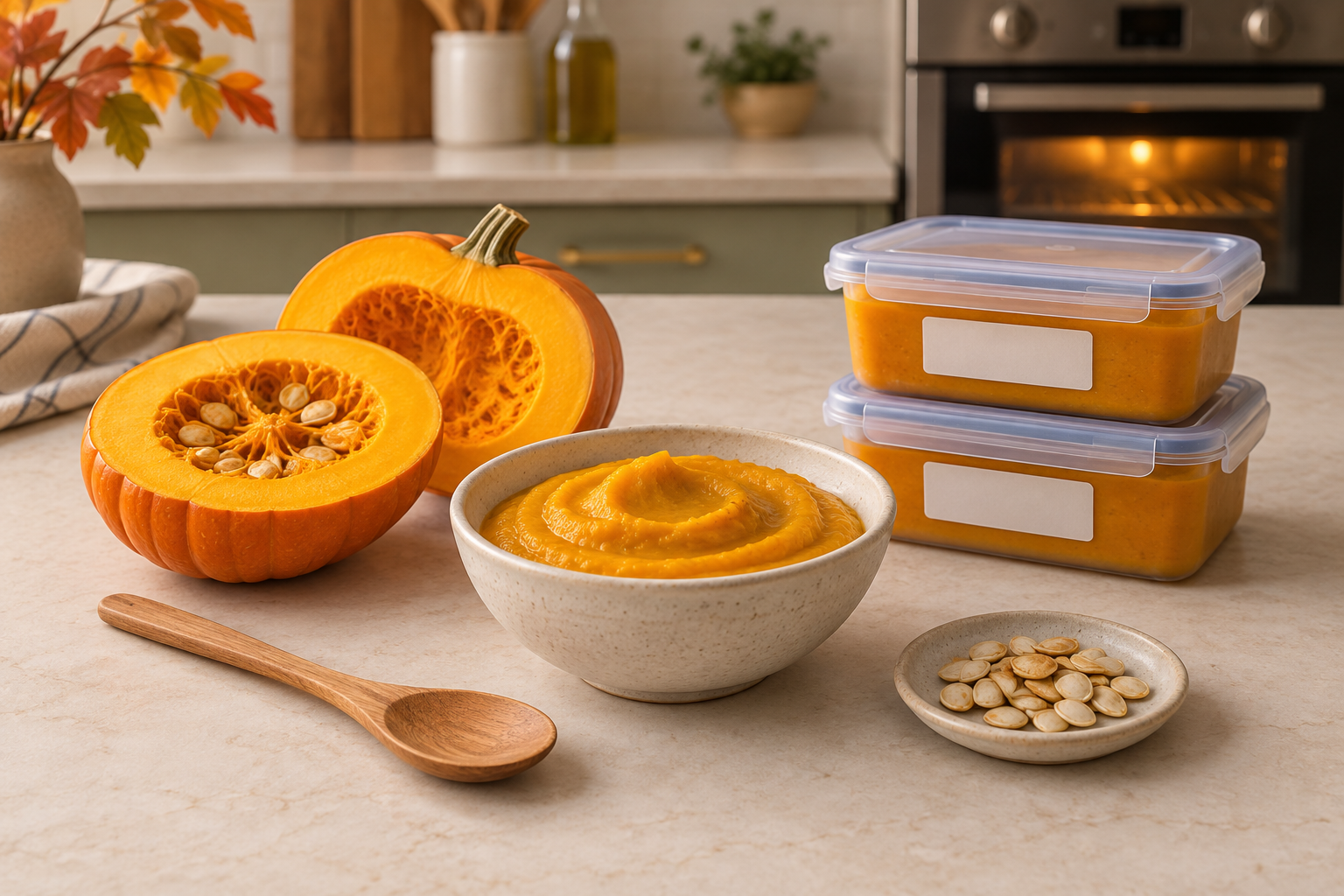
Choose a cooking pumpkin for homemade purée
The right pumpkin starts with the kind grown for the kitchen, not the one chosen to decorate a porch.
For pumpkin purée, look for a small cooking, pie, or processing pumpkin. These varieties are intended for baking and cooking and are generally a more suitable choice than large pumpkins grown mainly for carving or ornamental display. A smaller pumpkin is also easier to handle and cut in a home kitchen.
Check that the pumpkin is sound, with no soft, moldy, or badly damaged areas. A decorative pumpkin is not automatically inedible, but appearance-focused varieties may not give you the flavor or texture you want in a pie, soup, or loaf. Illinois Extension distinguishes cooking pumpkins from ornamental types and recommends choosing a variety suited to cooking.
- Choose a cooking or pie pumpkin when available.
- Avoid produce that is spoiled or noticeably damaged.
- Use the pumpkin’s flesh, not its size or decorative appearance, as the reason for your choice.
Cook the pumpkin until tender
Oven roasting is straightforward and hands-off; microwave and stovetop methods are alternatives when they better suit your kitchen.
For an oven method, heat the oven to 375°F. Cut the pumpkin into pieces that you can safely manage, remove the seeds and stringy center, and place the pieces in a baking dish. Cook until the flesh is tender enough to scoop or pierce easily. The time depends on the pumpkin’s size and the pieces, so use tenderness—not a single promised cooking time—as your guide.
Let the pieces cool enough to handle. Then scoop the flesh away from the rind. If you prefer another approach, Illinois Extension also describes microwave and stovetop methods. Whichever method you use, the goal is soft cooked flesh that can be mashed or blended.
- Heat the oven to 375°F.
- Cut the pumpkin into manageable pieces and remove the seeds and stringy center.
- Cook until the flesh is tender; check it rather than relying on a fixed time.
- Cool until safe to handle, then scoop the flesh from the rind.
| Method | What to expect | Useful check |
|---|---|---|
| Oven | A simple option for cooking pumpkin pieces in a baking dish. | The flesh should be tender enough to scoop or pierce easily. |
| Microwave | A convenient alternative when you want to avoid heating the oven. | Check that the pieces are tender throughout. |
| Stovetop | Another option described by Illinois Extension. | Cook until the flesh is soft, then drain excess water if needed. |
Turn the cooked flesh into purée
A masher works for a rustic result; a blender or food processor gives a smoother texture.
Put the cooked pumpkin flesh in a bowl and mash it with a fork or potato masher, or blend it until smooth. Work in batches if needed rather than overfilling a blender. The pumpkin’s moisture varies, so homemade purée can be thicker or looser than the canned product. If there is visible excess liquid, let it drain before measuring the purée for a recipe.
Use the purée in pies, breads, muffins, soups, or sauces. When following a recipe written for canned pumpkin, compare the texture before adding it. If your homemade purée looks noticeably wetter, draining it can help avoid adding more liquid than the recipe expects. That adjustment is a kitchen judgment, not a guarantee that every homemade batch will match canned purée.
Cool and freeze extra pumpkin purée
Plan portions before packing so you can thaw only what a future recipe needs.
The National Center for Home Food Preservation recommends cooling cooked pumpkin in cold water while stirring occasionally before packaging it for freezing. Once cooled, divide the purée into amounts that match the recipes you expect to make. For example, freeze a portion for a pie separately from a larger portion intended for soup or baking.
Use freezer-suitable containers or bags and leave about ½ inch of headspace as directed by the center. Headspace gives the contents room to expand as they freeze. Seal the packages, label them with the contents and date, and place them in the freezer. The cited guidance does not specify a storage duration, so this guide does not assign one.
For convenient portions, freeze in small containers or in measured amounts in freezer bags. If using bags, remove excess air and lay them flat to freeze; once solid, they are easier to stack. Keep the package sealed until you are ready to use the purée.
- Cool the cooked pumpkin in cold water, stirring occasionally.
- Divide the cooled purée into recipe-friendly portions.
- Pack in freezer-suitable containers or bags, leaving about ½ inch of headspace.
- Seal, label, and freeze.
Why pumpkin purée should not be home-canned
The shape and texture of the food matter in tested preservation instructions; purée is not interchangeable with cubes.
It may seem convenient to put homemade purée in jars for the pantry, but the National Center for Home Food Preservation specifically says not to home-can mashed or puréed pumpkin. Its canning guidance applies to pumpkin cut into 1-inch cubes, not a thick, smooth purée. A method intended for cubes should not be adapted by mashing the pumpkin or changing the jar contents.
If you want pumpkin ready for later recipes, freezing is the preservation route supported by the center’s pumpkin instructions. If pantry storage is important, use only a current, tested canning recipe that matches the food’s form exactly; do not improvise a process for purée.
Use frozen purée in later recipes
A little planning at packing time makes future cooking easier and reduces waste.
Label each package with the amount inside as well as the date you froze it. If a recipe uses a particular quantity, portion the purée accordingly so you do not have to thaw a large container for a small job. For recipes where texture is important, check the thawed purée and drain any excess liquid before measuring.
Homemade purée is useful in pumpkin pie, quick breads, muffins, soups, and sauces, but its moisture and texture can differ from canned pumpkin. Treat the recipe’s liquid amounts as a guide and make small adjustments only when the purée’s consistency calls for them. Keep any unused frozen portions sealed and return them to the freezer promptly.
- Portion by likely recipe use.
- Label packages so the contents and freezing date are clear.
- Check consistency before adding purée to a recipe written for canned pumpkin.
Frequently asked questions
Can I use a carving pumpkin to make purée?
A carving pumpkin is not automatically inedible, but it may not be the best choice for flavor or texture. Choose a cooking or pie pumpkin when you can, and use only sound produce.
How long should I bake a pumpkin?
There is no single time that fits every pumpkin and piece size. At 375°F, cook until the flesh is tender enough to pierce easily or scoop from the rind.
Can I freeze pumpkin purée in freezer bags?
Yes. Use bags intended for freezer storage, portion the purée, seal them well, and leave room for expansion. The National Center for Home Food Preservation’s procedure calls for about ½ inch of headspace.
How long does frozen pumpkin purée keep?
The cited National Center for Home Food Preservation instructions do not give a specific freezer-storage duration. This guide therefore does not assign one; consult current authoritative storage guidance for a time recommendation.
Can I pressure-can pumpkin purée if I use a pressure canner?
No. The cited guidance does not recommend home-canning mashed or puréed pumpkin. Its pressure-canning instructions apply to pumpkin cut into 1-inch cubes, not purée.
Sources & further reading
Explore the original sources behind this article. Our editorial perspective is separate from the organizations we reference.
- [S1] Choosing a Pumpkin | Pumpkins | Illinois Extension | Illinoisextension.illinois.edu
- [S2] Three easy ways to make your own pumpkin puree | Walking the Line | Illinois Extension | Illinoisextension.illinois.edu
- [S3] Freezing Pumpkin - National Center for Home Food Preservationnchfp.uga.edu
- [S4] Vegetables and Fruits FAQs - National Center for Home Food Preservationnchfp.uga.edu