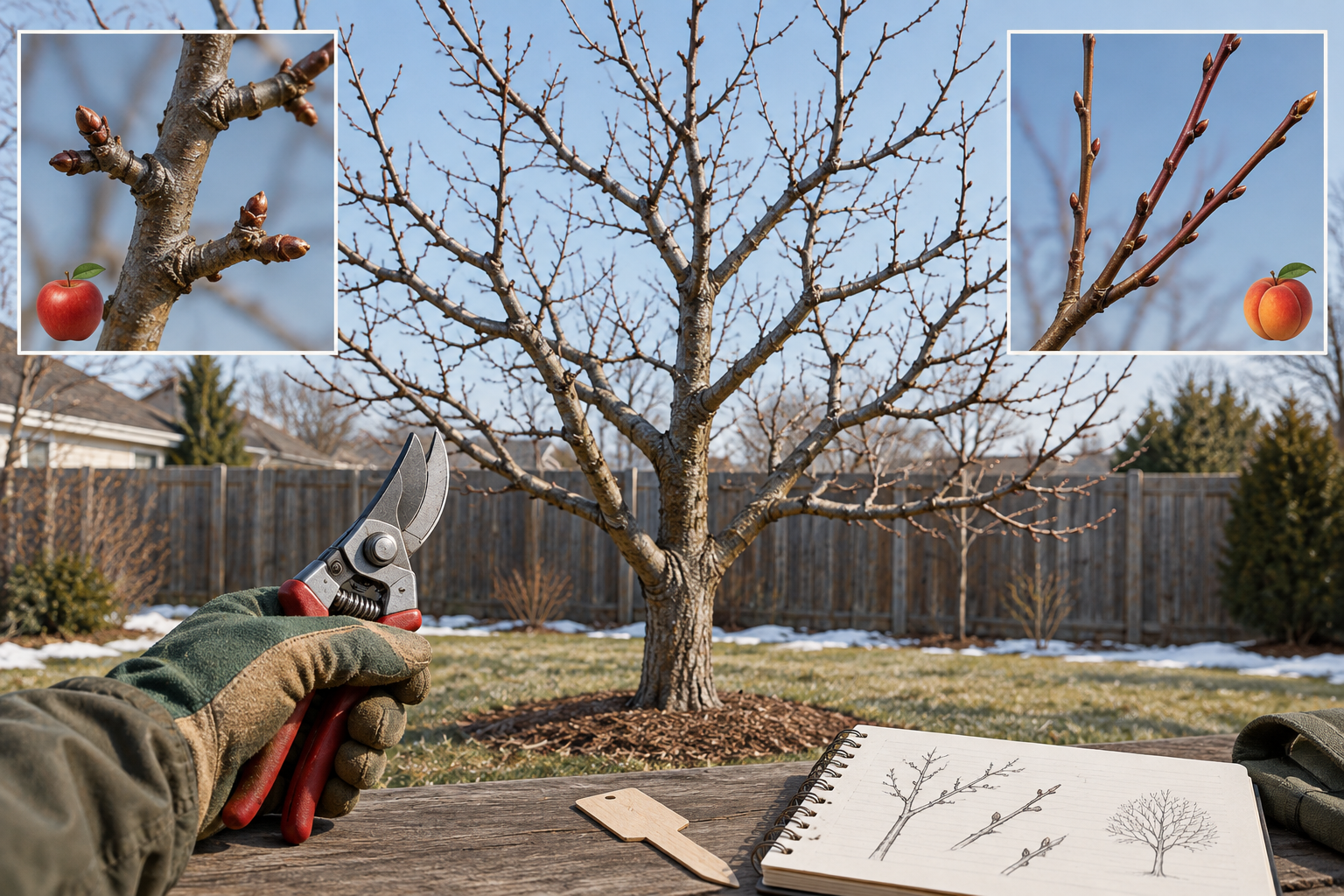
Just Planted a Tree? A Late-Fall Checklist Before the Ground Freezes
Before winter, check soil conditions, keep mulch away from the trunk, and consider protection only when it suits the tree and its risks. Local conditions should guide your next steps.
What to check before the ground freezes
A short site assessment helps you choose relevant care rather than following a one-size-fits-all winter routine.
Before the ground freezes, check whether the soil is dry or wet, whether mulch is piled against the trunk, and whether your tree’s species or location makes trunk protection worth considering. Water only if conditions call for it, and follow local or nursery guidance where available.
The right choice depends on the species, when it was planted, drainage, recent rain, and exposure. A tree in a dry, well-drained area may need different attention from one in persistently wet soil. University of Minnesota Extension notes that young and newly planted trees can be susceptible to winter injury, including sunscald, but that does not mean every new tree needs extra water or a wrap.
Start with the nursery tag, planting receipt, or other information about the tree. Note how exposed it is to winter sun and whether animal browsing is a concern in your yard. Check your local extension service for region-specific recommendations, particularly if you do not know the species.
- Find the tree’s species and planting information if available.
- Consider recent rainfall, drainage, and whether the soil is frozen.
- Look at the mulch and trunk base without disturbing the roots.
- Use local guidance when the species or conditions are unclear.
Water only when the soil and tree need it
Fall watering can be useful in dry conditions, but it is not an automatic seasonal task.
University of Minnesota Extension recommends thorough watering before the soil freezes. Utah State University Extension notes that newly planted trees may need water during prolonged dry fall periods, until the ground freezes. These regional recommendations are not a universal schedule or volume for every tree.
Check the soil around the tree and consider recent rain and how quickly the site drains. If the root area seems dry and the ground is still unfrozen, watering may be appropriate. Apply water slowly around the root area so it can soak in, and follow any instructions supplied with the tree or by a local extension service.
If the soil is already moist or saturated, do not add water simply because winter is approaching. Do not water frozen ground. If you cannot tell whether watering is appropriate, ask a local extension service or knowledgeable nursery rather than compensating with repeated watering.
- Dry soil and an unfrozen root area may indicate watering is worth considering.
- Wet or saturated soil is a reason not to water automatically.
- Use local or nursery instructions instead of assuming one amount fits every site.
Mulch the root area, not the trunk
A broad, even mulch layer can support the root area without burying the base of the tree.
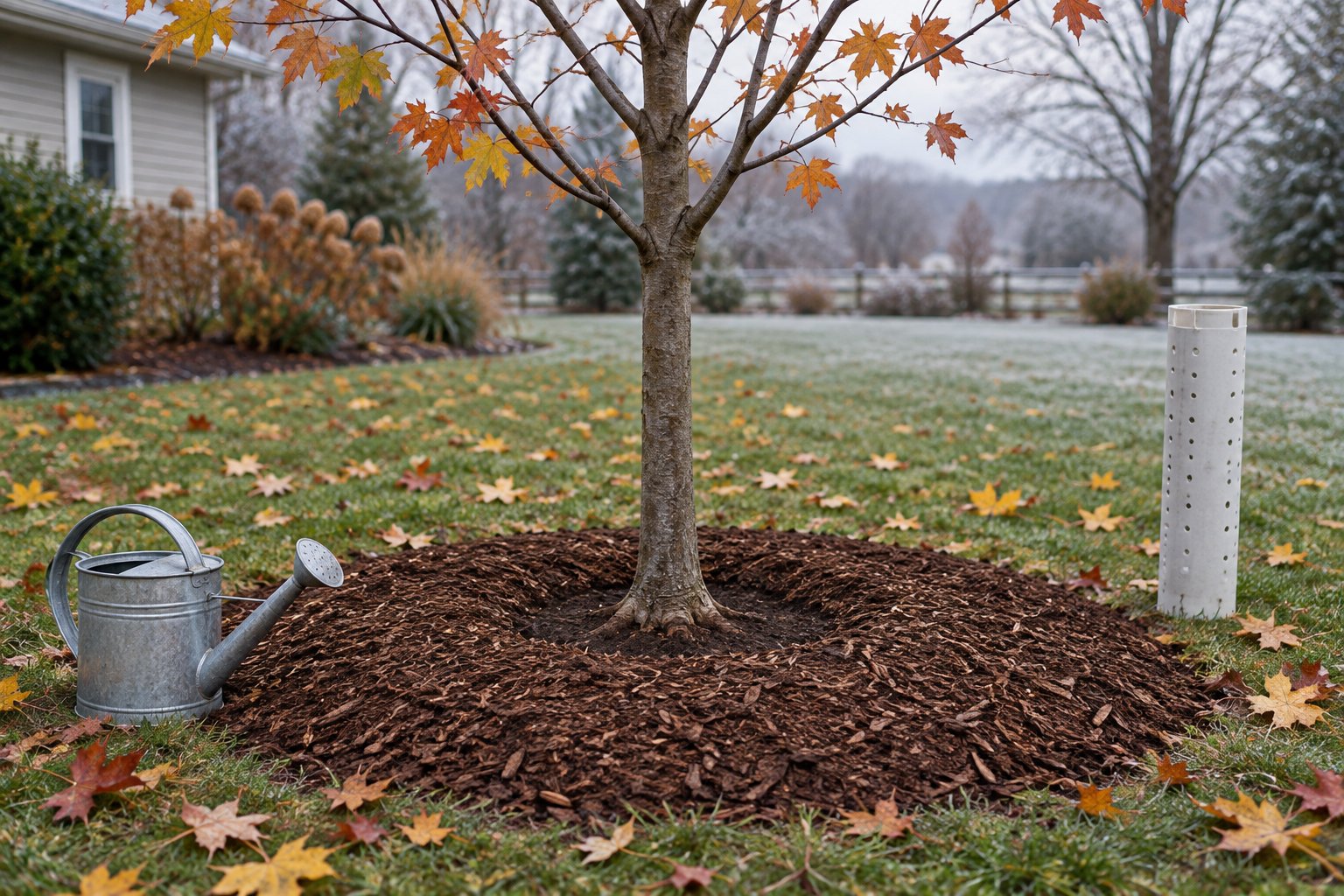
Mulch can help conserve soil moisture and buffer soil temperatures. Spread it over the root area, but keep it away from the trunk and the root flare—the place where the trunk widens into the roots. The goal is not to build a mound against the bark.
If mulch is already touching the trunk or hiding the root flare, gently pull it back. If you plan to add mulch, consult local recommendations for depth; extension guidance varies, so there is no single depth to prescribe for every site and material. Adding more is not automatically better.
Mulch and watering serve different purposes. A mulch layer can help moderate soil conditions, but it should not be treated as proof that the soil is moist or as a substitute for checking conditions.
- Spread mulch broadly over the root area.
- Keep the trunk and root flare visible and free of mulch.
- Follow local recommendations for depth rather than building a mound.
Choose trunk protection for the actual risk
A guard may be suitable for some trees, but the type of protection should match the problem you are trying to prevent.
Young, newly planted, and thin-barked trees can be susceptible to sunscald. University of Minnesota Extension discusses reflective guards for susceptible trees and advises removing the wrap in spring. Whether a guard is appropriate depends on the species, exposure, and local conditions.
If local guidance indicates that a guard is suitable, use one intended for that purpose and follow its installation instructions. Avoid wrapping the trunk tightly or leaving seasonal protection in place indefinitely. Make a note to inspect it and remove it in spring as directed.
Sunscald protection is different from protection against animal browsing. A reflective guard should not be assumed to deter rabbits or deer. If animals are a concern, ask your local extension service about a barrier suited to the likely animal and the tree.
- Check whether the tree and its exposure make sunscald a relevant concern.
- Use a suitable guard only when guidance supports it.
- Treat animal barriers as a separate decision from trunk wrapping.
A quick late-fall decision checklist
Use your observations to choose a modest next step, not to guarantee the tree’s winter survival.
Work through these checks before the soil freezes. If a detail is uncertain, local advice is more useful than a fixed rule that may not suit your tree or site.
- Find the tree’s species, planting date, and any care instructions.
- Check whether the soil around the tree is dry, moist, saturated, or frozen.
- If the root area is dry and the soil is unfrozen, consider watering in line with local or nursery guidance.
- Spread mulch across the root area while keeping the trunk and root flare uncovered.
- Consider trunk protection only if it addresses a relevant risk for this tree and site.
- Note when any seasonal guard should be checked and removed.
- Ask a local extension service for species- and region-specific advice if you are unsure.
| What you notice | What to consider | Do not assume |
|---|---|---|
| The root area seems dry and the soil is unfrozen | Check local or nursery guidance and consider watering | One fixed amount or schedule suits every tree |
| The soil is already wet or saturated | Hold off on automatic watering and reassess conditions | More water is always beneficial |
| Mulch touches the trunk or hides the root flare | Pull it back gently and leave the trunk base visible | A deeper mound is better protection |
| A young or thin-barked tree is exposed to winter sun | Check local guidance on a suitable guard | Every newly planted tree needs a wrap |
| Animal browsing is a concern | Ask about a barrier suited to the animal and tree | A reflective sunscald guard solves both risks |
Recheck in winter and seek local help when needed
A later look can catch shifted mulch or protection, while significant damage calls for qualified guidance.
When it is safe and practical, check that mulch has not shifted against the trunk and that any guard remains in place as intended. In spring, remove seasonal protection according to its instructions and local advice.
A change in bark appearance or a damaged branch does not by itself establish the cause. Avoid attempting significant repairs based on a quick visual check. For substantial trunk damage, instability, or a problem you cannot assess confidently, contact a qualified arborist. For questions about species, soil, and local freeze conditions, a nearby extension service can help.
These steps can reduce avoidable risks, but they cannot guarantee that a tree will survive winter. Your best next step is to record what you know about the tree, check current local guidance, and act only where the conditions support it.
- Check mulch and any guard when conditions allow.
- Keep the nursery label or care instructions for future reference.
- Seek qualified help for significant damage or an unstable tree.
Frequently asked questions
Should I water a newly planted tree before winter?
Possibly. If the root area is dry and the soil is still unfrozen, watering may be appropriate, especially after a prolonged dry period. If the ground is saturated or frozen, do not water automatically. Follow local or nursery guidance.
How much water does a new tree need in fall?
There is no universal amount that suits every species, soil, and site. Check the tree’s care instructions and local extension guidance, and consider recent rain and drainage before watering.
How should I mulch around a newly planted tree?
Spread mulch over the root area, but keep it away from the trunk and root flare. Recommendations for depth vary, so check local guidance rather than assuming one measurement applies everywhere.
Does every newly planted tree need a trunk wrap?
No. Some young or thin-barked trees may be susceptible to sunscald, but whether a guard is suitable depends on the tree, exposure, and local conditions. Follow instructions for any seasonal guard and remove it in spring as directed.
Will a reflective tree guard protect against rabbits or deer?
Not necessarily. Reflective guards for sunscald and barriers for animal browsing address different risks. Ask a local extension service about a barrier suited to the animal and tree.
Sources & further reading
Explore the original sources behind this article. Our editorial perspective is separate from the organizations we reference.
- [S1] Protecting trees and shrubs in winter | UMN Extensionextension.umn.edu
- [S2] Planting and transplanting trees and shrubs | UMN Extensionextension.umn.edu
- [S3] Putting the Yard and Garden to Bed | USUextension.usu.edu