Poinsettia Losing Leaves? Check Its Light, Location, and Water First
Falling leaves or colorful bracts do not point to one cause. Check your poinsettia’s light, temperature, soil moisture, and drainage before changing its care.
Poinsettia leaf drop: identify what is falling first
Separate the plant’s colorful display from its ordinary foliage before deciding what to inspect.
If your poinsettia is losing leaves or colorful bracts, start by checking its location, daylight, soil moisture, and drainage. The symptom alone does not show which condition is responsible, so avoid immediately watering more or changing several things at once.
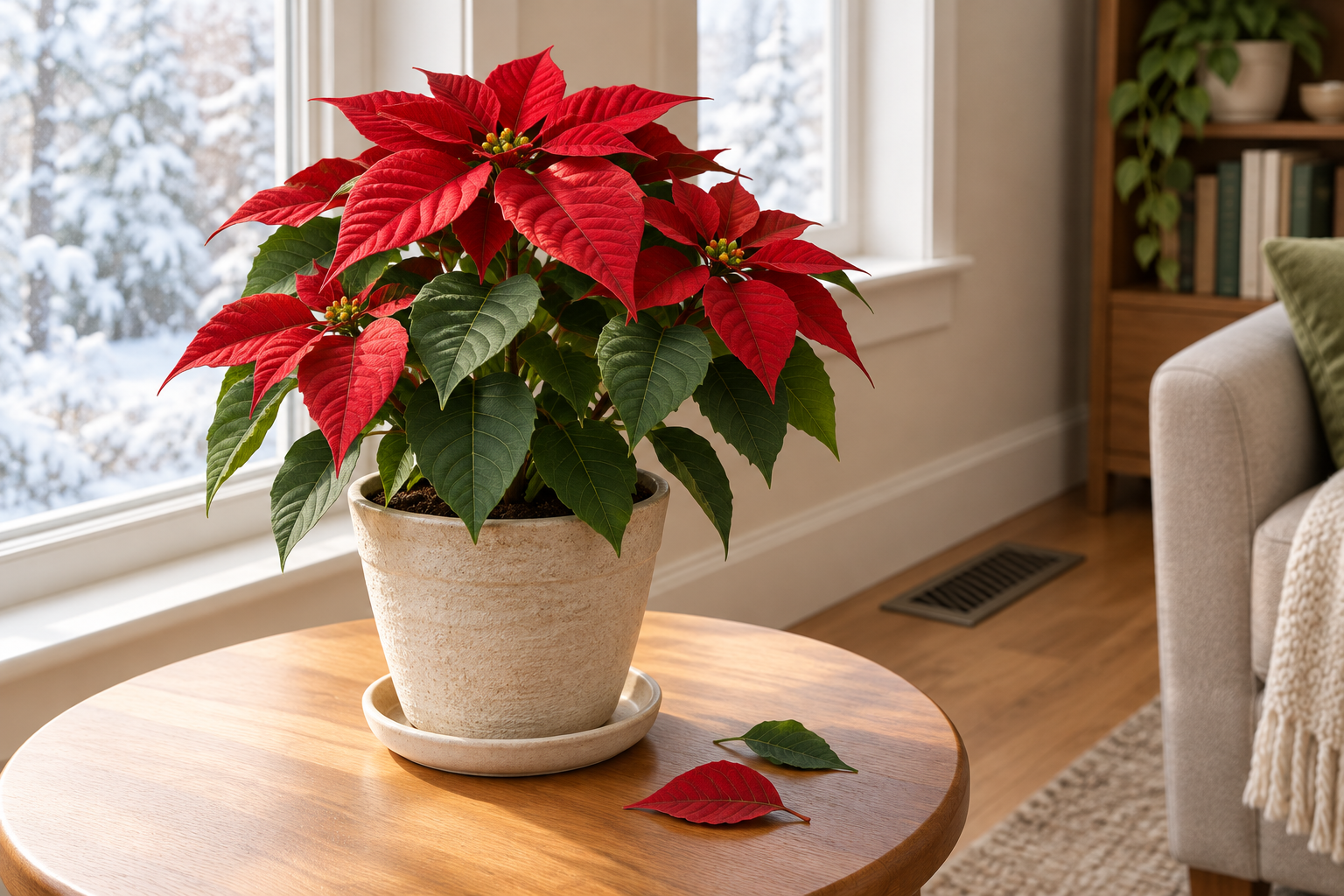
A poinsettia’s red, pink, cream, or other colorful display is made of modified leaves called bracts. The small flowers sit in the centers of those bracts. Green leaves and colorful bracts can both fall; noticing which parts are dropping helps you describe what is happening, but does not by itself diagnose the cause.
Think about the plant’s recent surroundings as well. Was it carried home in cold weather, moved beside a drafty door, placed near a heater, or left sitting in water? Treat those details as useful clues to check, not proof.
Check the location, temperature, and daylight
Look for a stable indoor position that provides daylight without exposing the plant to drafts or direct heat.
Inspect the area around the plant. Exterior doors that open often, drafty windows, fireplaces, radiators, and heating vents can expose it to cold air, direct heat, or temperature changes. If the current spot has one of these issues, move the plant to a steadier place rather than shifting it repeatedly.
University of Minnesota Extension says indoor temperatures around 65–70°F suit poinsettias, advises avoiding drafts and heat sources, and warns that exposure below 50°F can cause damage. These are useful reference points, not a guarantee that every home or plant will respond in exactly the same way.
Check the light while choosing a new spot. Poinsettias need bright daylight indoors, so a dim corner may be worth changing. Keep the plant from touching cold window glass, and do not trade a dark location for a position directly beside a heater. A bright area that avoids both extremes is a sensible first choice.
- Move the plant away from drafty doors and cold windows.
- Keep it away from direct heat from vents, radiators, and fireplaces.
- Choose a bright spot where leaves do not touch chilly glass.
Check soil moisture and drainage before watering
Use the soil and pot as evidence of whether water is needed, then make sure it has somewhere to go.
Feel the soil surface and, if practical, lift the pot. University of Minnesota Extension recommends watering when the soil surface feels dry or the pot feels light, then allowing the water to drain fully. This is more informative than watering automatically on a set weekday.
If the soil is still moist or the pot feels heavy, pause before adding water. Wilt or falling leaves do not automatically mean the plant needs more: Illinois Extension notes that wilted poinsettias tend to drop bracts sooner, but that observation alone cannot establish why a particular plant is wilting.
When the soil is dry or the pot feels light, water the soil and let the excess run out. Check the saucer and any decorative foil or outer sleeve afterward. Empty standing water rather than leaving the inner pot sitting in it; persistent excess water can rot roots.
- Feel the soil surface before watering.
- Use the pot’s weight as an additional cue if you can compare it over time.
- After watering, empty any water collected in the saucer or decorative cover.
Follow a simple troubleshooting sequence
A small, orderly check helps you make a useful adjustment without guessing at a cause.
Work through the basics in a consistent order. You do not need special equipment: the plant’s position, the feel of the soil, and whether water remains below the pot are enough for these first checks.
- Note where the plant sits. Look for a draft, cold glass, a nearby heat source, or a room that feels dim.
- Check whether it receives bright daylight while staying away from cold drafts and direct heat.
- Feel the soil surface and lift the pot if possible. Decide whether the soil feels dry or the pot feels light before watering.
- Inspect the pot’s drainage, saucer, and decorative cover. Empty any standing water.
- Correct one clear issue, then keep the other care steady while you observe the plant.
Make one change, then watch for further drop
Give your adjustment a fair assessment without expecting an instant or guaranteed recovery.
Start with the clearest condition you found. For example, if water is pooled in the cover, empty it and check that the pot drains. If the plant sits beside a drafty door, move it to a brighter, steadier spot. Avoid simultaneously changing its location, watering routine, and other care; doing so makes it harder to tell what may have helped.
Some leaves or bracts may continue to fall after you make an adjustment. That does not prove the change failed, and no single observation guarantees that the plant will recover or retain its display for a particular length of time. Watch whether the condition continues to change, and check the soil again before watering.
If you have checked light, temperature, moisture, and drainage but the decline continues or you cannot tell what the plant needs, do not add water or treatments at random. Recheck the basic conditions and consider asking a local plant expert or extension service for help assessing the plant.
- Choose one clear adjustment first.
- Keep other care consistent while you observe.
- Seek local plant-care guidance if the plant continues to decline and the cause remains unclear.
Frequently asked questions
Should I water a poinsettia more if it is dropping leaves?
Not automatically. Check the soil surface and, if possible, lift the pot. Water when the surface feels dry or the pot feels light, then let excess water drain. Leaf drop or wilting alone does not prove the plant needs more water.
Can a poinsettia sit near a heater?
Keep it away from direct heat, such as a heating vent, radiator, or fireplace. Choose a bright spot with a steadier temperature instead.
Are the red parts of a poinsettia flowers?
No. The colorful parts are modified leaves called bracts. The small flowers are in their centers.
Why are my poinsettia’s bracts falling?
Bract drop alone does not identify one cause. Check daylight, temperature and location, soil moisture, and drainage. Wilted poinsettias tend to drop bracts sooner, but that is not a complete diagnosis.
Sources & further reading
Explore the original sources behind this article. Our editorial perspective is separate from the organizations we reference.
- [S1] Growing and caring for poinsettia | UMN Extensionextension.umn.edu
- [S2] Caring for Poinsettias | Houseplants | Illinois Extension | Illinoisextension.illinois.edu