How to Protect Water Pipes Before a Freeze: A Home Checklist
Find the pipes most likely to freeze, prepare indoor and outdoor plumbing before cold weather, and take safe first steps if water flow slows or stops.
How to protect water pipes before a freeze
A short inspection and a few targeted preparations can reduce risk, though no single step guarantees that pipes will not freeze.
To protect water pipes before a freeze, first find plumbing in cold or unheated spaces, then disconnect outdoor hoses, insulate exposed sections, and close gaps that let cold air reach pipes. During severe cold, open cabinets around vulnerable indoor plumbing and keep the home heated. If water flow slows or stops, treat it as a possible frozen pipe and use only safe heat while arranging professional help if needed.
The pipes that deserve attention are not necessarily the ones you see every day. A line inside a cabinet against an outside wall may be more exposed than plumbing in a heated room. Risk depends on the home’s layout, insulation, plumbing, and local weather, so use this checklist to identify weak spots rather than relying on one temperature or one prevention measure.
Start with a quick pipe-risk check
Walk through the spaces where plumbing is exposed to cold air or separated from the home’s regular heat.
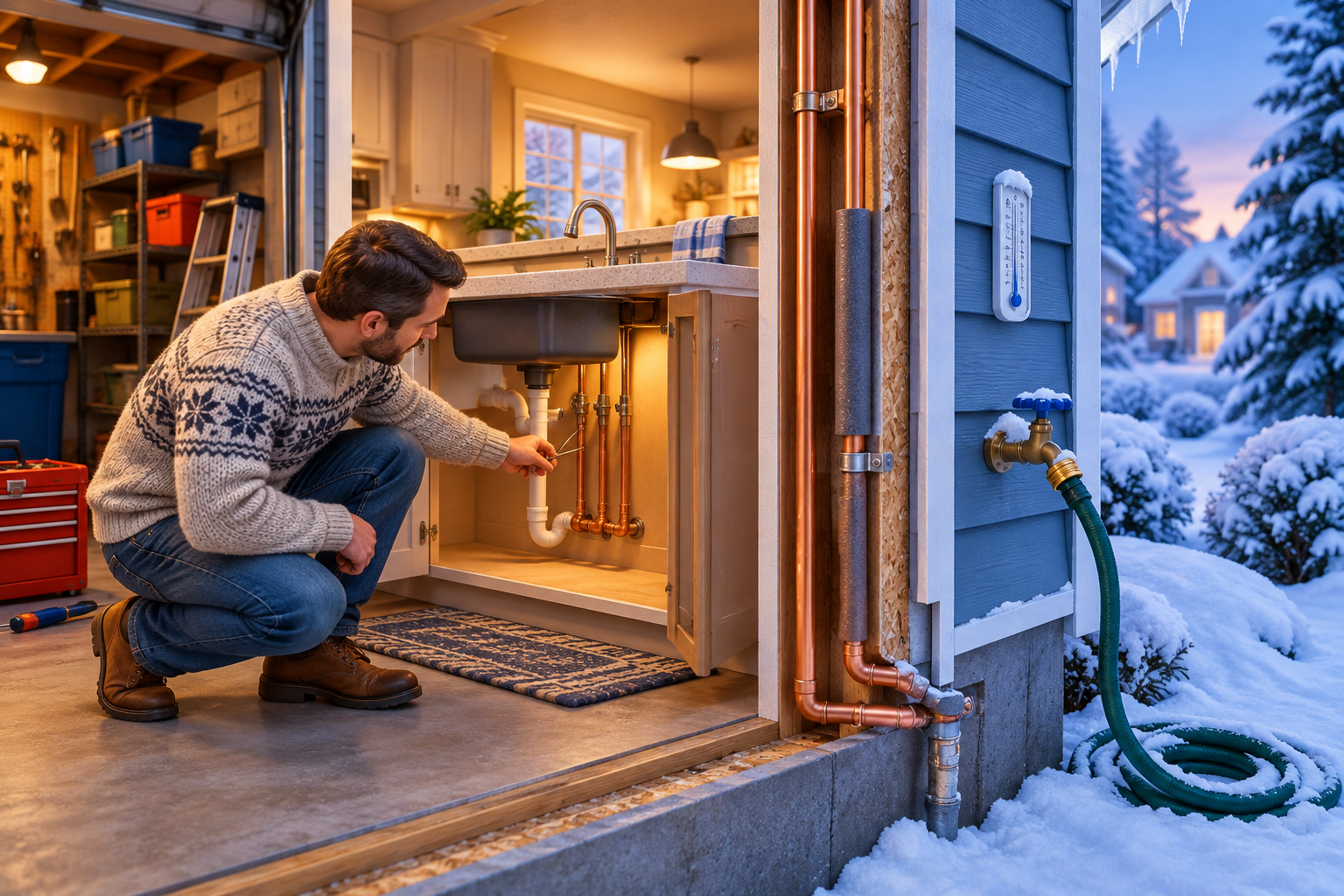
Look for water lines in garages, attics, crawl spaces, basements, and other areas that are unheated or less insulated than the main living space. Check along exterior walls and inside cabinets beneath sinks, especially where a sink backs onto an outside wall. Outdoor faucets and pipes serving exterior fixtures also merit attention.
If you rent, tell your landlord or property manager about exposed or damaged insulation, persistent drafts near plumbing, or pipes in an unheated shared area. Ask who is responsible for winter preparation and how to report a leak after hours. Do not remove building panels or attempt plumbing work that is outside your role or skill.
- Note where pipes are visible and whether the area is heated.
- Check for openings or drafts near plumbing, including around exterior walls and utility penetrations.
- Make a simple map or phone note of vulnerable locations so household members know where to check.
Prepare outdoor plumbing before temperatures drop
Outdoor connections and seasonal systems may need different winterizing steps.
Disconnect garden hoses from outdoor faucets before freezing weather. A hose left connected can hold water at the connection and leave the attached plumbing exposed to freezing conditions. If you have a dedicated shutoff for an outdoor faucet, follow the fixture’s instructions or ask a plumber or property manager how to use it correctly.
Irrigation systems, pools, and other outdoor plumbing may require a specific winterization process. Follow the manufacturer’s or installer’s instructions for your system rather than applying a generic method. If you are not sure how it is configured, contact the installer or a qualified plumbing professional before a freeze is forecast.
Insulate exposed pipes and block cold drafts
Focus on the places where insulation and air sealing can keep cold air from reaching plumbing.
Fit suitable pipe insulation around exposed sections in cold areas, following the product instructions and any local requirements. Insulation slows heat loss but does not create heat, so it should be paired with attention to drafts and indoor temperatures. If a pipe is difficult to reach, damaged, or part of a system you do not understand, ask a professional rather than forcing material into the space.
Seal gaps that allow cold outdoor air into areas near pipes. The National Association of Insurance Commissioners includes insulating exposed pipes and sealing drafts among its winter-weather precautions. Avoid covering vents or openings that are needed for appliances, ventilation, or safe operation; if you are unsure whether a gap can be sealed, get qualified advice.
Use a cold-weather routine indoors
Small adjustments can help warm air reach plumbing, but should not replace heating or an inspection of vulnerable areas.
During severe cold, open the cabinet doors beneath sinks where plumbing sits against an exterior wall. This lets room air circulate around the pipes. Before doing so, move household cleaners, medicines, and other potentially hazardous products out of children’s reach, and secure them safely elsewhere.
A slight drip from a faucet served by exposed plumbing may help keep water moving during a hard freeze, but it is not necessary or appropriate in every home. Consider it only when you know which faucet serves the vulnerable pipes and can do so without creating a slip hazard or other problem. Do not rely on dripping as a substitute for heat, insulation, or professional guidance.
If you leave home during freezing weather
Plan for the home to stay warm and make sure someone can respond if a problem develops.
The American Red Cross recommends keeping the thermostat at no lower than 55°F when leaving home during cold weather. Treat that as the Red Cross’s general recommendation, not a guarantee against frozen pipes or a setting that fits every building. Conditions vary, and pipes in especially exposed locations may need additional protection.
Before you go, check that the heating system is operating normally, close windows and exterior doors, and make sure household members know how to report a leak. If you will be away for an extended period or the home has a history of freezing, ask a plumber or property manager what additional precautions fit that plumbing system.
| Area | What to check | Practical next step |
|---|---|---|
| Outdoor faucets | Garden hose still connected | Disconnect the hose before freezing weather |
| Cold or unheated spaces | Exposed plumbing or nearby drafts | Insulate suitable pipe sections and address drafts safely |
| Under-sink cabinets | Pipes against an exterior wall | Open cabinet doors during severe cold; move chemicals out of children’s reach |
| Home before departure | Heating and access to help | Review the Red Cross thermostat recommendation and leave a contact plan |
| Irrigation or pool lines | System-specific winterization needs | Follow the installer’s or manufacturer’s instructions |
What to do if a pipe may be frozen
Act cautiously: keep water moving if possible, apply safe heat, and avoid actions that can cause fire, injury, or further damage.
A faucet that produces only a trickle or no water during freezing weather may indicate a frozen pipe. If you can identify the affected faucet, leave it open so water can flow as the ice melts. Use only safe heat that is appropriate for the location and appliance, and stay present while applying it. Do not use a blowtorch, candle, or any other open-flame device; the National Weather Service and American Red Cross both warn against open flames for thawing pipes.
If you cannot reach the suspected frozen section safely, do not dismantle walls or use improvised heating methods. Contact a licensed plumber, particularly if water flow does not return, you see a leak, or the pipe may have split. If water is escaping, locate the main shutoff only if you can do so safely and contact a plumber promptly.
- Leave the affected faucet open if you can identify it.
- Use safe heat only; never use an open flame or blowtorch.
- Stop if you cannot access the pipe safely or if water begins leaking.
- Contact a licensed plumber if the problem persists, the pipe is inaccessible, or damage is visible.
Take these next steps before the forecast turns cold
A focused inspection now makes it easier to respond calmly when temperatures fall.
Walk through the home and list exposed pipes, outdoor connections, and areas that lose heat quickly. Disconnect garden hoses, check insulation and drafts, and follow the specific winterization instructions for irrigation or pool plumbing. Decide who will check the home during an absence, and make sure the main shutoff and plumber contact are known to the people who may need them.
After a freeze, check vulnerable areas for leaks or dampness as conditions warm. The National Weather Service advises contacting a plumber if problems persist. If you find water damage or a leak, address it promptly rather than assuming the pipe is fine because temperatures have risen.
Frequently asked questions
Which water pipes are most likely to freeze?
Pipes in unheated or exposed areas are especially vulnerable, including outdoor lines, garages, crawl spaces, attics, and plumbing along poorly insulated exterior walls. Check beneath sinks on outside walls as well.
Should I leave a faucet dripping during a freeze?
A slight drip may help keep water moving through a faucet served by exposed pipes, but it is not a universal solution. Consider it only when it is practical and safe, and do not use it instead of heating, insulation, or professional advice.
What temperature should I set when I leave home?
The American Red Cross recommends keeping the thermostat at no lower than 55°F when leaving during cold weather. This is a general recommendation, not a guarantee; a home with especially exposed plumbing may need additional precautions.
Can I use a torch to thaw a frozen pipe?
No. Never use a blowtorch or another open flame to thaw a pipe. Use only safe heat, and call a licensed plumber if the pipe is inaccessible, leaking, or does not thaw.
What should I do if a pipe bursts?
If it is safe, use the main water shutoff to stop the flow and contact a licensed plumber promptly. Avoid entering areas with standing water near electrical equipment, and seek emergency assistance if there is an immediate safety hazard.
Sources & further reading
Explore the original sources behind this article. Our editorial perspective is separate from the organizations we reference.
- [S1] Preventing & Thawing Frozen Pipes | American Red Crossredcross.org
- [S2] How Can I Protect My Home From Winter Weather?content.naic.org
- [S3] Essential Tasks After it Warms Upweather.gov