Before the First Snow: A Safe Snowblower Check and Start-Up Routine
Before the season’s first snowfall, identify your snowblower’s model and power source, inspect it while it is off, and follow its manual for starting and maintenance. If it jams, stop, wait for moving parts to stop, and never reach into the auger or chute.
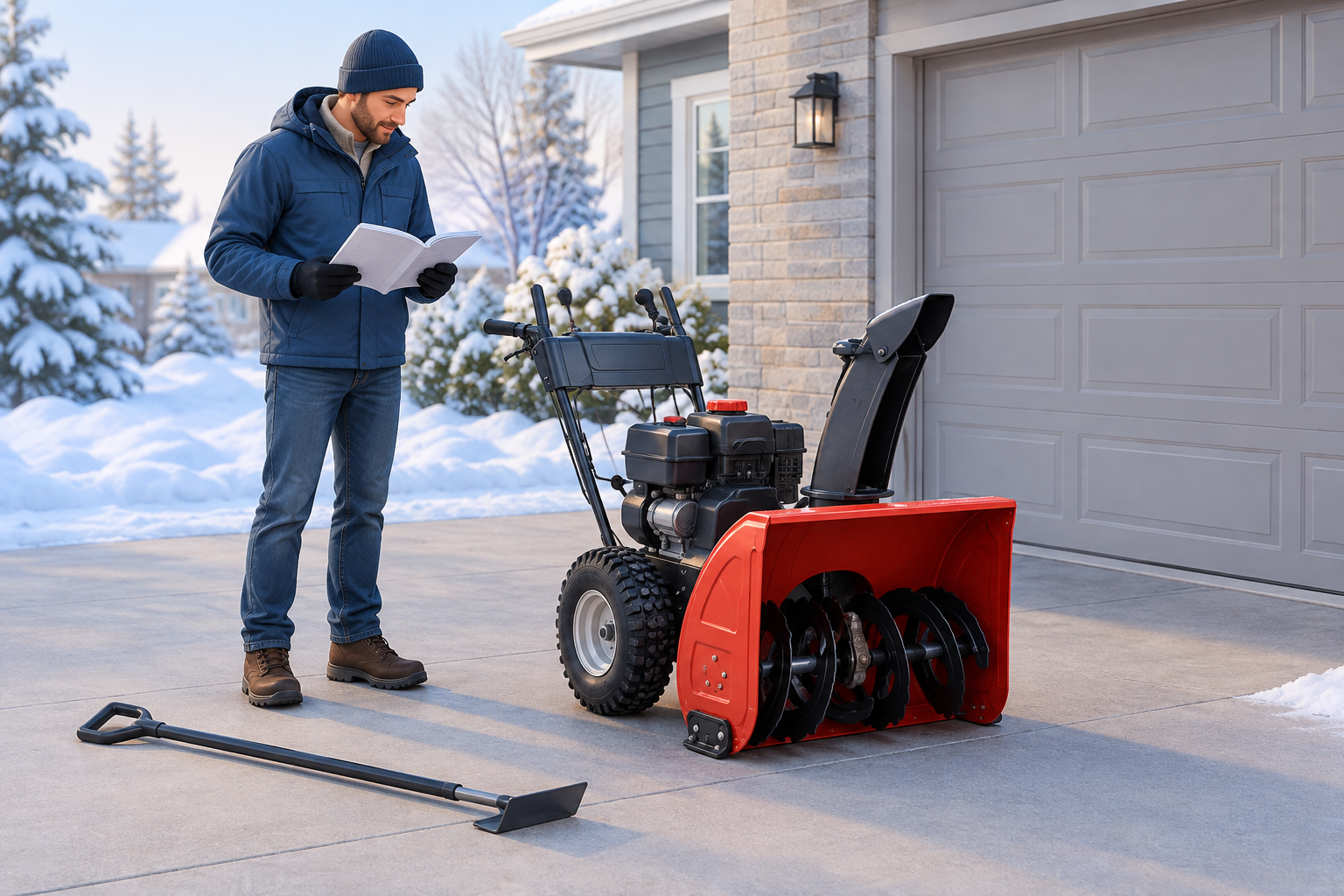
Start with your snowblower’s manual and power source
A useful pre-season check begins with the instructions for the exact machine—not a generic start-up sequence.
Before operating a snowblower for the first time this season, find the owner’s manual and identify the make, model, and power source. If you do not have a paper copy, check the manufacturer’s website using the model information on the machine. Avoid guessing if the controls, maintenance schedule, or starting procedure are unfamiliar.
Gas-powered, corded-electric, and battery-powered snowblowers do not all have the same start-up or power-isolation steps. The manual should tell you what to inspect, how to prepare the machine, which controls to use, and what to do before maintenance or clearing a blockage. CPSC’s snow thrower guidance supports a cautious, model-aware approach rather than assuming one procedure fits every machine.
Use this guide as an orientation, not a substitute for the manual. It is aimed at U.S. homeowners and renters, but the machine’s own instructions take priority for its specific operation and maintenance.
Inspect the machine while it is off
A quiet visual inspection can help you spot an obvious reason to pause before adding power or starting the engine.
Park the snowblower on a stable surface and make sure it is off before looking it over. Keep your hands clear of the auger, impeller, and other moving parts. Follow the manual’s instructions for making the machine safe to inspect; controls and procedures differ, so do not assume that switching it off alone is the right preparation for every task.
Look for visible damage, loose or missing parts, a damaged cord or plug on a corded model, or a battery or fuel issue that the manual identifies as a reason not to operate. Check for packed snow or debris only from a safe position. Do not reach into the auger or chute, even when the machine appears off. If something is lodged there, use the manual’s clearing procedure instead.
If a part looks broken, a guard or control is missing, or you are uncertain about what you are seeing, do not improvise a repair or test the machine to see what happens. Consult the manual, manufacturer, or a qualified service provider. A visual check can help identify concerns, but it cannot certify the snowblower as safe.
- Confirm you have identified the correct model and read the relevant instructions.
- Look for obvious damage or missing parts without reaching into openings.
- Stop and seek guidance if a concern is unclear or beyond the manual’s instructions.
Prepare the area and handle fuel before start-up
Choose a clear outdoor test area and complete any fuel-related preparation before the engine is started.
Move the machine to an outdoor location suitable for a brief test, following the manual’s directions. Keep people, pets, and loose objects away from the machine and the area where snow or debris could be discharged. Make sure you have room to operate the controls without stepping into the machine’s path or blocking your own way back.
For a gasoline-powered snowblower, check the manual’s fuel instructions and refuel before starting. OSHA advises against refueling while an engine is running or hot. If the engine has been used recently, wait until it is cool as directed by the manufacturer; do not rush this step because weather is worsening. Clean up any spilled fuel according to the product instructions before starting.
Electric and battery models do not use gasoline, but still require model-specific preparation. Check the manual for how to connect the cord or install and use the battery, and for any warnings about damaged electrical parts. Do not test a corded machine if its cord or plug appears damaged.
Use the manual for a short, cautious test
A first start is a chance to check whether the machine behaves as expected—not to push through a warning sign.
Follow the starting sequence and control instructions for your model. Do not rely on a sequence remembered from a different snowblower; even machines with similar controls may differ. Keep your hands and clothing clear of moving parts, and maintain a stable position while operating the controls.
Pay attention to whether the machine starts and responds as described in its manual. Stop if it behaves unexpectedly, makes an unfamiliar sound, shows visible damage, or does not respond as expected. Do not keep restarting it or try an improvised adjustment to overcome a problem. Turn to the troubleshooting section of the manual or contact a qualified service provider.
This test does not guarantee that the machine will work reliably under snow or that every component is safe. It is a limited check before use. If a problem remains unresolved, do not use the snowblower until you have followed appropriate service guidance.
- Use the model’s instructions for starting and control operation.
- Stop if the machine behaves unexpectedly; do not force a restart or adjustment.
- Use the manual or qualified service help for problems that you cannot resolve as instructed.
What to do if the auger or chute is blocked
A blockage calls for stopping and waiting—not reaching in to pull material out.
If snow or debris blocks the machine, stop it and wait until moving parts have stopped. Then follow the manual’s jam-clearing procedure, including its instructions for preventing the machine from restarting or moving while you work. The required steps can differ by model and power source, so do not assume one control or disconnection method is sufficient for every machine.
Never put a hand into the auger or discharge chute. The Consumer Product Safety Commission advises using a stick rather than hands to unclog a snow thrower, and OSHA likewise advises turning the machine off, waiting for moving parts to stop, and never clearing a jam by hand. Use only an appropriate clearing tool as directed by your machine’s manual; keep your hands away from the opening while clearing.
Once the blockage is cleared, follow the manual for any further checks before restarting. If the jam does not clear using the prescribed method, or the machine appears damaged, stop and seek service rather than prying, dismantling, or reaching farther into the machine.
- Stop the machine and wait for all moving parts to stop.
- Follow the manual’s instructions to prevent movement or restart before clearing.
- Never use your hands; use an appropriate long clearing tool as directed.
- If the blockage or a related problem persists, stop and seek qualified help.
A quick comparison by power source
The right preparation depends in part on how the machine receives power, but the manual remains the authority for each model.
Use the comparison below to identify which instructions to look for. It is not a replacement for the manufacturer’s procedure, and it does not cover every design or feature.
| Power source | Manual details to check | Do not assume |
|---|---|---|
| Gasoline | Fuel requirements, refueling precautions, starting sequence, and maintenance instructions. | That refueling or troubleshooting steps are the same as on another engine. |
| Corded electric | Cord and connection requirements, starting controls, and the procedure for disconnecting power before inspection or clearing. | That a damaged cord or plug is safe to test, or that switching off alone is enough for maintenance. |
| Battery electric | Battery installation and charging instructions, starting controls, and the procedure for removing or isolating the battery before service. | That every battery model uses the same isolation or jam-clearing steps. |
Know when to stop and arrange service
The safest next step is sometimes to leave the machine off until a qualified person can assess it.
Do not operate the snowblower if it has visible damage, a missing part the manual identifies as important, or a fault you cannot understand. Stop if it behaves unexpectedly during a test or if a jam cannot be cleared using the prescribed process. Avoid removing guards, dismantling parts, or attempting repairs that the manual does not cover.
If you rent, check who is responsible for maintaining the equipment and contact the property owner or manager if appropriate. If you own it, use the manufacturer’s support or a qualified service provider for repairs outside your experience. Keep the model information available when asking for help; it can make it easier to discuss the specific machine and problem.
Before the next snowfall, keep the manual accessible and review the start-up and jam-clearing steps once more. The practical goal is not to prove the machine is problem-free, but to know what you can check safely, what needs professional attention, and when not to operate it.
- Leave a damaged or malfunctioning machine off.
- Do not improvise repairs or remove parts unless the manual directs you to do so.
- Keep the model number and manual handy when contacting support or service.
Frequently asked questions
Can I use a generic snowblower start-up checklist?
Use a general checklist only as a reminder of questions to ask. Starting, inspection, maintenance, and power-isolation procedures vary by model and power source, so follow the manual for your machine.
Should I refuel a snowblower while it is running?
No. OSHA advises refueling before starting, not while the engine is running or hot. Follow the manufacturer’s fuel instructions and wait for a recently used engine to cool as directed.
What should I do if snow is packed into the chute?
Stop the machine, wait until moving parts have stopped, and follow the manual’s jam-clearing procedure. Never reach into the chute or auger with your hands; use an appropriate clearing tool as instructed.
Can I start the snowblower if I notice damage?
Do not test or operate a machine that appears damaged or has a missing part of concern. Check the manual and contact the manufacturer or a qualified service provider if you are unsure what the issue requires.
Does a successful first start mean my snowblower is safe to use?
No. A brief test cannot certify the machine or guarantee reliable performance. It only helps you check whether it responds as expected; stop and seek help if you notice a problem.
Sources & further reading
Explore the original sources behind this article. Our editorial perspective is separate from the organizations we reference.