How to Start Feeding Backyard Birds This Winter: A Simple Setup and Care Routine
Start with one accessible feeder and a single food, then build a simple routine for checking the seed, cleaning the feeder, and tidying the ground. If a feeder does not fit your space, plants are another option.
How to start feeding backyard birds this winter
A small, maintainable setup is a better first step than buying several feeders or foods at once.
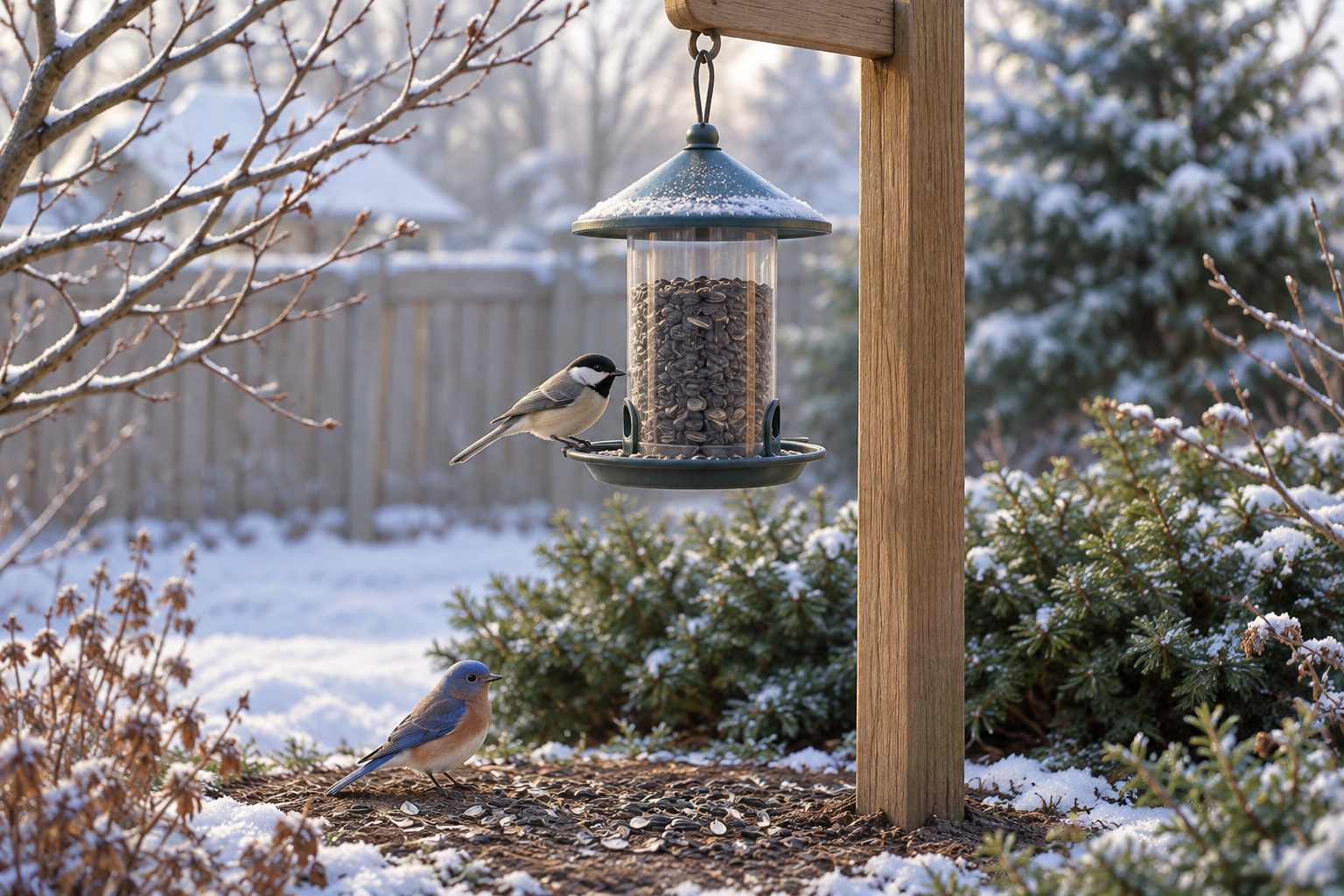
To start feeding backyard birds this winter, choose a spot you can reach safely, use one feeder suited to that location, and begin with one food. Sunflower seed is a reasonable general starting point, while local bird preferences vary. Plan to check the food, clean the feeder regularly, and remove debris from the area below it.
If you cannot keep the feeder and its surroundings accessible and clean, skip it. Plants and existing vegetation offer a feeder-free way to provide food and shelter.
Decide whether a feeder fits your space
Think about access and cleanup before choosing a feeder or filling it for the first time.
Look at the spot from the perspective of routine care. Can you reach the feeder without climbing or crossing a surface that may be icy? Can you see whether the food is damp or depleted? Is there a practical way to clear seed and other debris from the ground or balcony below it? If any answer is no, choose a more accessible location or consider a feeder-free approach.
Start with one feeder rather than spreading food across several locations. That makes it easier to notice what is being eaten, keep track of cleaning, and decide whether the routine works for you. A balcony can be suitable if you can reach the feeder and manage the debris; a yard is not automatically easier if the feeder is hard to access in winter.
- Choose a location that is safe to reach in winter weather.
- Make sure you can inspect the food and feeder without difficulty.
- Consider where spilled seed and hulls will collect.
- Decide whether you can fit regular cleaning into your routine.
| Approach | May suit you if | Plan for |
|---|---|---|
| One feeder | You have a reachable spot and can maintain it | Checking food, cleaning the feeder, and tidying below it |
| Plants or existing vegetation | You prefer not to manage a feeder or have limited space | Choosing plants suited to local conditions and allowing time for them to grow or provide shelter |
Choose one food to begin
A single food makes it easier to see what is being used and what is going to waste.
Sunflower seed is a practical first choice for many beginners. Cornell Lab of Ornithology says it attracts the widest variety of birds among common feeder seeds. That is a comparison among common feeder seeds, not a guarantee that birds will visit a particular yard or prefer the same food everywhere. The species and feeding habits you see depend on your location.
If you prefer a seed mix, check its ingredients. Some mixes contain less-attractive filler seeds that may be left behind. Starting with one food can help you spot whether it is being eaten or accumulating beneath the feeder. If you later change the food, change one thing at a time so you can tell whether the adjustment makes a difference.
Choose a feeder you can maintain
The right feeder is one that works with your chosen food and your ability to clean it.
Check that the feeder is intended for the food you plan to offer. Before buying, consider whether you can take it down, open its parts, and clean it according to its care instructions. Also think about where it will sit or hang and whether you can reach the area beneath it to remove spilled seed and debris.
There is no need to buy multiple feeder styles to get started. One feeder gives you a manageable trial. Focus on access, durability, and ease of cleaning rather than expecting a particular shape to attract particular birds. Local conditions and the birds already in your area influence what you may see.
Set a realistic cleaning and checking routine
Use a recurring reminder as a baseline, but respond sooner to wet weather, heavy use, or visible dirt.
Cornell Lab recommends cleaning seed feeders about every two weeks. It advises cleaning more often during heavy use or wet weather, and if sick birds have appeared. Treat that interval as a starting point, not a reason to wait when the feeder is visibly dirty or the seed is damp. Cornell also recommends removing spilled debris and letting the feeder dry before refilling it.
Follow the feeder’s care instructions for its materials and parts. During a cleaning, remove old seed and debris, clean and rinse the feeder as directed, and let it dry fully before adding fresh food. If you see birds that appear sick, clean more often; that observation alone does not identify an illness.
- Check the feeder and seed regularly, especially after rain or other wet weather.
- Remove damp or spoiled seed instead of topping it up with fresh food.
- Clean the feeder about every two weeks as a baseline, or sooner when conditions call for it.
- Clear spilled seed and debris from the surface or ground below the feeder.
- Let the feeder dry before refilling it, then set a reminder for your next check.
Keep the area below the feeder tidy
Include the surrounding surface in your checks so you notice waste and can clean it up before it accumulates.
When you inspect the feeder, look below and around it as well. Remove spilled seed, hulls, and other debris. This is easier if you chose a location that you can reach and clean without an awkward or unsafe winter trip.
If sick-looking birds have appeared, increase cleaning frequency. Avoid handling wild birds. If you are concerned about what you have observed, consult current guidance from an appropriate local wildlife authority. The practical point is to respond with extra care, not to diagnose a bird based on appearance.
Give the setup time—or choose plants instead
A feeder is one way to support backyard birds, but it is neither essential nor a promise of visitors.
Bird activity and food preferences vary by location, and a new feeder may not be used immediately. Keep the setup accessible and maintained while you observe it. If seed remains untouched or cleanup becomes inconvenient, reconsider the location or stop feeding rather than buying more feeders without a clear reason.
You can also support birds without a feeder. Cornell Lab describes plants as sources of food and shelter, including options for smaller urban spaces. Consider plants suited to your local conditions, or retain useful existing vegetation where appropriate. This approach may take time, and which birds use a space will vary.
If your feeding area is near windows, consider window-safety measures separately. Feeding does not replace precautions that make glass safer for birds.
A simple first-week plan
Use the first week to test whether the location and upkeep are manageable, rather than judging the setup by how quickly birds arrive.
Choose one reachable spot, one feeder you can clean, and one food. Put out a modest amount, then check the seed and the area below it during the week, especially after wet weather. Remove any damp or spoiled food and clear debris. Read the feeder’s care instructions before its first cleaning.
Set a reminder to clean the feeder about two weeks after you begin, with an earlier cleaning if it gets heavily used, the weather is wet, or sick birds have appeared. After several checks, ask whether the feeder is easy to reach, whether cleanup is manageable, and whether the food is being used. Continue, adjust one element at a time, or try a plant-based approach.
Frequently asked questions
What seed should I start with for backyard birds?
Sunflower seed is a reasonable general starting point. Cornell Lab says it attracts the widest variety of birds among common feeder seeds, but local visitors and preferences vary. Begin with one food and observe what happens.
How often should I clean a seed feeder?
About every two weeks is a useful baseline. Clean sooner during heavy use or wet weather, or if sick birds have appeared. Follow the feeder’s care instructions, remove debris, and let it dry before refilling.
What should I do if bird seed gets wet?
Remove damp or spoiled seed rather than topping it up. Clean and dry the feeder as needed before adding fresh food, and check it more often during wet weather.
Do I need a feeder to support backyard birds?
No. A feeder is optional. Plants and existing vegetation can provide food and shelter, and may be a better fit if you do not have a convenient place to maintain a feeder.
Why are birds not visiting my new feeder?
Bird activity and food preferences vary by location, and birds may not use a new feeder immediately. Keep it accessible and maintained while you observe. If it does not suit your space, reconsider the location or try a feeder-free approach.
Sources & further reading
Explore the original sources behind this article. Our editorial perspective is separate from the organizations we reference.
- [S1] Feeding Birds: a Quick Guide to Seed Types | All About Birdsallaboutbirds.org
- [S2] How to Clean Your Bird Feeder | All About Birdsallaboutbirds.org
- [S3] How to Provide Seeds and Shelter for Backyard Birds | All About Birdsallaboutbirds.org