How to Test a Sump Pump Safely—and Know When to Call for Help
Check your sump pump using the test method in its manual. Learn what to observe, when to stop, how to check a backup system, and which problems call for professional help.
What a sump pump test can—and cannot—tell you
A test is an operational check, not a promise that your basement will stay dry.
To check whether a sump pump works, first make sure the area is dry and safe, then follow the testing procedure in the manual for your exact model. Observe whether the pump starts, sends water through its discharge route, and stops as expected. If you cannot find or understand the instructions, do not improvise; ask the manufacturer or a qualified pump professional.
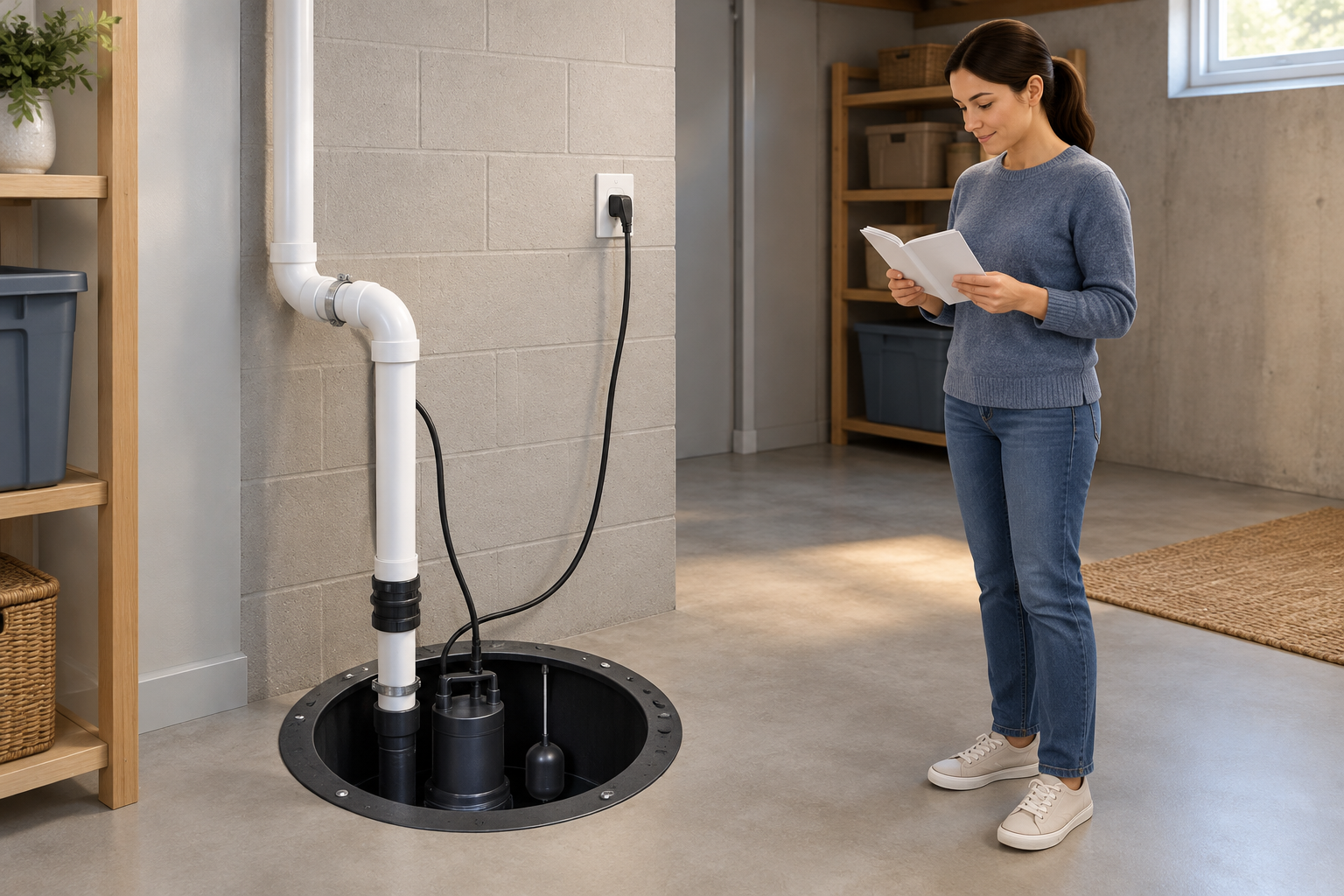
A sump pump’s float switch responds to the rising and falling water level in the basin and controls when the pump operates. A test can show whether the pump responds under the conditions you create, but it cannot establish how the system will perform during every storm or power failure. Pentair describes this float-switch function, while noting that equipment details vary by pump.
For example, a pump that starts and discharges water during a brief check may still be unable to keep up with heavy water inflow. Testing the primary pump also does not show whether a separate backup system is ready. If you rent, check with your landlord or property manager before arranging repairs or carrying out work.
Think of the test as one useful check in a broader preparedness plan. It can reveal an obvious operational problem before the pump is needed, but it cannot rule out every possible failure.
- A test can reveal that a pump does not start, discharge, or stop as expected.
- It cannot guarantee protection against flooding or prove the system can handle every water-inflow condition.
Find the exact model and its test instructions
Start with the right manual: test procedures and safe operating limits differ by design.
Look for the brand and model number on the pump’s label, then find the matching owner’s manual. Check its instructions for testing the pump and float switch, including any warnings about run time. If your setup includes a separate battery-operated or water-powered backup, find that system’s manual too.
Do not assume that instructions for one brand or model apply to another. For certain pump designs, Pentair describes lifting the float switch with a nonconductive object, while advising owners to consult the manual for model-specific testing. It also warns that some pumps may overheat if run directly for more than a few minutes. These are model-dependent cautions, not universal directions to lift a switch or use a particular run time.
If you cannot identify your pump, locate reliable instructions, or understand the stated test method, pause and ask the manufacturer or a qualified pump professional rather than trying a different procedure.
Stop if the area is wet or unsafe
Electrical safety matters more than finding out whether the pump operates.
Before approaching the basin, look at the floor and nearby equipment from a dry, safe location. If water is on the floor, the pump or electrical equipment is wet, or you would need to stand in water to inspect it, do not touch the pump, plug, cord, outlet, or controls.
Ready.gov flood-safety guidance warns against touching electrical equipment when it is wet or when you are standing in water. If conditions are unsafe, keep clear and seek qualified help. If flooding or another immediate hazard is underway, follow local emergency guidance rather than entering the affected area.
Even if the floor appears dry, stop if you see damaged wiring, a damaged plug, exposed electrical parts, or signs that water has reached electrical equipment. Do not unplug or move equipment in a wet area. If you rent, notify your landlord or property manager.
Make a visual check without handling electrical parts
A brief look may reveal an obvious reason to stop before testing.
Continue only if the area is dry and you can inspect it without reaching into the basin or moving electrical equipment. From a safe position, look for visible damage, debris or objects that could obstruct the float, and water or dampness around the pump and its connections. Do not put your hands into the basin or try to clear anything caught on the pump.
Note any unusual smell, visible corrosion, leaking, or damaged cord or plug. These observations do not identify the cause, but they are reasons to stop instead of proceeding with a test. Your pump manual may list other visual checks for your model.
If the basin is already full, water is rising, or flooding is underway, a routine test is not a substitute for responding to the situation. Keep away from unsafe conditions and contact appropriate help.
- Look for visible obstructions or damage without reaching into the basin.
- Do not open the pump, remove guards, handle wiring, or attempt repairs.
Test the pump by its specified method
Follow the approved procedure and observe the full cycle from a safe position.
If the area is dry and the manual provides a test you can perform safely, follow it exactly. Some models use a float-switch test; other designs or installations may require a different procedure. If the manual instructs you to add water to the basin, follow its directions for how to do so. Never pour water onto the pump, outlet, wiring, or other electrical equipment.
During the test, observe whether the pump starts as expected, whether water leaves through the discharge route, and whether the pump stops when the water level falls or the procedure is complete. Do not extend the run beyond the manual’s stated limits. Pentair warns that direct operation for more than a few minutes can cause some pumps to overheat, so do not assume that a longer test is harmless.
Do not reach toward a moving float or pump to make it behave differently. If the test does not work as described, stop and record what happened rather than repeating it with improvised methods.
- Confirm that the floor and equipment are dry and safe to approach.
- Read the test procedure and operating limits for the exact pump model.
- Perform only the specified test, without opening electrical parts or handling wiring.
- Observe the start, discharge, and stop behavior from a safe position.
- Stop if anything differs from the manual or you notice a hazard.
| What you observe | Practical next step |
|---|---|
| The pump starts, discharges water, and stops as described | Record the result. The test does not guarantee performance during heavy inflow or a power failure. |
| The pump does not start or does not stop as expected | Stop the test and contact a qualified pump professional or the manufacturer for model-specific help. |
| The pump runs but you do not observe discharge | Do not open, disconnect, or alter the equipment. Arrange a qualified inspection. |
| You notice damage, unusual operation, or wet electrical equipment | Keep clear and seek qualified help; do not continue the test. |
Check the backup system separately
Testing the primary pump does not confirm that backup equipment is ready for a power failure.
If your setup includes a battery-operated backup, use its own manual for status indicators, battery checks, and the approved test procedure. Do not assume the backup uses the same instructions as the primary pump, or that an indicator light alone proves the entire system will operate under every condition.
FEMA recommends a battery-operated backup for a sump pump in case of electrical failure. This is a preparedness measure, not a guarantee against flooding. Readiness depends on the particular system and conditions, so follow the manufacturer’s instructions and arrange service if the system reports a fault or you cannot interpret its status.
If you do not have a backup, note that as a separate preparedness question. Suitable options depend on your home and installation; a qualified professional can discuss them without assuming one type fits every property.
Know when to call for help
Describe what you observed rather than attempting a risky repair or guessing which component failed.
Contact a qualified pump professional if the pump fails to start, will not stop as expected, runs without visible discharge, or behaves unusually during the approved test. Seek help if you see damage, cannot find reliable instructions, or are unsure whether the electrical setup is safe.
Do not open the pump, alter wiring, bypass a switch, or keep repeating a failed test. If the area is wet or flooded, do not approach the equipment. A qualified electrician may be appropriate for electrical damage or uncertainty; a pump professional can assess pump operation. If you rent, notify your landlord or property manager so they can arrange service.
When you call, share the brand and model if you know them, the test method you followed, what the pump did, whether water discharged, and any visible warning or damage. Describe your observations rather than naming a failed component unless a professional has confirmed it.
- The pump does not start, stops unexpectedly, or does not stop as described.
- The pump runs but you do not observe water discharge.
- You notice unusual operation, visible damage, or uncertain electrical conditions.
- The area is wet or flooded and cannot be inspected safely.
Keep a short test record
A brief note makes it easier to remember what you checked and what still needs follow-up.
After a safe test, record the date, pump model if available, method used, and whether the pump started, discharged water, and stopped as expected. Add any issue and whom you contacted so the follow-up is easy to find.
Do not use a general guide to set a universal testing schedule. Follow the maintenance and inspection timing in your pump and backup-system manuals, which account for the equipment’s requirements. Before a period when the pump may be needed, make sure you can access the instructions and know whom to contact if the test fails.
Your next steps are straightforward: find the manuals, decide whether the area is safe to approach, and carry out only the approved procedure. If any part of that plan is uncertain, pause and ask a qualified professional.
Frequently asked questions
Can I test a sump pump by pouring water into the basin?
Only if the manual for your exact pump and installation instructs you to add water and explains how. Do not pour water onto the pump or electrical equipment, and do not improvise if you cannot find the model-specific directions.
How long should I let a sump pump run during a test?
Follow the run-time limits in the owner’s manual. There is no single safe duration for every model; Pentair warns that some pumps can overheat if run directly for more than a few minutes.
What should I do if the pump runs but water does not appear to discharge?
Stop the test and avoid opening, disconnecting, or changing the equipment. Contact a qualified pump professional to assess it, especially if you are unsure whether the discharge route or electrical setup is safe.
Does a successful test mean my basement cannot flood?
No. A test shows how the system behaved under that test’s conditions. It cannot guarantee that the pump can handle heavy inflow, that the discharge route will always work, or that a backup will operate during a power failure.
Can I check my sump pump if there is water on the floor?
Do not approach or touch the pump or electrical equipment if the area is wet or flooded, or if you would need to stand in water. Keep clear and contact qualified help; follow local emergency guidance if there is an immediate hazard.
Sources & further reading
Explore the original sources behind this article. Our editorial perspective is separate from the organizations we reference.
- [S1] Sump Pump Info FAQ | Pentairpentair.com
- [S2] Sump Pump Troubleshooting FAQ | Pentairpentair.com
- [S3] BE PREPARED FOR Aready.gov
- [S4] Be Flood Smart. Protect Your Propertyfema.gov