How to Transport a Potluck Dish Safely: Keep It Cold or Hot
Pack perishable food to stay cold or hot, arrange a clear handoff with the host, and use a thermometer and time limits rather than guesswork.
Start with the dish: should it travel cold or hot?
Choose a temperature plan based on how the food should be stored and served, then make sure the route and handoff support it.
Before packing, decide whether your dish needs refrigeration or is meant to be served hot. A dairy-based dip, custard dessert, or salad containing cooked poultry should generally travel cold. A casserole intended to be served hot needs a reliable plan for keeping it hot. If you are unsure whether an ingredient or dish is perishable, take the conservative route and ask the host about refrigerator space.
For U.S. food-safety guidance, keep cold food at 40°F or below and hot food at 140°F or above. The range between those temperatures is commonly called the danger zone. These are temperatures for the food itself, not the air in the car or the outside of its container. A carrier that feels cool or warm does not tell you the temperature in the middle of a large dish.
- Cold plan: chill the dish before leaving and transport it with a suitable cold source.
- Hot plan: confirm how the food will stay hot during the trip and what equipment will be ready at the gathering.
- If neither plan is workable, ask whether the host can refrigerate and reheat the dish, or choose a contribution that does not require the same temperature control.
Pack and transport a cold potluck dish
Starting with chilled food and protecting it during the drive makes cold transport easier to manage.
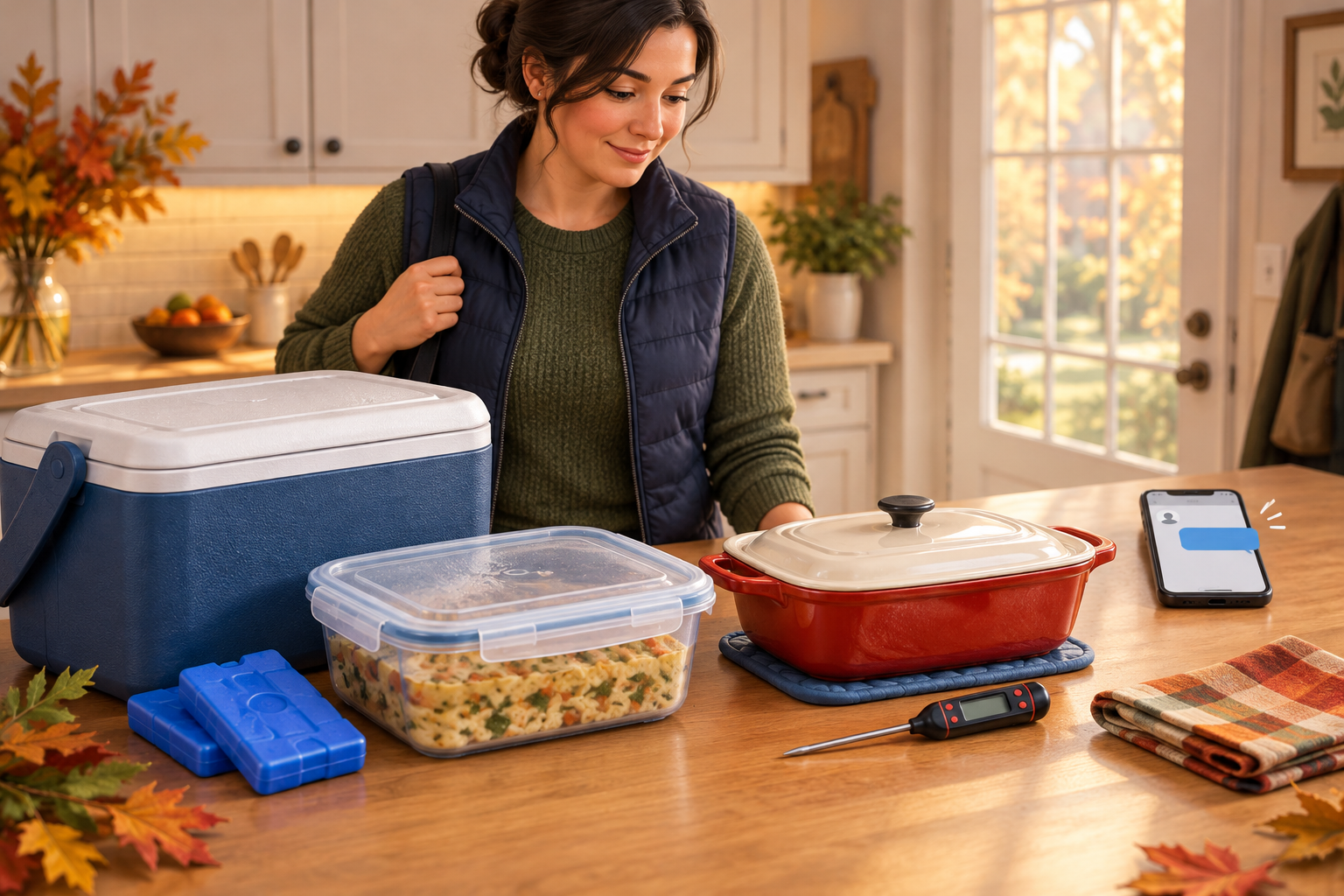
Refrigerate the dish before packing; ice packs are for keeping food cold, not for chilling a warm dish quickly. Put the food in a clean, leak-resistant container with a secure lid, then place it in an insulated cooler or suitable carrier with ice or frozen cold packs. Keep the cooler closed as much as possible, out of direct sun, and away from hot items in the car. Go directly to the gathering rather than leaving the food in a parked vehicle.
If raw ingredients are traveling in the same vehicle, seal them separately and keep them away from ready-to-eat food so raw juices cannot leak onto the finished dish. USDA FSIS advises using a cooler for car travel and keeping food at 40°F or colder during outdoor activities. For a longer outing, check the food with a thermometer rather than relying only on how cold the cooler feels.
- Use enough cold packs or ice to surround the food; one small pack may not be adequate for a large container.
- Keep the dish covered and protected from leaks or contact with other items.
- Bring a clean food thermometer if you can check the dish on arrival.
Transport hot food with a realistic holding plan
Insulation may slow heat loss, but it is not proof that food will remain hot enough throughout a trip.
A covered casserole or ordinary insulated bag may retain heat, but it does not guarantee that food will stay at or above 140°F for a particular journey length. The result depends on the dish, how much food it contains, its temperature when packed, the container, and travel conditions. The guidance reviewed for this article does not establish one transport method that works for every hot dish.
Contact the host before you leave. Ask whether an oven, warming appliance, or other suitable hot-holding setup will be ready when you arrive, and whether the dish can go straight into it. If the host cannot provide a workable plan, ask whether the food could instead be chilled and reheated before serving, or bring something else. Don’t leave a warm casserole on a counter while everyone decides what to do.
Use a clean food thermometer to check hot food when practical. FDA buffet guidance recommends checking hot-holding temperatures with a thermometer. If the food is below the hot-holding target and you do not know how long it has been there, do not try to settle the question by tasting or smelling it.
Arrange the handoff with the host before you leave
A quick, specific message helps the host make room for the dish and prevents it from waiting unattended on arrival.
Tell the host whether the dish is arriving cold or hot, when you expect to arrive, and what it needs next. Ask where to take it as soon as you walk in. That small conversation matters when refrigerator space is limited, several guests are bringing food, or the host is still setting up the meal.
Be specific rather than asking a vague question such as “Can you keep this warm?” For example: “I’m bringing a hot casserole. Will an oven or suitable hot-holding equipment be available when I arrive?” For a cold dessert, ask if it can go straight into the refrigerator until serving. If the answer changes your transport plan, agree on an alternative before you set out.
- Mention any serving instructions, such as keeping the dish refrigerated until it is placed on the table.
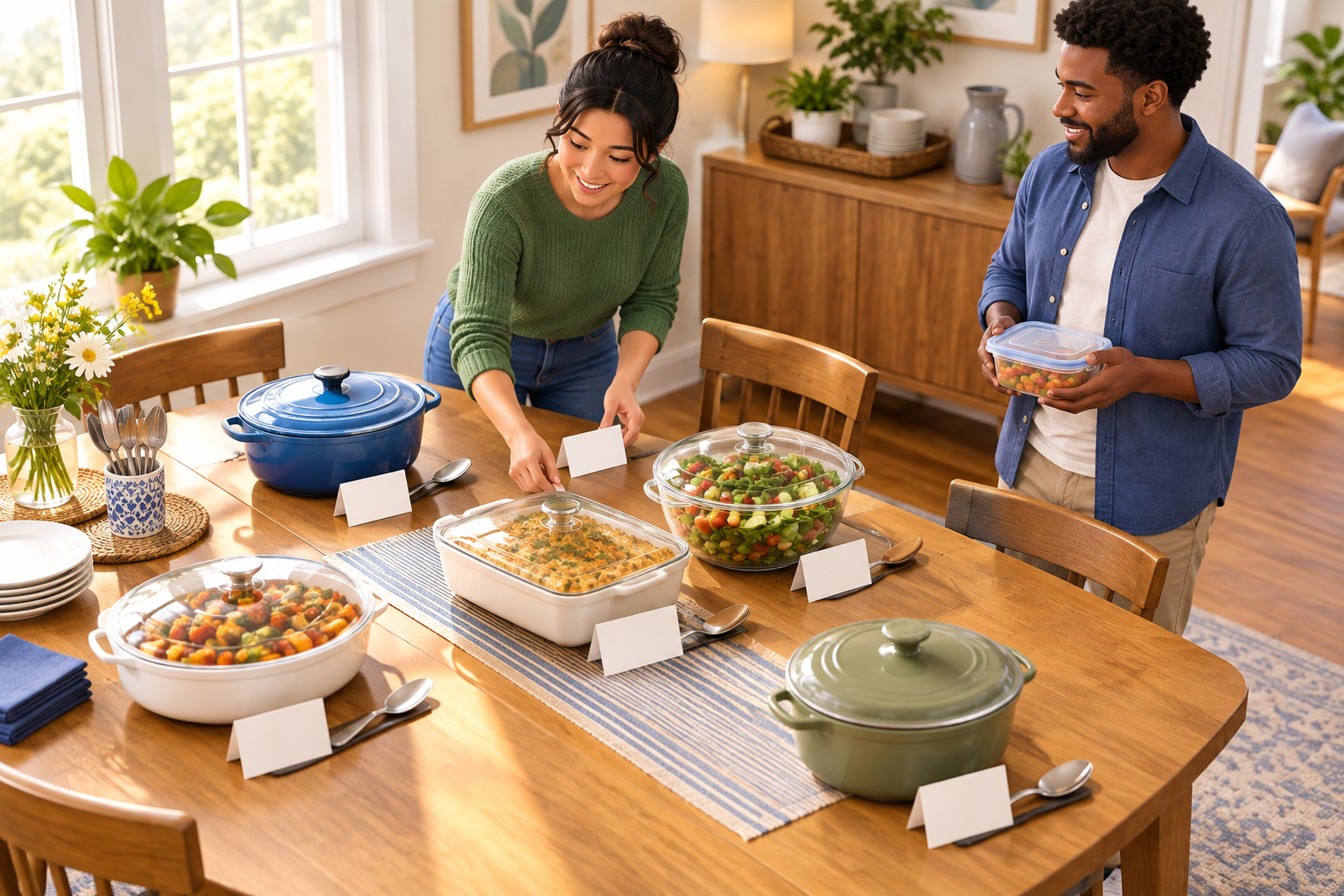
- Bring a serving utensil and, if useful, a simple label identifying the dish.
- Keep the dish covered while it waits for the agreed storage or serving place.
On arrival, move the dish into temperature control
The handoff is part of the journey: take the food directly to its planned storage or holding place.
For a cold dish, put it in the refrigerator until serving. If it will be displayed outside the refrigerator, keep it on ice and check the food temperature when practical. For a hot dish, use the hot-holding arrangement agreed with the host and check the food with a clean thermometer when possible. FDA buffet guidance advises keeping cold food refrigerated until serving or using ice if it will remain out, and recommends thermometer checks for hot holding.
If a temperature check shows that the food is not at the intended holding temperature, consider how long it has been outside temperature control and whether its handling history is known. Do not rely on smell, taste, or appearance. If you cannot establish that the food has been handled safely, do not serve it. When the timing or temperature history is unclear, err on the side of caution rather than trying to rescue the dish with an unverified fix.
Track time while food is out for serving
The time at the table matters as well as the time in the car, so note when temperature control stops.
FoodSafety.gov advises refrigerating perishable food within two hours, or within one hour when the surrounding temperature is above 90°F, such as in a hot car. Treat this as a limit for time outside proper temperature control, not as extra time after a long trip without temperature control. If the dish has been kept at or below 40°F or at or above 140°F, keep maintaining that temperature; once it is outside those conditions, track the time.
For a buffet, set out smaller portions and replenish them from a properly chilled or hot-held supply if the host has a way to do that. Avoid mixing fresh food into an older serving dish that has been sitting out. In hot outdoor conditions above 90°F, use the shorter one-hour limit. If no one knows when the food left temperature control, do not use a smell or taste test to decide whether it is safe.
| Dish plan | Before and during travel | At the gathering |
|---|---|---|
| Serve cold | Chill it before packing; carry it in an insulated cooler with ice or cold packs. | Refrigerate until serving, or keep it on ice; check the food temperature when practical. |
| Serve hot | Confirm a realistic plan for maintaining hot holding; do not assume a covered dish stays hot enough. | Use suitable hot-holding equipment and check the food with a thermometer. |
| Plan not confirmed | Contact the host and agree on another approach before leaving. | Do not leave the dish waiting at room temperature while a plan is made. |
Use this checklist before you head out
A final check connects the dish, the ride, and the host’s setup into one practical plan.
Before departure, make sure you can answer three questions: does the food need to stay cold or hot, how will you maintain that condition in transit, and where will the dish go immediately on arrival? If you cannot answer one of them, contact the host or change the plan before you leave. That is more useful than guessing based on the container or how the food looks.
- Decide whether the dish needs to stay cold or hot.
- Chill cold food before packing, or confirm a workable hot-holding plan with the host.
- Use a clean, secure container and keep raw foods separate from ready-to-eat dishes.
- Pack cold food with ice or cold packs in an insulated cooler; keep it closed and out of direct sun.
- Tell the host when you will arrive and where the dish should go immediately.
- On arrival, move the dish to refrigeration, onto ice, or into suitable hot-holding equipment.
- Track time outside temperature control and follow the two-hour limit—or one hour when the surrounding temperature is above 90°F.
Frequently asked questions
How long can a potluck dish sit out?
For perishable food, FoodSafety.gov advises refrigerating it within two hours, or within one hour when the surrounding temperature is above 90°F. Keep cold food at or below 40°F and hot food at or above 140°F; track time when the food is outside proper temperature control.
Can an insulated bag keep a casserole safely hot?
It may slow heat loss, but an ordinary insulated bag does not guarantee that food will stay at or above 140°F for a particular length of time. Arrange suitable hot holding with the host and check the food with a thermometer when practical.
What is the best way to transport a cold potluck dish?
Chill the dish before packing it in a clean, secure container. Carry it in an insulated cooler with ice or cold packs, keep the cooler closed, and refrigerate the dish or place it on ice at the gathering.
What should I do if I don’t know how long the food has been out?
Do not rely on smell or appearance to decide whether it is safe. Check any reliable temperature and timing information available; if you cannot establish that it was handled safely, do not serve it.
Sources & further reading
Explore the original sources behind this article. Our editorial perspective is separate from the organizations we reference.
- [S1] Food Safety by Events and Seasons | FoodSafety.govfoodsafety.gov
- [S2] 4 Steps to Food Safety | FoodSafety.govfoodsafety.gov
- [S3] How can I keep food safe while engaging in outdoor activites?ask.fsis.usda.gov
- [S4] Serving Up Safe Buffets | FDAfda.gov