How to Use a Portable Generator Safely During a Power Outage
Place a portable generator outdoors at least 20 feet from openings, use suitable outdoor-rated cords, and follow your model’s instructions for loads, weather, and refueling. Know how to respond if a carbon-monoxide alarm sounds.
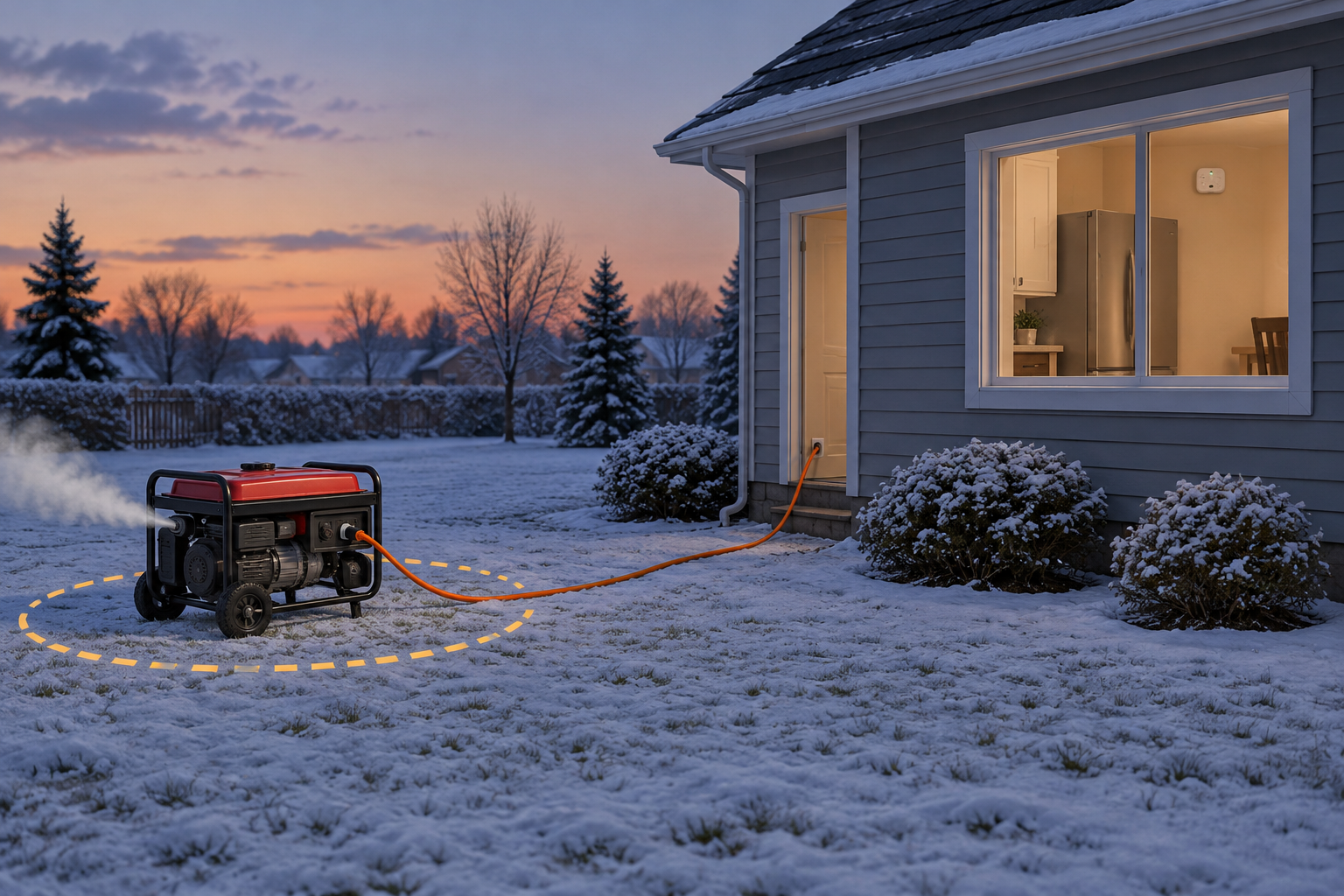
How to use a portable generator safely
Start with safe placement and carbon-monoxide protection before deciding what to power.
To use a portable generator during a power outage, run it outdoors at least 20 feet from windows, doors, and vents, with its exhaust directed away from the home and other openings. Use suitable, undamaged outdoor-rated extension cords for appliances, and never plug the generator into a wall outlet. Keep a working battery-powered or battery-backup carbon-monoxide (CO) detector in the home.
Carbon monoxide is a poisonous gas that you cannot reliably detect by sight or smell. Never run a generator inside a home, garage, shed, or other enclosed or partly enclosed space—even if a door or window is open. The Centers for Disease Control and Prevention (CDC) gives the 20-foot placement guidance and warns against using generators in enclosed spaces.
Details such as operating limits and wet-weather precautions vary by model and fuel type. Read the unit’s manual and labels before an outage. This guide covers basic portable-generator use, not electrical installation or repair.
Prepare the generator and household before an outage
Learn the equipment and check essential safety devices before you need backup power.
Find the generator’s make and model, locate its manual, and note its fuel type and operating instructions. If the manual is missing, look for instructions from the manufacturer for that exact model rather than relying on advice for a similar-looking unit. Check the equipment and cords for visible damage; do not use damaged items.
Check that household CO detectors are installed and working according to their own instructions. CDC recommends using a battery-powered or battery-backup CO detector when running a generator. The detector is a backup safeguard, not permission to run the generator too close to the home or in an enclosed area.
Make a short list of the appliances you may need, such as a refrigerator or phone charger. Check their labels and the generator manual for electrical requirements and limits. If you cannot tell whether the generator can handle a planned load, do not connect the appliance until you have checked with the manufacturer or a qualified professional.
Choose a safe outdoor operating location
Placement must remain safe throughout the outage, including when wind or weather changes.
Set the generator outdoors at least 20 feet from windows, doors, and vents. Point its exhaust away from the home and openings, and look for openings on more than one side of the building. Do not operate it in a garage, basement, shed, or other enclosed or partly enclosed space. Opening a garage door or window does not make these locations safe.
Choose a spot where people will not need to walk through the exhaust to enter or leave the home, and keep children and pets away from the running equipment. Do not improvise an enclosure or cover that might restrict airflow. The Consumer Product Safety Commission (CPSC) also advises directing exhaust away from openings and following the manufacturer’s instructions for wet-weather use.
If you cannot meet the placement guidance, do not move the generator closer as a workaround. Consider another safe way to meet essential needs or seek guidance from local emergency services or a qualified professional.
Connect appliances without unsafe household wiring
Extension cords for individual appliances are not a substitute for a professionally installed connection to household circuits.
For individual appliances, use intact extension cords rated for outdoor use and suitable for the electrical load. Follow the generator, cord, and appliance instructions. Inspect cords before use, and do not use one with cuts, damaged plugs, or an outdoor rating you cannot confirm. Arrange cords to avoid pinching, standing water, and trip hazards.
Never connect a generator directly to household wiring through a wall outlet. This can create a serious electrical hazard. Connecting a generator to household circuits requires an appropriate transfer switch installed by a qualified professional; installation is outside the scope of a do-it-yourself outage setup. ESFI recommends suitable, undamaged outdoor-rated cords and warns against connecting a generator directly to household wiring without an appropriate transfer switch.
| Connection method | Suitable use | Important boundary |
|---|---|---|
| Outdoor-rated extension cord | Connecting an individual appliance when the cord and generator suit its load | Use an undamaged cord rated for outdoor use and follow the equipment instructions. |
| Transfer switch | Connecting a generator to selected household circuits through a suitable installation | Have the appropriate equipment installed by a qualified professional. |
| Plugging the generator into a wall outlet | Not a safe connection method | Do not do this; it connects the generator directly to household wiring. |
Manage weather, fuel, and routine operation
Use the manual as the authority for conditions and procedures specific to your generator.
Wet conditions can create added risks, but a generic cover or improvised shelter is not a solution for every model. Follow the manufacturer’s instructions for operating the exact generator in wet weather and for protecting it without compromising safe placement or airflow. If conditions prevent you from following those instructions, do not start the generator or turn it off.
Before refueling, shut the generator off and let it cool as directed by the manufacturer. Use only the specified fuel and refueling procedure. Stop using equipment that appears damaged, leaks, or behaves unusually, and consult the manual or a qualified service professional rather than improvising a repair.
CPSC advises checking and maintaining generators and following the manufacturer’s wet-weather instructions. A pre-outage inspection can help you notice visible problems, but it does not replace model-specific maintenance.
What to do if a CO alarm sounds or someone feels ill
Treat a possible carbon-monoxide warning as an emergency; do not stay inside to investigate.
If a CO alarm sounds, or anyone develops possible symptoms such as headache, dizziness, nausea, weakness, or confusion, get everyone outside to fresh air immediately. Call 911 or your local emergency number from outside and follow responders’ instructions. Do not stay inside to locate the source, and do not re-enter until emergency responders say it is safe.
A detector is important, but it does not make unsafe generator placement acceptable. Keep following the outdoor-distance and exhaust-direction guidance even when a detector appears to be working.
Portable generator outage checklist
Use this quick sequence before starting, during operation, and before refueling.
Pause if any part of the setup is damaged, unclear, or impossible to keep safe. The generator manual governs model-specific instructions; these steps summarize the core precautions for ordinary portable-generator use.
- Before starting: Read the manual, inspect the generator and cords, and check the household CO detector according to its instructions.
- Set up outdoors: Keep the generator at least 20 feet from windows, doors, and vents, with exhaust directed away from openings. Never use it in an enclosed or partly enclosed space.
- Connect appliances: Use suitable, undamaged outdoor-rated cords. Do not plug the generator into a wall outlet or connect it directly to household wiring.
- While running: Follow the manual’s operating and wet-weather instructions. Keep people and pets away, and stop if the equipment is damaged or conditions become unsafe.
- Before refueling: Turn the generator off and let it cool as directed by the manufacturer.
- If an alarm sounds or someone feels unwell: Leave for fresh air and call emergency services from outside.
Frequently asked questions
How far should a portable generator be from windows and doors?
CDC guidance says to operate it outdoors at least 20 feet from windows, doors, and vents, with exhaust directed away from openings. Follow the manual for any additional instructions for your model.
Can I run a portable generator in a garage if the door is open?
No. Do not run a generator in a garage or other enclosed or partly enclosed space, even with a door or window open. Operate it outdoors and follow the placement guidance.
Can I plug a generator into a wall outlet to power my home?
No. Do not connect a generator directly to household wiring through a wall outlet. Connecting household circuits requires an appropriate transfer switch installed by a qualified professional.
Does a CO detector make it safe to place a generator closer to the house?
No. A working battery-powered or battery-backup CO detector is an additional safeguard, not a replacement for outdoor operation, the recommended distance, and directing exhaust away from openings.
What should I do if a carbon-monoxide alarm sounds?
Get everyone outside to fresh air immediately and call 911 or your local emergency number from outside. Do not re-enter until emergency responders say it is safe.
Sources & further reading
Explore the original sources behind this article. Our editorial perspective is separate from the organizations we reference.