What to Do With Fall Leaves: Mulch, Compost, or Leave Them?
Choose what to do with fall leaves by where they landed: mulch manageable lawn coverage, use shredded leaves in garden beds, leave woodland leaf litter undisturbed, and compost suitable excess.
Choose what to do with fall leaves by location
One yard can call for several different approaches, so sort leaves by where they fell before deciding what to move.
What to do with fall leaves depends mainly on their location and how much has accumulated. Mulch dry leaves on the lawn while the layer remains manageable, use shredded leaves as mulch in garden beds, and leave the natural leaf layer in an established wooded area. Compost suitable surplus or check local yard-waste options if you have more than you can use.
For example, a light scattering on the lawn and a deep layer beneath a tree do not have to be treated the same way. You can mulch the lawn, use some leaves in a garden bed, and leave woodland litter where it is. The goal is not to move every leaf into one pile.
On the lawn, mulch until coverage becomes too dense
Use the amount of visible grass as a practical cue for whether to keep mulching or collect leaves.
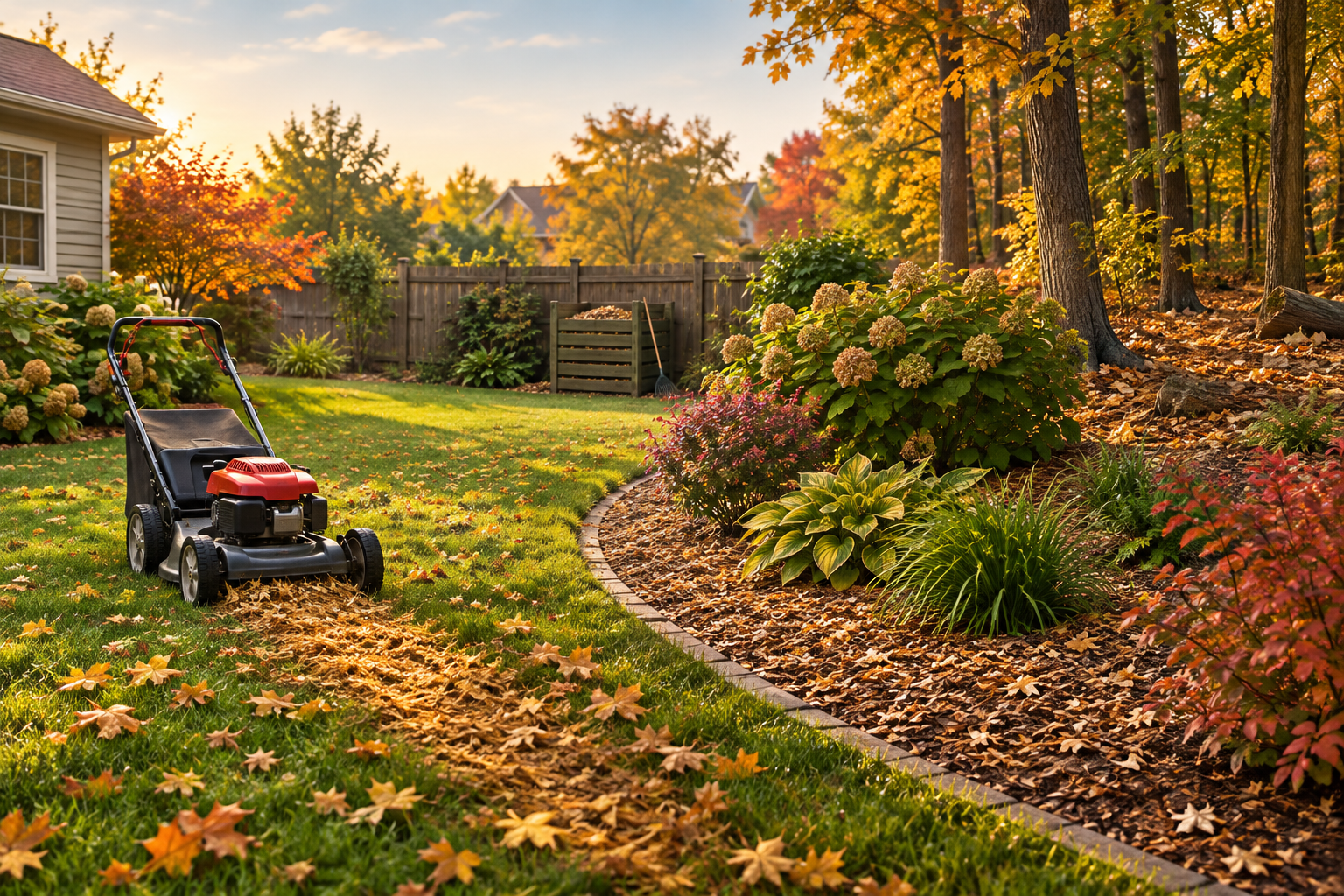
If leaves on the lawn are dry and their coverage is still light, you can mulch them with a mower. Check the lawn as more leaves fall rather than relying on a fixed number of mowing or raking sessions.
University of Minnesota Extension recommends mulching dry leaves and says to begin collecting them for compost when less than half the lawn is visible through the leaf cover. This is a useful threshold, not a guarantee for every lawn or local condition. If the cover becomes dense before then, use your judgment and collect some rather than continuing to add to it.
Collected lawn leaves can be used in a garden bed, added to a suitable compost pile, or handled through a local yard-waste program. Choosing a second use may keep you from treating all the leaves as material to discard.
- Mulch dry leaves while the lawn remains visible through the cover.
- Collect excess when less than half the lawn is visible through the leaves.
In garden beds, use shredded leaves as surface mulch
Shredding makes leaves easier to spread as a layer in planted areas.
Shredded leaves can be used around trees, shrubs, and perennial beds. Penn State Extension gives a 2–4-inch layer as guidance for these areas. Treat that as a practical reference rather than a prescription for every plant, bed, or local condition.
If a bed already has enough leaf cover, there is no need to add all the leaves you collected from the lawn. Use only what suits the area and consider composting or locally approved yard-waste collection for the rest. If you are unsure whether a particular type of leaf or plant material is suitable for a bed or compost pile, check local extension or municipal guidance.
- Shred leaves before spreading them as a surface layer.
- Use Penn State Extension’s 2–4-inch guidance for trees, shrubs, and perennial beds as a starting point.
In a wooded area, leave the natural leaf layer
An established woodland has a different role from a lawn or cultivated garden bed.
Where leaves have fallen in an established wooded area, leave the existing layer in place where practical. Penn State Extension cautions against adding extra leaves on top of woodland leaf litter, which provides habitat for wildlife.
You can still clear leaves from a path or other area that needs to remain accessible. The distinction is between maintaining a usable route and stripping or piling material in the wooded area. If you have leaves to move from a lawn, use a bed, compost area, or local collection option instead of adding them on top of the existing woodland layer.
Compost suitable excess leaves
Leaves can provide the carbon-rich component of a compost pile, but they are only one part of the mix.
If you have more leaves than your lawn and beds can use, a managed compost pile is one option. The U.S. Environmental Protection Agency identifies dry leaves as a carbon-rich material, often called a “brown.” Composting also needs a balance of browns and “greens,” along with air and moisture. In other words, a pile made only of leaves is not the complete mix described in the EPA’s home-composting guidance.
The EPA advises against adding diseased or pest-infested plants and herbicide-treated plants to a backyard compost pile. If your collected leaves are mixed with other plant material, consider what is in the mix before composting it. Local composting programs may have separate instructions for materials that should not go into a home pile.
Do not count on a particular finish date: composting depends on the materials and conditions, and the sources here do not establish a guaranteed timeline. If you do not compost at home, check whether your community accepts leaves through a yard-waste collection or drop-off program.
- Combine dry leaves with suitable greens and provide air and moisture.
- Keep diseased or pest-infested plants and herbicide-treated plants out of a backyard compost pile.
- Check local guidance if you are unsure whether a material is accepted.
Compare the options at a glance
Use the location and amount of leaves to narrow down the next step.
These are practical defaults for sorting leaves, not universal rules for every property. Local conditions and municipal requirements can affect what is suitable.
| Where the leaves are | First option to consider | When to choose another option |
|---|---|---|
| Lawn | Mulch dry leaves while coverage is manageable. | Collect excess when less than half the lawn is visible through the leaves. |
| Garden bed | Spread shredded leaves as a surface mulch. | Use less or none if the bed already has enough cover. |
| Established wooded area | Leave the natural leaf layer in place. | Avoid adding another pile on top of existing woodland leaf litter. |
| Surplus leaves | Compost suitable material or check local yard-waste options. | Follow local instructions if home composting is not suitable. |
Check local rules before hauling leaves away
Your city, county, or waste hauler can tell you whether leaves are collected and how to prepare them.
Collection schedules, accepted materials, and drop-off arrangements vary by community. Before bagging leaves or placing them at the curb, check current instructions from your municipality or waste hauler. A program may specify dates, containers, or other preparation requirements; do not assume that it accepts leaves just because it collects other yard waste.
If you rent, check the instructions for your building or ask the property manager. If you plan to use a drop-off site, verify that it accepts leaves and confirm its current details before transporting them.
- Sort leaves by location: lawn, garden bed, wooded area, or surplus.
- Mulch manageable dry lawn coverage and collect excess if less than half the grass is visible.
- Use shredded leaves in garden beds or compost suitable material.
- Check municipal or hauler instructions for any leaves you cannot use at home.
Frequently asked questions
Should I mulch leaves on my lawn or rake them up?
Mulch dry leaves while coverage remains manageable. University of Minnesota Extension suggests collecting leaves for compost when less than half the lawn is visible through the leaf cover.
How deep should shredded leaves be in a garden bed?
Penn State Extension describes a 2–4-inch layer around trees, shrubs, and perennial beds. Treat this as guidance, since conditions and plant needs can vary.
Should I rake leaves out of a wooded area?
Where practical, leave the established leaf layer in place. Penn State Extension cautions against adding more leaves on top of woodland litter, which provides wildlife habitat.
Can I compost all fall leaves?
Dry leaves are a carbon-rich compost ingredient, but a pile also needs greens, air, and moisture. The EPA advises against adding diseased or pest-infested plants and herbicide-treated plants to a backyard compost pile.
Will my town collect leaves?
It depends on local rules and schedules. Check your municipality or waste hauler for accepted materials, preparation instructions, collection dates, and drop-off options.
Sources & further reading
Explore the original sources behind this article. Our editorial perspective is separate from the organizations we reference.
- [S1] Fall leaf mulching is good for your lawn | UMN Extensionextension.umn.edu
- [S2] Leaves Are Treasure, Not Trashextension.psu.edu
- [S3] Composting At Home | US EPAepa.gov