How to Build a Winter Car Kit That Fits Your Climate and Trips
Build a compact winter car kit around your local weather, route, trip length, passengers, and vehicle. Then check the car’s key cold-weather systems before you go.
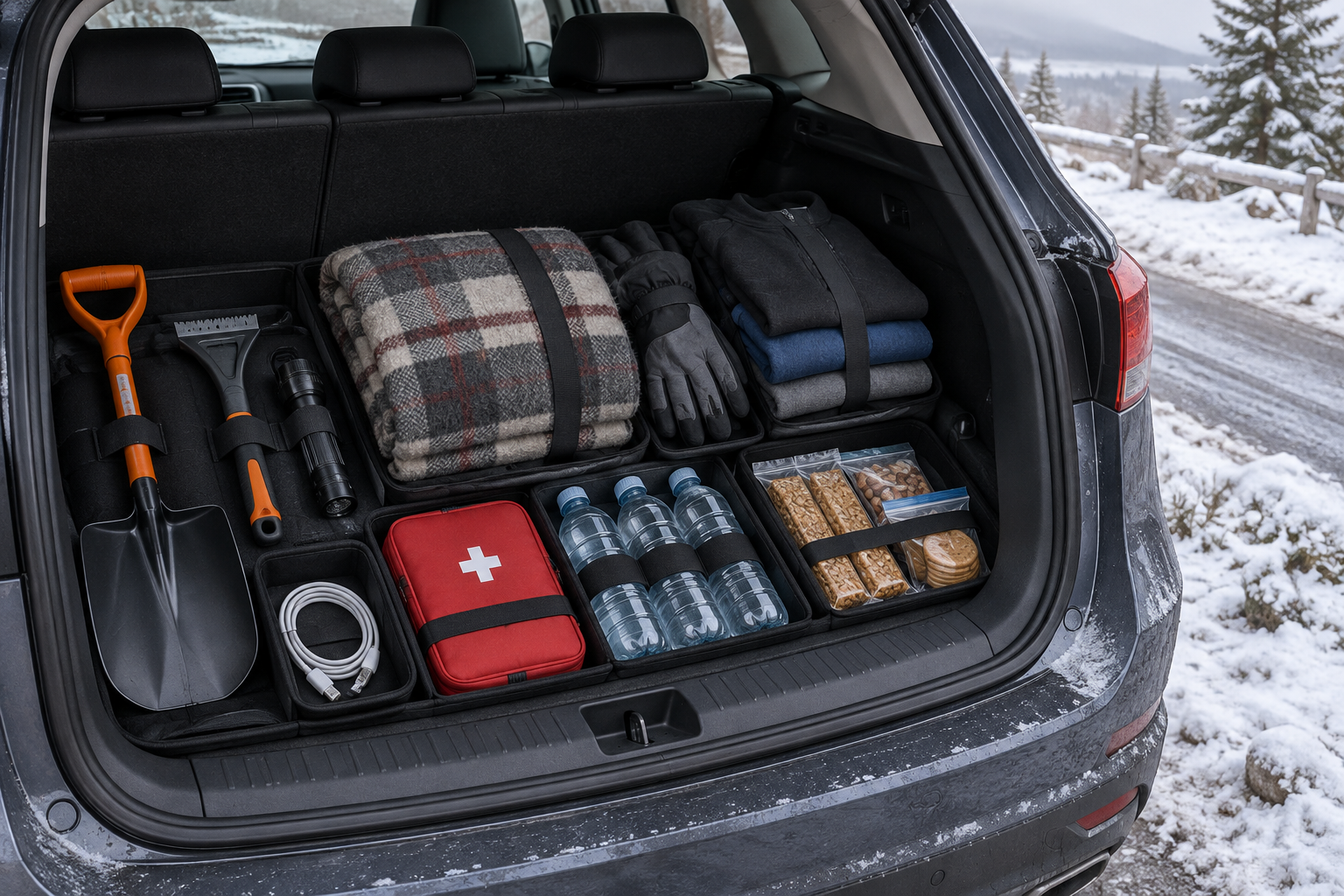
Start with the trips you actually take
A useful kit is sized for your likely conditions, not for every emergency imaginable.
A winter car kit should help you handle ordinary cold-weather problems and give you useful supplies if a trip is delayed. The right contents depend on where you drive, how far you go, how often you travel, who rides with you, and what your vehicle needs. A short commute on maintained roads calls for a different setup from a long drive through places with heavy snow or few services.
Before shopping, picture a typical winter trip and a less convenient one: a traffic delay, a closure, or a car that cannot continue. Ask how long you might wait for help, whether you could reach a staffed place, and what each passenger would need to stay comfortable. This is a planning exercise, not a promise that any kit can make every trip safe.
- Local conditions: snow and ice, freezing rain, cold temperatures, or mostly wet roads.
- Route: urban streets, maintained highways, rural roads, mountain passes, or areas with limited services.
- Trip length: routine errands, a commute, or extended travel away from home.
- Passengers: children, older adults, pets, or anyone who relies on essential medication or mobility equipment.
Build a compact core kit
Cover the basics that remain useful across many kinds of winter travel.
Start with supplies for visibility, communication, warmth, basic care, and a delay. NHTSA’s winter-driving guidance includes items such as an ice scraper, flashlight, warning devices, blankets, phone and charger, water, food, and necessary medicine. The Red Cross also recommends considering warm clothing, boots, a first-aid kit, and extra dry clothes. Choose practical versions you know how to use, and avoid packing so much that essential items become hard to reach.
- Visibility and light: an ice scraper, a flashlight, and spare batteries if the flashlight uses them. Keep the scraper where you can reach it from the driver’s seat.
- Communication: a charging cable that fits your phone and a car charger. A charged power bank can be useful backup; follow its manufacturer’s storage and temperature guidance.
- Warmth: blankets or sleeping bags suited to your passengers, plus hats, gloves, and spare dry clothing. Keep the items dry and accessible.
- Basic care: a first-aid kit and any necessary medicine. Check medicine storage instructions and expiry dates; do not leave temperature-sensitive medication in the car unless its label or a health professional says that is appropriate.
- Delay supplies: drinking water and nonperishable food that suit your household’s needs, including allergies or dietary restrictions. Check them periodically and replace anything damaged or out of date.
Add supplies for snow, ice, and longer routes
Use the route and likely delay—not a generic mega-checklist—to decide what belongs in the trunk.
If snow or ice is likely, add a small shovel and traction material appropriate for your vehicle and local conditions. NHTSA lists a shovel and traction material among winter-driving supplies. An item is only helpful if it fits your vehicle, can be reached safely, and you understand how to use it. Check your owner’s manual for vehicle-specific precautions, especially before using equipment around tires or under a vehicle.
For a longer or more remote trip, consider extra dry clothing, additional food and water, sturdy footwear, and more than one way to charge a phone. A warning device can help make a disabled vehicle more visible, but use it only as directed and where it is safe to do so. Do not assume that carrying supplies makes it wise to continue in hazardous conditions.
- A commuter in a mild-winter area may need a compact scraper, flashlight, phone charger, warm layer, and basic delay supplies.
- A driver who regularly encounters snow and ice may add a shovel and suitable traction material, then check whether the vehicle’s tires and equipment are appropriate for those roads.
- A family taking a long winter drive may need separate warm layers, spare dry clothes, child-specific supplies, and food that works for each passenger.
- An EV or hybrid driver should account for reduced cold-weather range when planning travel and charging. NHTSA notes that cold can reduce the driving range of electric and hybrid vehicles; consult the vehicle manual and plan around the conditions of the route.
| Driving situation | Consider adding | Before departure |
|---|---|---|
| Short, familiar trips | Compact core kit and supplies for passengers | Check local forecasts and road conditions |
| Snow- or ice-prone roads | Shovel and suitable traction material | Check tires and vehicle guidance |
| Long or remote travel | Extra warm and dry clothing, food, water, and phone power | Review the route, likely services, and changing conditions |
| Electric or hybrid vehicle | Trip-specific charging plan and vehicle supplies | Allow for possible cold-weather range reduction |
Check the car, not just the trunk
A stocked kit cannot make up for vehicle systems that are not ready for winter conditions.
Before cold weather travel, check the parts of the vehicle that affect visibility, handling, and reliable operation. NHTSA recommends checking lights, wipers, defrosters, coolant, tires, and the battery. Cold can reduce the power of conventional vehicle batteries, and tire condition and suitability matter for the roads you expect to use. For inspection intervals, specifications, or repairs, follow the owner’s manual or ask a qualified mechanic rather than relying on a one-size-fits-all checklist.
Make sure your lights work, the windshield can be cleared, and the defroster operates as intended. Check that wipers are in usable condition and that washer fluid is suitable for the temperatures you expect. Review tire pressure and condition using the vehicle’s guidance. If the battery is slow to start the engine or you have concerns about it, arrange an appropriate check rather than waiting for a cold morning.
- Lights: confirm that exterior lights are working and visible.
- Wipers and washer fluid: check operation, condition, and suitability for expected temperatures.
- Defroster: make sure it works before you depend on it for visibility.
- Coolant, tires, and battery: use the owner’s manual for the correct checks and specifications; get professional help for concerns beyond routine inspection.
Pack the kit so you can use it
Good placement, regular checks, and simple labels can matter as much as the items themselves.
Keep high-priority items easy to reach without unpacking the whole trunk. A scraper and phone cable, for example, are more useful if you can get to them promptly. Store clothing and blankets in a way that helps keep them dry, and secure heavy objects so they do not shift around the cabin. Do not block the driver’s view or access to controls, and follow the vehicle manual when fitting or carrying equipment.
Make a brief seasonal check and repeat it after using supplies. Charge devices, replace depleted batteries, check food and medicine dates, and confirm that clothing still fits the passengers who may need it. Update the kit when your routine changes—for example, when you begin a longer commute, travel with a pet, or switch vehicles. A written inventory or small container for core supplies can make the check quicker.
- Lay out the core items and remove anything damaged, expired, or unsuitable for your vehicle.
- Place frequently needed items where they can be reached safely; secure the rest.
- Check condition and charge before the season and after any use.
- Review the kit whenever passengers, routes, or vehicle needs change.
Make a pre-trip winter check
A few minutes of planning can help you decide whether to go, change the route, or wait.
Before leaving, check the weather and road conditions along the route, not only at your starting point. Consider whether conditions may worsen while you are traveling and whether the trip is essential. If road conditions are poor, postponing nonessential travel may be the more sensible choice. For longer journeys, tell someone your route and expected arrival time, and keep your phone charged.
If you become stranded, do not improvise a procedure based on a checklist. Follow current NHTSA guidance for winter driving and for using a vehicle while waiting for help. NHTSA warns that snow blocking the exhaust can create a carbon-monoxide danger if the engine is running. Keep that warning in mind and use official instructions for the situation; a car kit is not a substitute for them.
Frequently asked questions
What should every winter car kit include?
A practical core kit can include an ice scraper, flashlight, phone charging cable and car charger, warm clothing or blankets, a first-aid kit, water, nonperishable food, and necessary medicine. Add items based on the weather, route, passengers, and vehicle.
Do I need a shovel and traction material?
They are worth considering if your routes commonly bring snow or ice. Choose supplies that suit your vehicle and conditions, and consult the owner’s manual for vehicle-specific precautions. They are not a reason to travel when conditions are unsafe.
What should I check on my car before winter travel?
Check lights, wipers and washer fluid, defrosters, coolant, tires, and the battery. Follow the owner’s manual for correct specifications and ask a qualified mechanic about repairs or concerns.
Is a winter car kit enough for a long trip?
No kit can guarantee safety or replace trip planning. For longer travel, consider extra clothing, food, water, and phone power, and review weather and road conditions along the route. Be ready to postpone nonessential travel if conditions are poor.
What should I know if snow blocks my exhaust while I am stranded?
NHTSA warns that a snow-blocked exhaust can create a carbon-monoxide danger if the engine is running. Follow NHTSA’s current stranded-driver guidance rather than relying on improvised instructions.
Sources & further reading
Explore the original sources behind this article. Our editorial perspective is separate from the organizations we reference.